 ✨ AI Generated
Former Iwabuchi Floodgate
Japanese: 旧岩淵水門
Kita City, Tokyo
This information was written by AI and may contain mistakes. Please check official sources for opening hours, fees, and other details before you go.
Found a mistake? Let us know with “✏️ Something's wrong” on this spot's screen in asobot →
🎧 Audio guide(1:02)
In short
The Former Iwabuchi Floodgate was constructed at the diversion point of the Arakawa and Sumida rivers, completed in 1924 (Taisho 13). Designed to regulate the volume of water flowing into the Sumida River during floods, it is commonly known as the "Red Floodgate" (Aka-suimon) and prevented flooding for about 60 years. In 2024 (Reiwa 6), it was designated an Important Cultural Property of Japan.
- Main Structure with Five Gates: Spanning a total length of approximately 62 meters, the structure features five gates, including a passage for boats.
- Designed by Aoyama Akira: Designed by the engineer Aoyama Akira, who was involved in the construction of the Panama Canal.
- Red Floodgate and Blue Floodgate: Located about 300 meters downstream is the current Iwabuchi Floodgate, which took over its role. It is commonly known as the "Blue Floodgate" (Ao-suimon).
History and Highlights
The Former Iwabuchi Floodgate is a sluice gate built at the junction of the Arakawa and Sumida rivers. It is commonly called the "Red Floodgate."
Its construction was prompted by the severe flood damage that struck downtown Tokyo in 1910 (Meiji 43). The former Ministry of Home Affairs planned the Arakawa Floodway project, and this floodgate was built as part of it. It was created to regulate the amount of water flowing into the Sumida River during major floods without obstructing boat traffic. Construction began in 1916 (Taisho 5) and was completed in 1924 (Taisho 13).
It was designed by Aoyama Akira of the Tokyo Civil Engineering Branch Office of the Ministry of Home Affairs. Aoyama was the only Japanese engineer involved in the construction of the Panama Canal. The construction site had soft ground, making it one of the most challenging engineering tasks within the floodway project. The foundation was stabilized by embedding reinforced concrete frames extending about 20 meters below the riverbed. It sustained no damage during the 1923 Great Kanto Earthquake.
Later, due to land subsidence in eastern Tokyo, the floodgate sank by up to about 2 meters, leading to repeated repair works. The floodgate was repainted red during renovations in the mid-1950s to early 1960s (Showa 30s). Due to a revision of the flood prevention plan in 1973 (Showa 48), the gate's height became insufficient, and its operational role ended when a new Iwabuchi Floodgate was built approximately 300 meters downstream. Having prevented flooding for roughly 60 years, the floodgate was designated a national Important Cultural Property on August 15, 2024 (Reiwa 6). It is the only surviving sluice gate or lock among those built when the Arakawa Floodway was initially opened to water.
Viewing and Experience Points
- Five Gates and Wing Walls: Along its roughly 62-meter total length, the structure has five steel lift gates—including a boat passage—and is flanked by wing walls on both sides. It is a pioneering floodgate constructed entirely of reinforced concrete.
- Crossing atop the Gate: The top of the floodgate is open to the public as a dedicated pedestrian and bicycle bridge, allowing visitors to cross over to Nakanoshima, an island surrounded by the river. Nakanoshima has been developed as the Arakawa Red Floodgate Green Space, offering views of the upstream Arakawa River.
- The Red Floodgate and the Blue Floodgate: The downstream Iwabuchi Floodgate was completed in 1982. During Typhoon Hagibis in 2019 (Reiwa 1), it was closed for the first time in 12 years, successfully preventing the Sumida River from overflowing.
Tips for Exploring
It is about a 15-minute walk from Exit 3 of Akabane-iwabuchi Station or Exit 2 of Shimo Station on the Namboku Line. From the East Exit of JR Akabane Station, it is about a 20-minute walk.
Adjacent to the gate is the Arakawa Water Museum (Arakawa Chisui Shiryokan), a facility introducing the history of the Arakawa Floodway improvement project. The third-floor terrace provides a clear view of the Arakawa River and the Red Floodgate. Please check the museum's visitor information before visiting. On Nakanoshima, there is also the "Grass Mowing Monument," commemorating the All-Japan Grass Mowing Championship held from 1938 to 1944.
Akabane Ichibangai Shopping Street is located about 1.2 kilometers southwest of here.
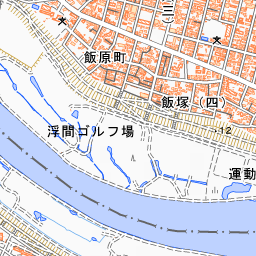
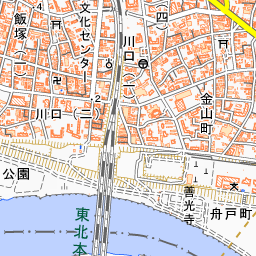
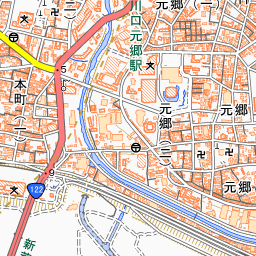

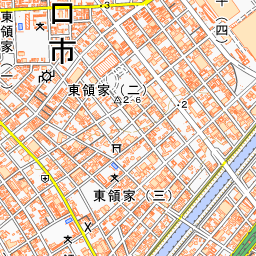
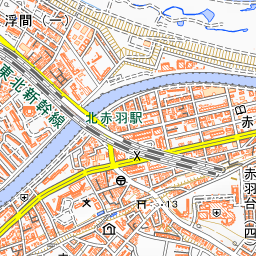
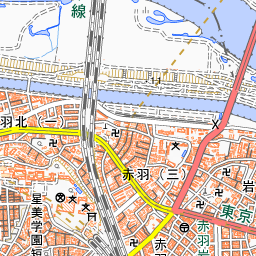
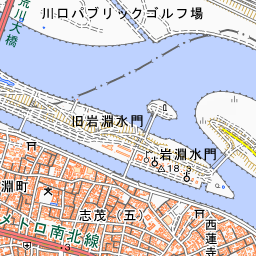
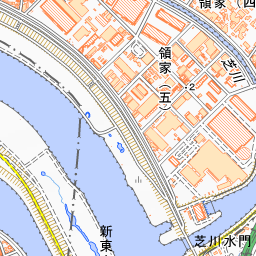
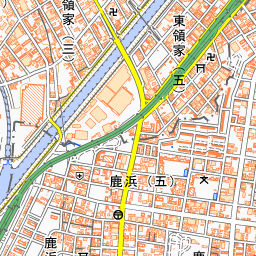
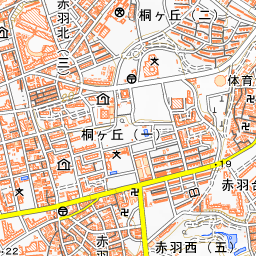

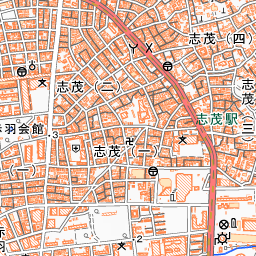

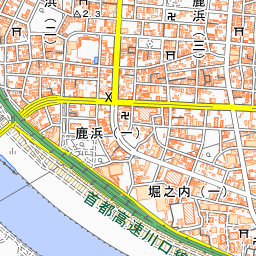
Spot location © OpenStreetMap contributors (ODbL)
Open in Google MapsUse asobot while you walk
- See where you are on the map and find spots nearby
- Listen to the guide's audio in course order, one after another (with subtitles)
- Walk to the next spot while following the map
Open on your phone
Scan to open this spot in asobot on your phone.