 ✨ AI Generated
Naramachi
Japanese: ならまち
Nara City, Nara
This information was written by AI and may contain mistakes. Please check official sources for opening hours, fees, and other details before you go.
Found a mistake? Let us know with “✏️ Something's wrong” on this spot's screen in asobot →
🎧 Audio guide(1:01)
In short
Naramachi is a townscape lined with old machiya (traditional townhouses) spreading around Gango-ji Temple, and most of it was once part of the temple grounds. Machiya and temples dating from the Edo period to the Meiji period still remain today, and there are also many cafes and general goods shops renovated from old private houses. It is about a 15-minute walk from Kintetsu-Nara Station to Gango-ji Temple in the center of town.
- Machiya and Lattices: Machiya with narrow frontages and long, deep interiors line the streets, featuring wooden lattices on their facades.
- Migawari-zaru: Red monkey dolls hung under the eaves are protective charms against evil that are said to take misfortunes upon themselves in place of the people.
- Koshin-do Hall: A hall dedicated to Koshin-san, decorated with monkey statues and cloth dolls considered to be messengers, with migawari-zaru hung at the entrance.
History and Highlights
Most of Naramachi was once the precinct of Gango-ji Temple. During the Nara period, Gango-ji Temple was a temple with a grand monastic complex (garan). In 1451, arson during a tsuchi-ikki (peasant uprising) staged by the people of Yamato burned down buildings such as the main hall (Kondo) of Gango-ji Temple. Nevertheless, the temple complex appears to have been maintained for some time after that.
A town seems to have been formed within the former temple grounds toward the end of the Sengoku (Warring States) period. In writings from the early Edo period, it is recorded that most of the town known as "Shinya" was established within the precinct of Gango-ji Temple between around 1573 and 1592. Excavation surveys have also revealed that traces of daily life prior to the 1550s are extremely scarce. Despite preserving an old streetscape, Naramachi is surprisingly new for a town in Nara.
When Gango-ji Temple was registered as a World Heritage site under the "Historic Monuments of Ancient Nara" in 1998, the surrounding townscape was designated as its buffer zone and became a new tourist spot in Nara known as "Naramachi."
Viewing and Experiencing Highlights
- Machiya and Lattices: Machiya in Naramachi are characterized by narrow frontages and long, deep interiors. During the Edo period, taxes were levied based on the width of the street frontage. The facades of the machiya feature mushiko-mado (clay-covered lattice windows) and lattices. The rustic "Nara-goshi" lattices made of rounded timber are also called "Shika-goshi" (deer lattices) because they were designed not to injure deer that wander into the town.
- Migawari-zaru: Red dolls can be seen hanging under the eaves of houses. Shaped like monkeys, they are called "migawari-zaru" (substitute monkeys) because they are believed to take misfortunes on themselves instead of the inhabitants. It is also said that writing a wish on the back and hanging the doll will grant the wish, and the tradition is to hang as many dolls as there are family members.
- Koshin-do Hall and Naramachi Koshi-no-Ie: Koshin-do Hall enshrines Shomen Kongo, commonly known as "Koshin-san." It is adorned with statues and cloth dolls of monkeys, which are considered messengers of Koshin-san, and migawari-zaru hang at the entrance. At Naramachi Koshi-no-Ie, visitors can view a reconstructed machiya from the late Edo to Meiji periods from both the outside and inside.
Tips for Walking Around
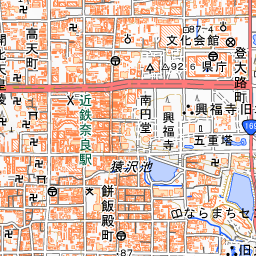
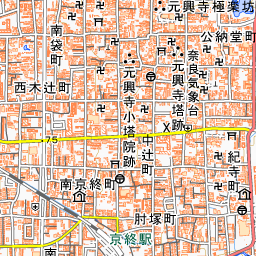
Gango-ji Temple, located at the center of the town, is about a 15-minute walk from Kintetsu-Nara Station and about a 20-minute walk from JR Nara Station. Walking south from Sarusawa Pond leads into Naramachi. It is recommended to visit Gango-ji Temple first, and then stroll through the narrow alleys to spot the lattices of the machiya and the migawari-zaru under the eaves. When exploring the town, visitor centers such as the Naramachi Minami Tourist Information Center "Shika no Fune" are helpful. Naramachi Nigiwai-no-Ie is located about 160 meters to the north, and Jurin-in Temple is about 300 meters to the east.

Guides that include this spot (1)
Use asobot while you walk
- See where you are on the map and find spots nearby
- Listen to the guide's audio in course order, one after another (with subtitles)
- Walk to the next spot while following the map
Open on your phone
Scan to open this spot in asobot on your phone.