
Mitaka City Osawa-no-Sato Watermill Farmhouse
Japanese: 三鷹市大沢の里水車経営農家
Mitaka, Tokyo
This information was written by AI and may contain mistakes. Please check official sources for opening hours, fees, and other details before you go.
Found a mistake? Let us know with “✏️ Something's wrong” on this spot's screen in asobot →
🎧 Audio guide(1:03)
In short
The Mitaka City Osawa-no-Sato Watermill Farmhouse is a site along the Nogawa River where farmhouse buildings and a watermill commonly known as "Shinguruma" remain preserved. Built around 1808, the watermill kept turning for 160 years until around 1968 to polish rice and mill flour. It has been designated a Tangible Folk Cultural Property of Tokyo and recognized as a Mechanical Engineering Heritage by the Japan Society of Mechanical Engineers.
- A waterwheel roughly 4.6 meters in diameter: Turned by the flow of water at 10 to 12 rotations per minute, it possessed a power output of approximately 6 horsepower.
- Wooden gears and pestles: Wooden gears resembling joinery transfer the power, raising and dropping large Japanese zelkova pestles.
- Farmhouse buildings: The main house, storehouse, storage sheds, and the traces of the mill race remain, conveying the historical appearance of a watermill-operating farmhouse.
History and Highlights
The Mitaka City Osawa-no-Sato Watermill Farmhouse features one of Japan's leading watermills, commonly called "Shinguruma." Built around 1808 during the fifth year of the Bunka era in the Edo period, it underwent repeated modifications over time. The present mechanism is a large, double-winged watermill equipped with 14 pounding mortars (tsukiusu), 14 pestles, and 2 grinding millstones, representing commercial watermills of the Musashino region in both size and configuration.
Watermills in the Musashino region were built in great numbers from the Edo period alongside the development of new farmland, reaching their peak from the end of the Meiji period through the Taisho period. Starting in 1817 (the 14th year of Bunka), the Minegishi family ran the watermill operations across five generations. The mill operated for 160 years for rice polishing and flour milling, but came to a halt around 1968 (the 43rd year of Showa) when river works on the Nogawa River changed the water flow. Nevertheless, because the eighth-generation head of the family, Minegishi Kiyoshi, carefully preserved the entire watermill, its intricate mechanisms remain preserved in good condition today.
The grounds retain structures such as the main house, the kitchen area (katte), an earthen storehouse (dozo), and storage sheds, along with traces of the flume channel used for the mill. In 1998, Tokyo designated it a Tangible Folk Cultural Property under the title "Watermill Farmhouse of Musashino (Nogawa River Basin)." In 2009, the Japan Society of Mechanical Engineers certified it as a Mechanical Engineering Heritage under the name "Former Minegishi Watermill." Today, Mitaka City manages it and opens it to the public.
Viewing and Experience Highlights
- The Waterwheel: The waterwheel turned by the water flow measures about 4.6 meters in diameter. It is a "breastshot" type (chugake) typical of the Musashino region, turning 10 to 12 times a minute and delivering about 6 horsepower. Today, it is rotated using a pump to draw up water stored in an underground tank.
- Wooden Gears: Many of the gears are cogged gears made by assembling individually crafted wooden teeth, similar to joinery woodwork. In Musashino, gears were called manriki. The main axle and the cam axle (tsukishinbo) that drives the pestles meet at a right angle, and the interlocking gears are arranged in dual tiers of large and small sets—an ingenious device not seen elsewhere.
- Pestles and Pounding Mortars: The rotational force of the waterwheel is converted through the axle and gears into vertical motion that lifts and drops the pestles. Made of square Japanese zelkova timbers, the pestles are about 3 meters long and weigh roughly 44 kilograms. Ordinarily, only the waterwheel rotates; the pestles and mortars operate during special public openings.
Tips for Exploring
The facility offers guided explanations by volunteer citizen docents. Tracing the mechanism in the order of power transfer—from the waterwheel to the axle, the gears, and finally the pestles—makes it easier to understand how it works.
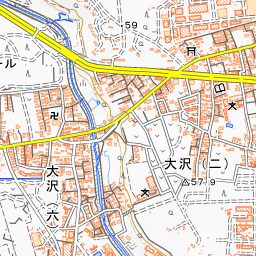
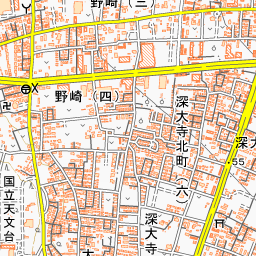
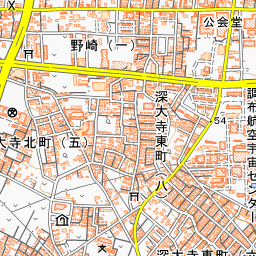
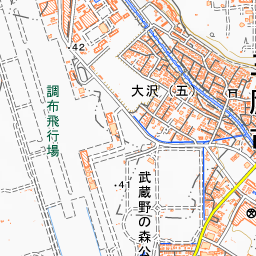
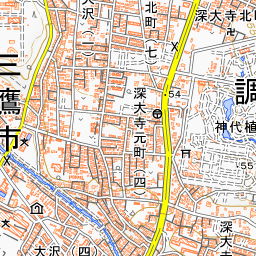
To access the site by bus, board a bus from the South Exit of JR Mitaka Station, alight at "Ryugenji," and walk for 5 minutes. The Osawa-no-Sato Old Folk House is located nearby. The National Astronomical Observatory of Japan Mitaka Campus is about 610 meters east-southeast of here, and Tokyo Metropolitan Nogawa Park is about 840 meters north-northwest.

Use asobot while you walk
- See where you are on the map and find spots nearby
- Listen to the guide's audio in course order, one after another (with subtitles)
- Walk to the next spot while following the map
Open on your phone
Scan to open this spot in asobot on your phone.