 ✨ AI Generated
Koishikawa Korakuen Gardens
Japanese: 小石川後楽園
Bunkyo City, Tokyo
This information was written by AI and may contain mistakes. Please check official sources for opening hours, fees, and other details before you go.
Found a mistake? Let us know with “✏️ Something's wrong” on this spot's screen in asobot →
🎧 Audio guide(1:07)
In short
Koishikawa Korakuen Gardens is a feudal lord's garden (daimyo garden) created in the early Edo period by Tokugawa Yorifusa of the Mito Tokugawa family and completed during the time of the second domain lord, Mitsukuni. It is the oldest surviving daimyo garden from Edo and has received dual designation as a national Special Historic Site and Special Place of Scenic Beauty. Centered on a pond, the grounds evoke scenic spots from across Japan and China.
- Daisensui: The central pond of the garden. Featuring the turtle-shaped Horai Island, it represents the scenery of Lake Biwa.
- Engetsu-kyo Bridge: A stone bridge said to have been designed by the Ming Confucian scholar Zhu Shunsui. Its reflection on the water's surface resembles a full moon.
- River and Rural Scenery: Features a stream modeled after the Oi River in Kyoto and a rice paddy said to have been created by Mitsukuni.
History and Highlights
Koishikawa Korakuen Gardens was created in 1629, during the early Edo period, by Tokugawa Yorifusa, the first lord of the Mito Tokugawa family, at his secondary Edo residence. Completed through renovations by the second lord, Mitsukuni, it is the oldest existing daimyo garden from Edo.
Designed as a strolling-style garden with artificial hills and ponds (kaiyushiki tsukiyama sensui teien), its layout is centered around the "sea" landscape of the main pond, "Daisensui," surrounded by scenes representing "mountains," "rivers," and "rural landscapes." Building upon Yorifusa's garden design that mimicked renowned landscapes from across Japan, Mitsukuni added Chinese tastes reflecting Confucian philosophy.
The name "Korakuen" was chosen by Mitsukuni based on the advice of the Ming Confucian scholar Zhu Shunsui. It derives from a passage in Fan Zhongyan's Memorial to Yueyang Tower (from the Song dynasty), which states: "Be the first to worry about the world's worries and the last to enjoy its pleasures." Expressing a core mindset for rulers, Mitsukuni adopted this as his own political creed.
Even when an artillery arsenal was built on the estate grounds at the start of the Meiji period, the garden was preserved thanks to the efforts of Army Minister Yamagata Aritomo and others. In March 1952, it was designated as a national Special Historic Site and Special Place of Scenic Beauty.
Viewing and Experience Highlights
- Daisensui and Horai Island: Daisensui is the central view of the garden, representing Lake Biwa with Horai Island floating upon it. It is said that Tokugawa Iemitsu personally sketched the shape of the pond. The island is shaped like a turtle, and the stone representing the turtle's head is called "Tokudaiji-ishi."
- Engetsu-kyo Bridge and Tokujindo: Engetsu-kyo is a stone bridge said to have been designed by Zhu Shunsui, who was invited by Mitsukuni. It gets its name ("Full Moon Bridge") because its reflection in the water resembles a full moon. Tokujindo, located within the same mountain scenery, is the only building in the garden that retains its original appearance from the time it was constructed.
- River and Rural Scenery: The Oi River is a stream modeled after the Oi River in Kyoto. It is said that Iemitsu sat on a riverside rock to direct the construction work. Tsuten-kyo Bridge spans upstream, and Togetsu-kyo Bridge spans downstream. The rice paddy on the north side is said to have been created by Mitsukuni to teach the hardships of farmers, and local elementary school students from Bunkyo Ward still participate in planting and harvesting rice here every year.
Walking Tips
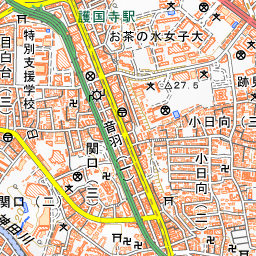
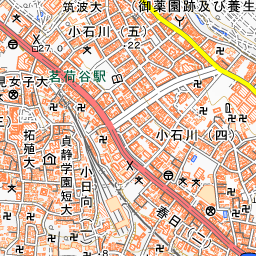
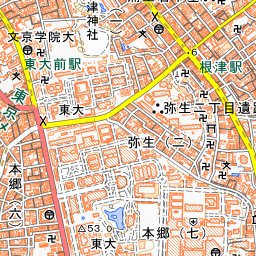
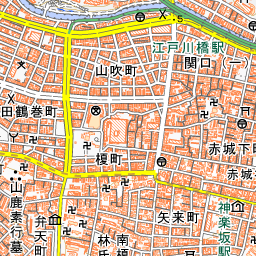
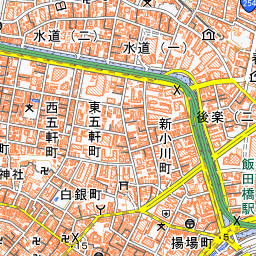
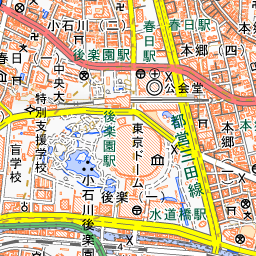
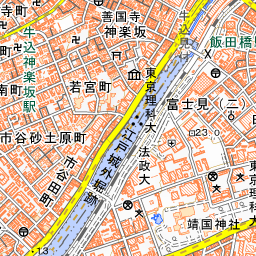
The entrances are the West Gate and East Gate. The West Gate is a 3-minute walk from Exit C3 of Iidabashi Station on the Toei Oedo Line. The East Gate is a 5-minute walk from the West Exit of Suidobashi Station on the JR Sobu Line. Entering through the West Gate brings visitors right in front of a weeping cherry tree. According to the garden's layout, passing from the inner garden through the Karamon Gate and emerging through the dim Kiso Road leads into the grand, expansive view of Daisensui. Tokyo Dome City is located about 260 meters to the east.




Spot location © OpenStreetMap contributors (ODbL)
Open in Google MapsGuides that include this spot (1)
Use asobot while you walk
- See where you are on the map and find spots nearby
- Listen to the guide's audio in course order, one after another (with subtitles)
- Walk to the next spot while following the map
Open on your phone
Scan to open this spot in asobot on your phone.