
Seigaku-in
Japanese: 清学院
Sakai Ward, Sakai, Osaka
This information was written by AI and may contain mistakes. Please check official sources for opening hours, fees, and other details before you go.
Found a mistake? Let us know with “✏️ Something's wrong” on this spot's screen in asobot →
🎧 Audio guide(1:09)
In short
A building with a history as a temple of Shugendo, located at the northern edge of Sakai's moat-encircled urban area, and now open to the public as the "Sakai City Machiya Historical Museum Seigaku-in." From the late Edo period to the early Meiji period, it was also used as a terakoya (private temple school) called "Seikodo," and Kawaguchi Ekai, who was born in nearby Kitahatago-cho, attended it at the traditional age of six. Ekai later became the first Japanese person to cross the Himalayas into Tibet in search of Buddhist scriptures.
- Temple Elements Compactly Arranged on a Small Plot: Facing the complex, the Fudo-do hall stands on the left and the gate on the right. While the floor plans of the Fudo-do and the kuri are integrated, only the gabled roof over the Fudo-do section is raised a tier higher, making it appear as an independent building from the outside
- Traces of Shugendo and a Terakoya in the City: This is one of the few surviving buildings among Shugendo facilities operated within urban areas during the Edo period, and also one of the few remaining structures of a terakoya in Sakai's moat-encircled urban area. The Fudo-do hall, kuri (living quarters), and gate were designated as Registered Tangible Cultural Properties of Japan in 2002
- Exhibits Related to Kawaguchi Ekai: Believed to be the only building associated with Kawaguchi Ekai, the facility exhibits materials centered on Ekai as well as terakoya textbooks
History and Highlights
Seigaku-in is a building with a history as a temple of Shugendo, located at the northern edge of Sakai's moat-encircled urban area. In the 1689 map "Sakai Oezu," it is recorded under the name "Yamabushi Seigaku-in." From the late Edo period to the early Meiji period, it was also used as a terakoya (private temple school) called "Seikodo." Today, it is open to the public as the "Sakai City Machiya Historical Museum Seigaku-in."
One of the people who studied here was Kawaguchi Ekai, who was born in nearby Kitahatago-cho. Ekai attended Seikodo at the traditional age of six. He later became a monk of the Obaku sect, and in search of Buddhist scriptures, became the first Japanese person to cross the Himalayas into Tibet. In 1900, he crossed a Himalayan pass into western Tibet, and the following year, became the first Japanese person to reach the Tibetan capital of Lhasa. An account of that journey was later published as "Tibet Ryokoki" (Travels in Tibet).
The buildings were erected in the late Edo period, and the Fudo-do hall, kuri (living quarters), and gate were designated as Registered Tangible Cultural Properties of Japan in 2002.
Viewing and Experience Points
- Temple Elements Compactly Arranged on a Small Plot: Facing the complex, the Fudo-do hall stands on the left and the gate on the right. While the floor plans of the Fudo-do and the kuri are integrated, the gabled roof over the Fudo-do section is raised a tier higher, making it appear as an independent building from the outside. The elements of a temple are compactly gathered within an extremely small urban plot.
- Traces of Shugendo and a Terakoya in the City: This is one of the few surviving buildings among Shugendo facilities operated within urban areas during the Edo period. It is also one of the rare remaining structures of a terakoya in Sakai's moat-encircled city area.
- Exhibits Related to Kawaguchi Ekai: Believed to be the only surviving building associated with Kawaguchi Ekai, the facility exhibits materials centered on Ekai as well as terakoya textbooks.
Walking Tips
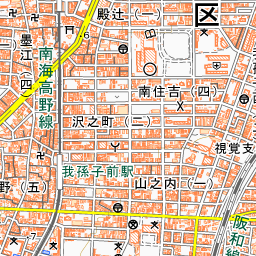
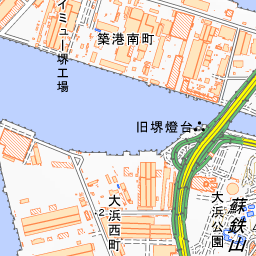
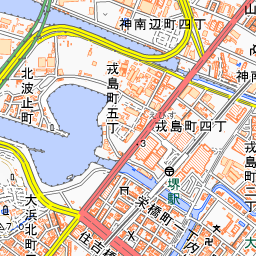
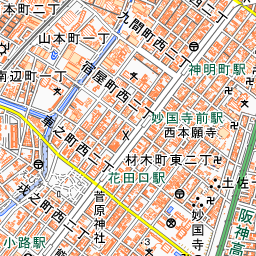
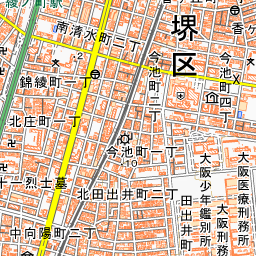
It is 300 meters west of the Takasu-jinja stop on the Hankai Line, and 300 meters east of Shichido Station on the Nankai Main Line. Since there is no parking lot, please visit by train. The Important Cultural Property "Sakai City Machiya Historical Museum Yamaguchi Family Residence" is about 620 meters away, and visiting both makes a great base for walking around the moat area. About 1.1 kilometers further south lies Myokoku-ji Temple.
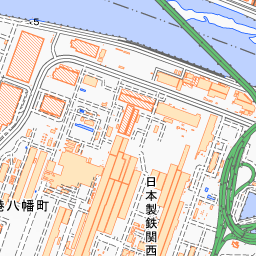
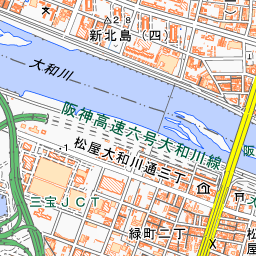
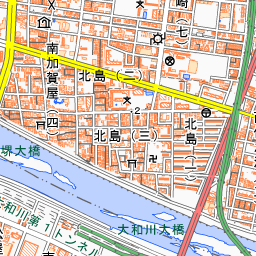
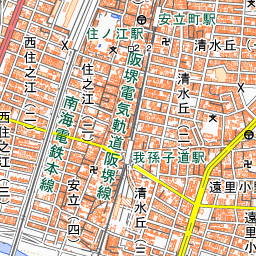


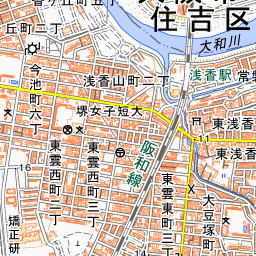
Spot location © OpenStreetMap contributors (ODbL)
Open in Google MapsUse asobot while you walk
- See where you are on the map and find spots nearby
- Listen to the guide's audio in course order, one after another (with subtitles)
- Walk to the next spot while following the map
Open on your phone
Scan to open this spot in asobot on your phone.