 ✨ AI Generated
Cat Street
Japanese: キャットストリート
Shibuya City, Tokyo
This information was written by AI and may contain mistakes. Please check official sources for opening hours, fees, and other details before you go.
Found a mistake? Let us know with “✏️ Something's wrong” on this spot's screen in asobot →
🎧 Audio guide(1:01)
In short
Cat Street is a pedestrian promenade located on a backstreet just off the main avenue connecting Shibuya and Harajuku. Built directly atop a culvert covering the Shibuya River, it is known as a trendsetting center in "Ura-Harajuku" lined with select boutiques, vintage clothing stores, and cafes.
- A path tracing the river's bends: The gentle curves of the path directly preserve the original meandering course of the river.
- Old bridgeposts: Bridgeposts (the main pillars of bridges) from structures that once spanned the river, such as Harajuku Bridge and Sando Bridge on the edge of Omotesando, remain in places.
- A watermill depicted by Hokusai: Katsushika Hokusai's print Watermill at Onden depicts a watermill shed along the river that corresponds to where this street is today.
History and Highlights
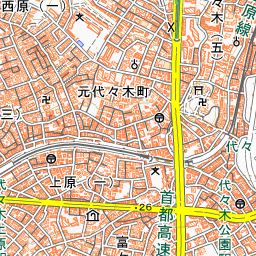
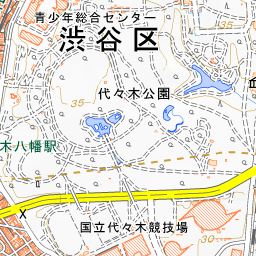
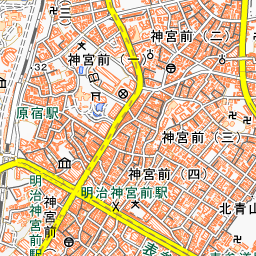
Cat Street is a pedestrian promenade located on a backstreet one block in from the main avenue connecting Shibuya and Harajuku. A section of the "Former Shibuya River Promenade," which continues from near the Jingumae Koban (police box), is popularly known as Cat Street. This area is called Ura-Harajuku. It is a trendsetting area lined with relatively small shops, including select shops, street-level brand boutiques, and vintage clothing stores. There are also many eateries such as cafes.
This street lies directly over the culvert of the Shibuya River. The upstream section north of Shibuya Station was also known as the Ondengawa River. From the Edo period through the mid-Taisho period, numerous watermills were built along the Shibuya River. Katsushika Hokusai's Watermill at Onden depicts a riverside watermill shed that overlaps with present-day Cat Street.
The river was enclosed in a culvert between 1962 and 1963, transforming the underground into a sewer line and the surface into a road. In 1967, playground equipment and greenery were installed atop the culvert, turning it into a children's playground. It is said that people began calling it Cat Street in the 1980s. At that time, the top of the culvert was a children's park where stray cats also lived. There are various theories regarding the origin of the name, such as the abundance of cats or the fact that it was as narrow as a "cat's forehead" (a Japanese idiom for a tiny space). The park was removed in 1996, and the culvert was redeveloped as a municipal ward road.
Viewing and Experiencing Highlights
- A path tracing the river's bends: Pay attention to the gentle curve of the road. The old river's meandering course remains as the contour of the street today.
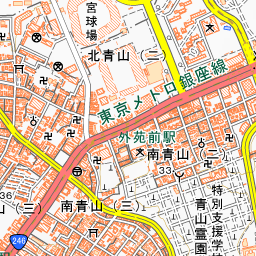
- Look for bridgeposts: Traces of the bridges that once spanned the river remain here and there. At Harajuku Bridge, located where you enter Ura-Harajuku, the bridgeposts that stood on both ends have been preserved. By the side of Omotesando, there is a bridgepost engraved with "Sando Bridge." A little to the south stands the bridgepost of Ondenbashi Bridge, and where the street meets Meiji-dori Avenue, the bridgepost of Miyashitabashi Bridge remains.
- See the bottom of the valley: At the point where the culvert crosses Omotesando, there is the Jingumae 5-chome pedestrian footbridge. Climb up the footbridge and look toward Harajuku Station and Omotesando Station. You will see that this spot forms the bottom of a gentle V-shaped valley.
Walking Tips
It is said that the name Cat Street originally referred to the area south of Omotesando. Crossing Omotesando and heading south, you will find a lively street lined with brand-name shops and cafes. Today, a park built atop the culvert remains only near Meiji-dori Avenue. Flanking this park on the road surface are the remnants of Yachiyobashi Bridge and Nakayoshibashi Bridge. The paving is distinctly different from the surrounding asphalt, so try looking at your feet as you walk. Crossing Meiji-dori Avenue brings you to Miyashita Park in MIYASHITA PARK.

Use asobot while you walk
- See where you are on the map and find spots nearby
- Listen to the guide's audio in course order, one after another (with subtitles)
- Walk to the next spot while following the map
Open on your phone
Scan to open this spot in asobot on your phone.