 ✨ AI Generated
Taima-dera Temple
Japanese: 當麻寺
Katsuragi, Nara
This information was written by AI and may contain mistakes. Please check official sources for opening hours, fees, and other details before you go.
Found a mistake? Let us know with “✏️ Something's wrong” on this spot's screen in asobot →
🎧 Audio guide(1:05)
In short
Taima-dera Temple is an ancient temple located at the eastern foot of Mt. Nijo. It is known as the only temple in Japan where a pair of ancient three-story pagodas, East and West, remains standing together. A legend is passed down about its principal image, the Taima Mandala, stating that Chujo-hime wove it overnight. From the medieval period onward, the temple was revived through devotion to the mandala.
- East Pagoda and West Pagoda: Both are three-story pagodas designated as National Treasures. The East Pagoda, built first, is the oldest surviving structure at the temple.
- Main Hall (Mandala Hall): A hall designated as a National Treasure, housing the Taima Mandala as the principal image inside a massive zushi (shrine cabinet).
- Buddhist Statues of the Kondo (Golden Hall): The seated statue of Miroku Butsu, a National Treasure, is considered Japan's oldest clay statue, and three of the Four Heavenly Kings (Shitenno) guarding it are considered Japan's oldest dry-lacquer statues.
History and Highlights
Taima-dera Temple is situated at the eastern foot of Mt. Nijo. According to the temple's history, it is said to have originated as "Manpozo-in," built in the 20th year of Empress Suiko (612) by Prince Maroko, the younger brother of Prince Shotoku. The prince's grandson, Taima Kunimi, relocated it to the eastern foot of Mt. Nijo, and in the 10th year of Emperor Tenmu (681), the principal image of Miroku Butsu was enshrined in the Kondo, marking what is said to be the beginning of present-day Taima-dera Temple. Today, there is also an estimate placing its founding slightly later, as a clan temple (ujidera) built by the Taima clan.
Its principal image, the Taima Mandala, is a large depiction measuring four meters square that illustrates the scene of the Pure Land of Ultimate Bliss. Legend holds that Chujo-hime, the daughter of Fujiwara no Toyonari, completed the transcription of one thousand volumes of sutras and saw the Pure Land in the setting sun. Becoming a nun at Taima-dera Temple, she is said to have woven this mandala in a single night using thread obtained from lotus stems. The original is a National Treasure and is actually a silk tapestry weave (tsuzure-ori). Currently, a replica known as the "Bunki Mandala" is enshrined in the Mandala Hall as the principal image.
During the Siege of Nara in the 4th year of Jisho (1180), the lecture hall was completely burned down, and the Kondo was heavily damaged. From the medieval period onward, it was revived through faith in the mandala, and the orientation of the temple shifted from south to east. Starting from the 3rd year of Oan (1370), the Pure Land (Jodo) sect came to co-exist alongside the Shingon sect within the temple.
Viewing and Experience Points
- East Pagoda and West Pagoda: Both are three-story pagodas designated as National Treasures. The East Pagoda, built first, is the oldest surviving structure at the temple, while the West Pagoda was built slightly later. When comparing the two, the second story has two intercolumnar bays (hashirama) on the East Pagoda and three on the West Pagoda. The rings of the finial (sorin) on both roofs number eight, rather than the usual nine.
- Main Hall (Mandala Hall): A hall designated as a National Treasure. The inner sanctuary (naijin) retains the style of the Tenpyo era, while the outer sanctuary (gejin) was expanded during the Eiryaku era. A massive zushi (shrine cabinet), also a National Treasure, is placed atop a National Treasure Buddhist altar platform (shumidan) donated by Minamoto no Yoritomo.
- Buddhist Statues of the Kondo: The seated statue of Miroku Butsu in the Kondo is a National Treasure and is considered Japan's oldest clay statue. Three of the Four Heavenly Kings surrounding and guarding it are considered Japan's oldest dry-lacquer statues.
Walking Tips
It is about a 15-minute walk from Taimadera Station on the Kintetsu Minami-Osaka Line. In front of the Kondo stands what is considered Japan's oldest stone lantern, made of tuff from Mt. Nijo. Also in front of the Kondo is the Yogoseki, a stone where En no Gyoja is said to have sat and practiced esoteric rituals. Nakanobo, the oldest sub-temple (tatchu), features the garden "Koguen," which incorporates the East Pagoda as borrowed scenery (shakkei), where about 1,200 tree peony bushes bloom from late April to early May. During the Neri Kuyo Eshiki festival on April 14, the scene of twenty-five bodhisattvas guiding Chujo-hime to the Pure Land is reenacted across the Raigo Bridge set up within the temple grounds. The Katsuragi City Sumo Museum is located about 780 meters to the east.
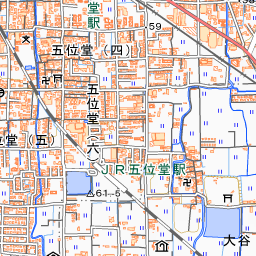
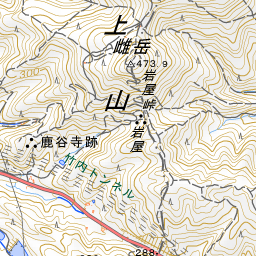
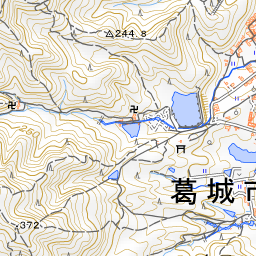

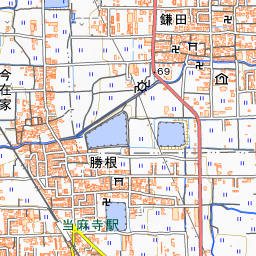

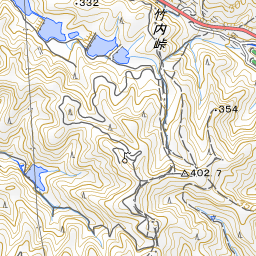
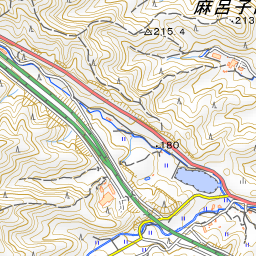
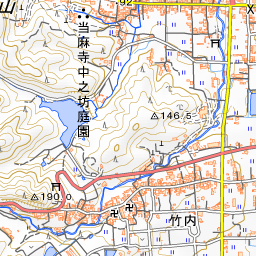
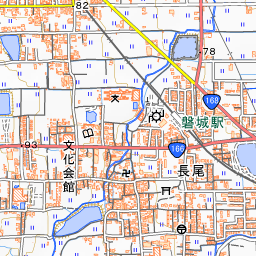
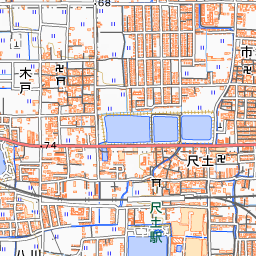
Spot location © OpenStreetMap contributors (ODbL)
Open in Google MapsGuides that include this spot (1)
Use asobot while you walk
- See where you are on the map and find spots nearby
- Listen to the guide's audio in course order, one after another (with subtitles)
- Walk to the next spot while following the map
Open on your phone
Scan to open this spot in asobot on your phone.