 ✨ AI Generated
Hinokuma-dera Temple Site
Japanese: 檜隈寺跡
Asuka Village, Nara
This information was written by AI and may contain mistakes. Please check official sources for opening hours, fees, and other details before you go.
Found a mistake? Let us know with “✏️ Something's wrong” on this spot's screen in asobot →
🎧 Audio guide(1:03)
In short
The Hinokuma-dera Temple Site marks the remains of an ancient Buddhist temple located southwest of the Asuka Palace, considered to have been the clan temple of the immigrant-descended Yamato no Aya clan. Today, it forms the grounds of Omiashi-jinja Shrine, where a thirteen-story stone pagoda from the late Heian period stands. Designated as a National Historic Site, it is one of the components of the "Ancient Capitals of Asuka and Fujiwara."
- Thirteen-story stone pagoda: Although part of it is missing and it now has eleven tiers, it is designated as a National Important Cultural Property.
- A west-facing temple: Archaeological excavations revealed that the temple had an unusual layout facing west.
- Tile-stacked foundation: The lecture hall features the only tile-stacked foundation (kawara-zumi kidan) in the Asuka region.
History and Highlights
The Hinokuma-dera Temple Site is located in the center of the Hinokuma Basin, southwest of the Asuka Palace. Built at a stronghold of immigrant lineages, it was begun by the powerful immigrant-descended Yamato no Aya clan as their clan temple.
The temple's name appears in an entry from the first year of the Shucho era (686) in the Nihon Shoki, confirming that it existed at this location around that time. According to excavations, the main hall (kondo) and west gate were constructed in the latter half of the 7th century, followed by the lecture hall and pagoda at the end of the 7th century.
The defining feature of this temple is its unique layout facing west. The main hall and lecture hall were arranged north and south across the pagoda, enclosed by a corridor extending from the west gate. While topographical constraints are the leading theory for this arrangement, another theory suggests that the Yamato no Aya clan, of immigrant origin, may have taken traditional indigenous Japanese Shinto shrines into consideration. For the foundation of the lecture hall, a tile-stacked foundation (kawara-zumi kidan)—a technique frequently seen in temples of the Baekje kingdom—was used. The lecture hall of this temple is the only structure in the Asuka region to have a tile-stacked foundation. This illustrates that the temple was built against a backdrop of exchanges with East Asia.
In the medieval period, it seems to have also been called Doko-ji. During the Edo period, Motoori Norinaga's travelogue Sugagasa no Nikki depicted a dilapidated scene with only the thirteen-story stone pagoda remaining. In 1907 (Meiji 40), Omiashi-jinja Shrine, which enshrines Achi no Omi, the ancestor of the Yamato no Aya clan, was relocated to the temple site. The shrine is said to have originally been founded around the 5th century. It became a National Historic Site in 2003 (Heisei 15) and is also one of the components of the "Ancient Capitals of Asuka and Fujiwara," inscribed as a World Heritage site in 2026 (Reiwa 8).
Highlights for Viewing and Experiencing
- Thirteen-story stone pagoda: A stone pagoda from the late Heian period standing on the pagoda site, designated as a National Important Cultural Property under the name "Omiashi-jinja Stone Toba." With parts missing, it now has eleven tiers. Try counting the number of tiers.
- Foundation stones on the grounds: Foundation stones remain scattered across the grounds. Try to imagine the scale of the former temple—where the main hall, lecture hall, and pagoda once stood side by side—from beneath your feet.
- Immigrant-style hearth: Approximately 25 meters northwest of the temple, the remains of a pit dwelling with an L-shaped flue hearth, characteristic of immigrant cultures, were discovered. Because no other residential remains were found in the vicinity, it is judged to have been a special building associated with the temple.
Tips for Exploring
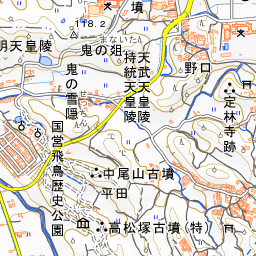
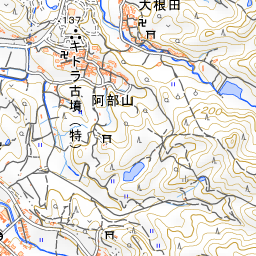
The temple site is located at the tip of a hill. It is about 650 meters south-southeast to Kitora Kofun Burial Mound and about 680 meters north-northeast to Takamatsuzuka Kofun Burial Mound, making it convenient to visit while traveling between the two burial mounds. The area around Kitora Kofun Burial Mound has been developed as the Kitora Tumulus Area of the Asuka Historical National Government Park. As it is within the precincts of a shrine, please walk quietly.
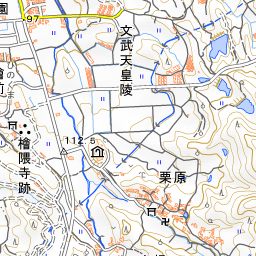
Spot location © OpenStreetMap contributors (ODbL)
Open in Google MapsGuides that include this spot (1)
Use asobot while you walk
- See where you are on the map and find spots nearby
- Listen to the guide's audio in course order, one after another (with subtitles)
- Walk to the next spot while following the map
Open on your phone
Scan to open this spot in asobot on your phone.