 ✨ AI Generated
Kasagi-dera Temple
Japanese: 笠置寺
Kasagi Town, Kyoto
This information was written by AI and may contain mistakes. Please check official sources for opening hours, fees, and other details before you go.
Found a mistake? Let us know with “✏️ Something's wrong” on this spot's screen in asobot →
🎧 Audio guide(1:08)
In short
Kasagi-dera Temple is a temple of the Chisan School of Shingon Buddhism atop Mount Kasagi, which rises on the south bank of the Kizu River. Mount Kasagi, composed entirely of granite, has long been known as a training ground for Shugendo and a mountain of faith. During the Genko War of 1331, it became the anzaisho (temporary imperial residence) of Emperor Go-Daigo, and most of the temple complex burned down.
- Miroku Cliff Buddha and Shogatsu-do Hall: The principal image, the Miroku Cliff Buddha, measures 15.7 meters in height and 12.7 meters in width, but its original appearance was lost to repeated fires of war, and today only part of its halo remains. Shogatsu-do Hall is the hall where the Shushoe service, said to be the origin of the Omizutori ceremony at Todai-ji Temple's Nigatsu-do, was performed
- Kokuzo Cliff Buddha: A 9-meter-tall cliff carving of Kokuzo Bosatsu, said to be the best-preserved cliff Buddha on Mount Kasagi
- Ascetic training circuit (gyoba-meguri): A circuit of about 800 meters in the inner area of the grounds, passing spots such as Tainai-kuguri, the Taiko-ishi, and the Yurugi-ishi. There are slippery areas such as on rocks, so comfortable walking shoes are recommended
History and Highlights
Kasagi-dera Temple is a temple belonging to the Chisan School of Shingon Buddhism, standing atop Mount Kasagi on the south bank of the Kizu River. Its honorary mountain name (sango) is Kasagisan. Mount Kasagi is composed entirely of granite and features numerous bizarre and unusually shaped rocks; it has long been known as a training ground for Shugendo and a mountain of faith.
According to the Konjaku Monogatarishu, an imperial prince of Emperor Tenji was hunting on this mountain when he found himself trapped on a precipitous cliff. He prayed to the mountain deity, escaped danger, and placed his woven hat (kasa) there as a marker, which is said to be the origin of the name "Kasagi." However, the exact beginnings of the temple remain unknown. The main object of worship is the Miroku Cliff Buddha carved into a giant rock, said to have been created toward the end of the Nara period. In the Heian period, as Miroku (Maitreya) worship spread alongside Mappo (Latter Day of the Law) thought, the "Kasagi pilgrimage" arose, drawing visitors ranging from commoners to aristocrats. In 1192 (Kenkyu 3), the monk Jokei from Kofuku-ji Temple moved here and erected various halls, bringing great prosperity to the temple.
During the Genko War of 1331 (Genko 1), the mountain became an anzaisho (temporary imperial residence) for Emperor Go-Daigo and turned into a battlefield, causing most of the temple complex to burn down. By 1868, the temple was left without a resident head priest, until Priest Joei began its reconstruction in 1876.
Sights and Experiences
- Miroku Cliff Buddha and Shogatsu-do Hall: The principal Miroku Cliff Buddha is enormous, measuring 15.7 meters in height and 12.7 meters in width. However, its original appearance was lost due to repeated war damage beginning with the Genko War, and today only part of its halo remains. Shogatsu-do Hall is the hall where the Shushoe service—said to be the origin of the Omizutori ceremony at Todai-ji Temple's Nigatsu-do—was performed. Looking up from below, one can clearly see its kengai-zukuri (cliff-overhang) construction.
- Kokuzo Cliff Buddha: Located along the ascetic training circuit (gyoba-meguri), this is a 9-meter-tall cliff carving of Kokuzo Bosatsu (Akasagarbha Bodhisattva). While there are various theories, tradition says it was carved by Kobo Daishi Kukai, and it is said to be the best-preserved cliff Buddha on Mount Kasagi.
- Ascetic Training Circuit (Gyoba-Meguri): In the inner area of the temple grounds, there is an ascetic training circuit of about 800 meters in circumference. Along the route, visitors encounter spots such as Tainai-kuguri (passing through a narrow rock crevice), the Taiko-ishi (drum rock) that sounds like a drum when struck, the Yurugi-ishi that sways when pushed, and Ari no Towatari (narrow ridge). Climbing onto the Byodo-seki rock offers a panoramic view of the Kizu River and the town of Kasagi.
Travel Tips
It takes about 5 minutes on foot from JR Kasagi Station to the trailhead. By car, you can drive up to the parking lot near the summit. Touring the grounds and completing the ascetic circuit from the main gate takes about one hour. Because there are slippery areas such as on rocks, comfortable walking shoes are recommended. Mount Kasagi is a renowned spot for cherry blossoms—selected as one of "Japan's Top 100 Cherry Blossom Spots"—and autumn foliage. On calm, windless mornings from late October to early December, a sea of clouds can be seen.

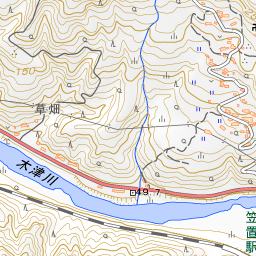


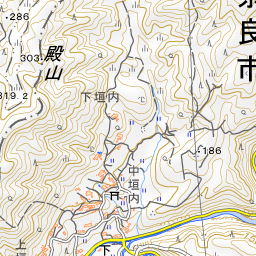
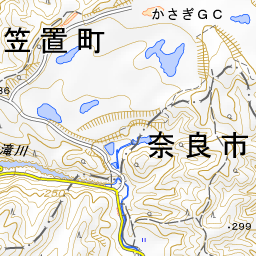
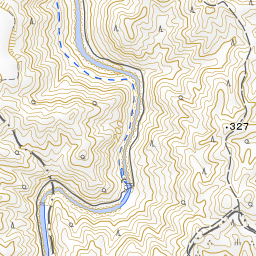
Spot location © OpenStreetMap contributors (ODbL)
Open in Google MapsGuides that include this spot (1)
Use asobot while you walk
- See where you are on the map and find spots nearby
- Listen to the guide's audio in course order, one after another (with subtitles)
- Walk to the next spot while following the map
Open on your phone
Scan to open this spot in asobot on your phone.