 ✨ AI Generated
Hogon-in Temple
Japanese: 宝厳院
Ukyo Ward, Kyoto
This information was written by AI and may contain mistakes. Please check official sources for opening hours, fees, and other details before you go.
Found a mistake? Let us know with “✏️ Something's wrong” on this spot's screen in asobot →
🎧 Audio guide(1:08)
In short
A sub-temple of Tenryu-ji Temple, the head temple of the Rinzai Zen Tenryu-ji branch, which is usually closed to the public and can only be visited during special opening periods in spring and autumn. According to temple records, it was founded in 1461 (Kansho 2); after being destroyed by fire during the Onin War and undergoing various transitions, it was relocated to its current site and restored in 2002 (Heisei 14).
- Shishiku Garden: A stroll garden that incorporates Arashiyama as a borrowed landscape, created by the Zen monk Sakugen Shuryo, who traveled to China twice during the Muromachi period. It is also documented in the Edo-period guidebook to famous gardens, "Miyako Rinsen Meisho Zue"
- Shishi-iwa and Stone Formations: A massive boulder shaped like a lion's face called "Shishi-iwa" (Lion Rock) is placed here, and the garden also depicts "Ryumon-baku" (Dragon Gate Waterfall), where carp swim up a waterfall to become dragons, as well as stones representing the twelve animals of the Chinese zodiac crossing the "Sea of Suffering" of round black stones
- Fusuma Paintings in the Main Hall: In the main hall, completed in 2008 (Heisei 20), there are 58 fusuma (sliding door) paintings titled "Fuga Sansan Sansan Jizai," created by Tamura Noriko. Thirty-three men and women of various ages are depicted against an unexpected vermilion backdrop
History and Highlights
Hogon-in Temple, carrying the mountain name Daikizan, is a sub-temple of Tenryu-ji Temple, the head temple of the Rinzai Zen Tenryu-ji branch. It is usually closed to the public and can only be visited during special opening periods in spring and autumn.
According to temple records, it was founded in 1461 through the financial support of Hosokawa Yoriyuki, who was a kanrei (deputy shogun) of the Muromachi shogunate, welcoming Zen master Shochu Eiko—a third-generation spiritual successor to Muso Soseki, the founder of Tenryu-ji Temple—as its founding abbot. At the time of its founding, the temple was located in what is now Kamigyo Ward and possessed extensive grounds, but it was destroyed by fire during the Onin War. Later, Toyotomi Hideyoshi granted it goshuin-ryo (lands certified by red-seal letters), and the Tokugawa shogunate also protected the temple until the Meiji period. After undergoing various transitions, it was situated within the grounds of Kogen-ji Temple, another sub-temple of Tenryu-ji Temple, starting in 1972, and in 2002, it was relocated to its current site and restored.
The principal image is the Eleven-faced Kannon Bodhisattva, flanked by thirty-three statues of Kannon Bodhisattva and a statue of Jizo Bodhisattva, which according to temple records was revered by Ashikaga Takauji.
Highlights of Appreciation and Experience
- Shishiku Garden: A stroll garden that incorporates Arashiyama as a borrowed landscape, created by the Zen monk Sakugen Shuryo, who traveled to China twice during the Muromachi period. "Shishiku" means "the Buddha preaching," and it is regarded as a garden where one feels the truths of life while walking and listening to the birds' chirping and the sound of the wind. It is also documented in the Edo-period guidebook to famous gardens, "Miyako Rinsen Meisho Zue."
- Shishi-iwa and Stone Formations: A massive boulder shaped like a lion's face called "Shishi-iwa" (Lion Rock) is placed here, and like the Sogenchi Garden of Tenryu-ji Temple, it depicts "Ryumon-baku" (Dragon Gate Waterfall), where carps swim up a waterfall to become dragons. Stones representing the twelve animals of the Chinese zodiac crossing the "Sea of Suffering" of round black stones to listen to the sermon of the Shakyamuni triad stones are also depicted.
- Fusuma Paintings in the Main Hall: In the main hall completed in 2008, there are 58 fusuma (sliding door) paintings titled "Fuga Sansan Sansan Jizai," created by Tamura Noriko. Thirty-three men and women of various ages are depicted against an unexpected vermilion backdrop.
Tips for Walking
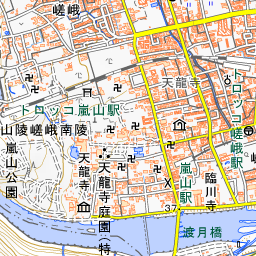
It is a 3-minute walk from Randen Arashiyama Station and a 10-minute walk from JR Saga-Arashiyama Station. Tenryu-ji Temple is about 250 meters to the northwest, Nonomiya-jinja Shrine is about 400 meters to the north, and Togetsukyo Bridge is about 370 meters to the southeast. Because the temple is open for visits only during special opening periods, please check the opening schedule before setting out.
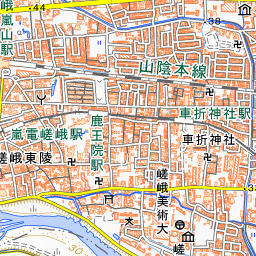
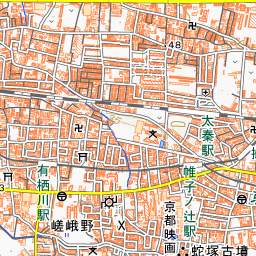
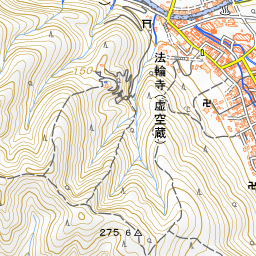
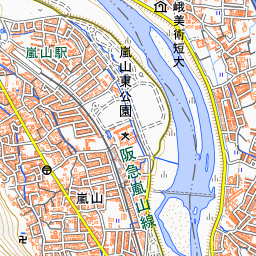
Spot location © OpenStreetMap contributors (ODbL)
Open in Google MapsUse asobot while you walk
- See where you are on the map and find spots nearby
- Listen to the guide's audio in course order, one after another (with subtitles)
- Walk to the next spot while following the map
Open on your phone
Scan to open this spot in asobot on your phone.