 ✨ AI Generated
Sai-ji Temple Ruins
Japanese: 西寺跡
Minami Ward, Kyoto
This information was written by AI and may contain mistakes. Please check official sources for opening hours, fees, and other details before you go.
Found a mistake? Let us know with “✏️ Something's wrong” on this spot's screen in asobot →
🎧 Audio guide(1:06)
In short
The remains of Sai-ji Temple, which once stood in Heian-kyo, designated as a national historic site. Sai-ji was a state-run temple built alongside To-ji Temple upon the relocation of the capital to Heian-kyo in 794 (Enryaku 13), and it stood across Suzaku-oji Avenue facing To-ji. After its five-story pagoda, the sole surviving structure on the grounds, burned down in 1233 (Tempuku 1), it was never rebuilt.
- Kondo-yama, the Site of the Lecture Hall: The earthen mound at the center of Karahashi Saiji Park marks the former site of the Sai-ji Lecture Hall. Recent surveys have also confirmed the lecture hall's podium foundation and base stones
- A Grand Temple Comparable to To-ji Temple: Positioned symmetrically to To-ji Temple with Suzaku-oji Avenue as the axis, Sai-ji was built with structures on the same scale as those of To-ji
- A Statue from Sai-ji Preserved at To-ji Temple: Enshrined in the To-ji Temple Treasure House is a statue of Jizo Bosatsu said to have originally belonged to Sai-ji Temple
History and Highlights
Sai-ji Temple Ruins are the remains of Sai-ji Temple, which once stood in Heian-kyo, and are designated as a national historic site. Sai-ji was a state-run temple built alongside To-ji Temple upon the relocation of the capital to Heian-kyo in 794 (Enryaku 13), praying for the peace and security of the nation. Constructed to the west of Rajomon Gate, it was also referred to as Udaiji (the Right Great Temple) and stood across Suzaku-oji Avenue facing To-ji Temple, which was known as Sadaiji (the Left Great Temple). Its Nandaimon (South Great Gate) opened onto Kujo-oji Avenue, and the temple grounds extended approximately 250 meters from east to west and about 510 meters from north to south.
Historical records state that the monk Shubin was granted Sai-ji Temple in 823 (Konin 14), the very same year Kukai was granted To-ji Temple. Sai-ji was destroyed by fire in 990 (Shoryaku 1), and after its five-story pagoda—the sole surviving structure on the grounds—burned down in 1233 (Tempuku 1), it was never rebuilt.
In 1921 (Taisho 10), the area centering on the earthen mound known as Kondo-yama was designated as a national historic site. Subsequent archaeological excavations confirmed the remains of the Nandaimon gate, Chumon (middle gate), Kondo (main hall), monks' quarters, and refectory, leading to the surrounding areas being added to the historic designation in 1966 (Showa 41).
Sights and Experiences
- Kondo-yama, the Site of the Lecture Hall: The earthen mound at the center of Karahashi Saiji Park marks the former site of the Sai-ji Lecture Hall. It was through excavation findings that this preexisting earthen platform was identified as the lecture hall ruins. Recent surveys have also confirmed the lecture hall's podium foundation and base stones.
- A Grand Temple Comparable to To-ji Temple: Positioned symmetrically across Suzaku-oji Avenue from To-ji Temple, Sai-ji was originally built with structures on the same scale as those of To-ji. Visualizing To-ji Temple today, where the five-story pagoda and lecture hall still stand, makes it easy to imagine the immense size of the lost Sai-ji Temple.
- A Statue from Sai-ji Preserved at To-ji Temple: Enshrined inside To-ji Temple Treasure House is a statue of Jizo Bosatsu said to have originally belonged to Sai-ji Temple. Visiting the treasure house during its seasonal openings in spring and autumn offers a chance to connect with traces of Sai-ji's past.
Walking Tips
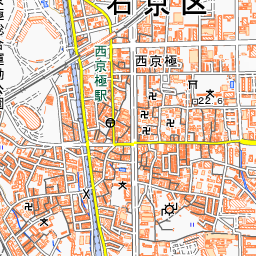
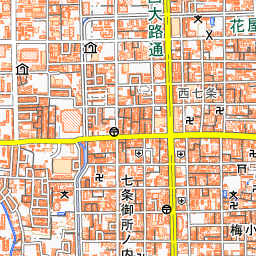
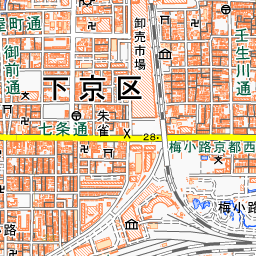
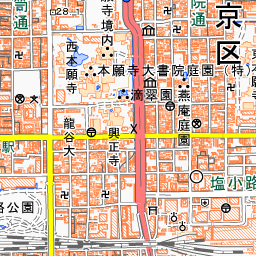
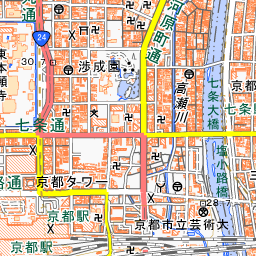
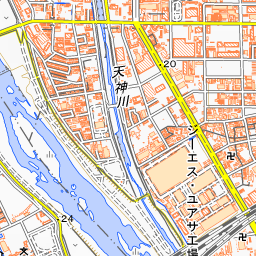
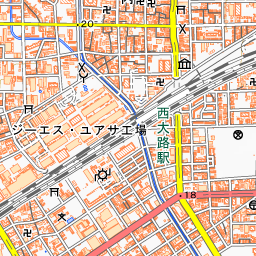
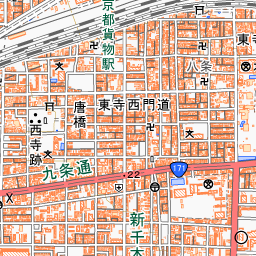
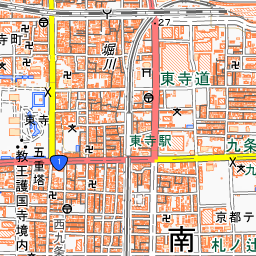
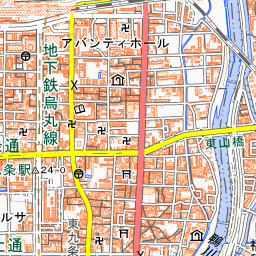
The ruins are located about 450 meters in a straight line east-southeast from Nishi-Oji Station. Walking approximately 900 meters east from Sai-ji Temple Ruins leads to To-ji Temple. Along the way, north of the intersection of Kujo-dori Street and Kyu-Sembon-dori Street, is a small park containing a stone monument marking the Rajomon Gate Ruins. Walking between Sai-ji and To-ji with the site of Rajomon Gate in between allows visitors to experience the expansive southern boundary of ancient Heian-kyo.
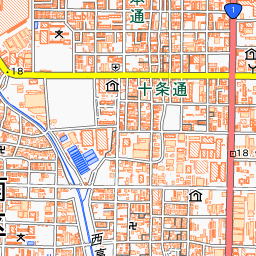
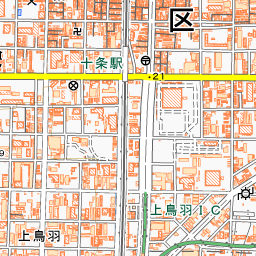
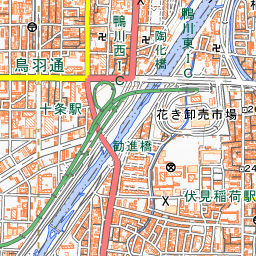
Spot location © OpenStreetMap contributors (ODbL)
Open in Google MapsUse asobot while you walk
- See where you are on the map and find spots nearby
- Listen to the guide's audio in course order, one after another (with subtitles)
- Walk to the next spot while following the map
Open on your phone
Scan to open this spot in asobot on your phone.