 ✨ AI Generated
Kinpusen-ji Temple
Japanese: 金峯山寺
Yoshino Town, Nara
This information was written by AI and may contain mistakes. Please check official sources for opening hours, fees, and other details before you go.
Found a mistake? Let us know with “✏️ Something's wrong” on this spot's screen in asobot →
🎧 Audio guide(1:08)
In short
Kinpusen-ji Temple is the head temple of the Kinpusen Shugen sect, located on Mt. Yoshino. Having flourished as the fundamental training center for Shugendo, it remains the central temple where practitioners of Shugendo and yamabushi (mountain ascetics) from all over Japan gather. Zaodo, the main hall and a National Treasure, boasts a scale second only to the Great Buddha Hall of Todai-ji Temple among ancient wooden structures, and is registered alongside the Niomon gate as a core asset of the World Heritage site.
- Zaodo, a National Treasure: A large hall with a height of 34 meters; the present building was completed around Tensho 20 (1592).
- Hidden Images of Zao Gongen: The main images of worship, three statues of Kongo Zao Daigongen, are hidden Buddhist images (hibutsu), with the central statue towering at over 7 meters tall.
- The Four Cherry Trees of Prince Morinaga: On the grounds stand four cherry trees where Prince Morinaga (also known as Daito-no-miya) is said to have held a final drinking feast, having resigned himself to the fall of Yoshino.
History and Highlights
The area spanning from Mt. Yoshino to Mt. Sanjogatake has been a sacred area known as Mt. Kinpu since ancient times. According to temple tradition, En no Gyoja underwent a thousand days of ascetic practice on Mt. Sanjogatake during the Hakuho period and perceived Kongo Zao Daigongen. En no Gyoja carved its figure into the wood of a wild cherry tree and enshrined it at the summit of Mt. Sanjogatake and on Mt. Yoshino. This is said to be the beginning of Kinpusen-ji Temple. Today, it serves as the head temple of the Kinpusen Shugen sect.
Zaodo, the main hall, is a National Treasure. It is a hiwadabuki (cypress bark-roofed) building, measuring 34 meters in height and 36 meters on each of the four sides of its mokoshi (pent roof). Among ancient wooden structures, its size is second only to the Great Buddha Hall of Todai-ji Temple. Zaodo repeatedly burned down and was rebuilt; the Taiheiki records that it was burned down in Shohei 3 (1348) during an attack by Ko no Moronao. The present building was completed around Tensho 20 (1592). Inside stands Japan's largest zushi (miniature shrine), enshrining the three hidden statues of Kongo Zao Daigongen. The central statue is a giant over 7 meters tall and is not usually on view.
The Niomon gate standing to the north of Zaodo is also a National Treasure, with a height of 20.3 meters. The lower tier of the present structure is estimated to date from the Nanboku-cho period, and the upper tier from the Kosho era, making it the oldest building remaining among the temple's halls. While the main hall faces south, the Niomon faces north. The Niomon is currently undergoing major disassembly and repair work.
Points for Appreciation and Experience
- The Appearance of Zao Gongen: Zao Gongen is considered an appearance of the three Buddhas—Shakyamuni, Avalokiteshvara (Kannon), and Maitreya (Miroku)—manifesting in a fierce, wrathful form. The blue-black color of the entire body expresses compassion and tolerance.
- Sites Associated with Prince Morinaga and Emperor Go-Daigo: The four cherry trees mark the place where Prince Morinaga held a final drinking feast in Genko 3 (1333), having resigned himself to the fall of Yoshino. On the site of the Nancho Myoho-den, there once stood Jitsujo-ji Temple, which was used as a temporary palace (anzaisho) by Emperor Go-Daigo.
- Seasonal Events: From April 10 to 12, when the cherry blossoms are in full bloom, the Hanaku (flower offering) events continue. On the 11th and 12th, the Hanakusen Poe is held, with a daimyo procession. At the Renge-e on July 7, a frog-jumping ceremony (kaeru-tobi) is performed. During the Setsubun-e, an exorcism ritual of demon subjugation is held, with chants of "Fortune in, demons in as well!"
Walking Tips
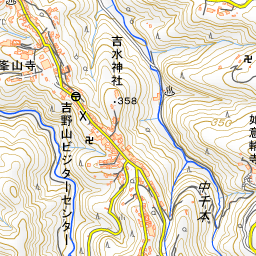
From Yoshinoyama Station on the ropeway to Zaodo, it is about a 10-minute walk. About 200 meters north of the Niomon gate stands Kane-no-Torii, an Important Cultural Property. It is the first of the four gates encountered on the pilgrimage up Mt. Omine and is called the "Hosshinmon." A legend also says it was built using leftover copper from the Great Buddha of Todai-ji Temple. At Zaodo, a goma fire ritual is held every morning as part of ascetic training and is open to the public. From Zaodo to Yoshimizu-jinja Shrine, it is about 300 meters to the east.
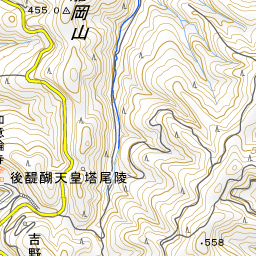
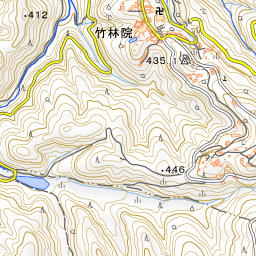
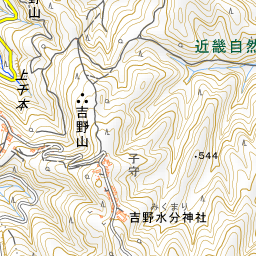
Spot location © OpenStreetMap contributors (ODbL)
Open in Google MapsGuides that include this spot (2)
Use asobot while you walk
- See where you are on the map and find spots nearby
- Listen to the guide's audio in course order, one after another (with subtitles)
- Walk to the next spot while following the map
Open on your phone
Scan to open this spot in asobot on your phone.