 ✨ AI Generated
Heian-jingu Shrine
Japanese: 平安神宮
Sakyo Ward, Kyoto
This information was written by AI and may contain mistakes. Please check official sources for opening hours, fees, and other details before you go.
Found a mistake? Let us know with “✏️ Something's wrong” on this spot's screen in asobot →
🎧 Audio guide(1:10)
In short
A shrine founded in 1895 (Meiji 28), the 1,100th anniversary of the relocation of the capital to Heian-kyo, enshrining Emperor Kanmu, who established Heian-kyo, as its deity; in 1940 (Showa 15), Emperor Komei was also enshrined. The shrine buildings replicate the Chodoin, the main administrative complex of Heian-kyo, at approximately five-eighths scale, and six structures, including the Daigokuden Hall and Otenmon Gate, are designated as Important Cultural Properties.
- Otenmon Gate and Daigokuden Hall: The Otenmon Gate replicates the south main gate of the Chodoin, and the Daigokuden Hall replicates the main hall of the Chodoin, where major state ceremonies were held. To its south, the Soryuro and Byakkoro towers face each other on the left and right
- Heian-jingu Shrine Shin'en Garden: A stroll garden with ponds covering a total area of approximately 33,000 square meters, consisting of four gardens surrounding the shrine buildings. Created by Ogawa Jihei VII and others, it is designated as a national Place of Scenic Beauty. Stepping stones called "Garyu-kyo," made from the bridge piers of Sanjo Ohashi Bridge and Gojo Ohashi Bridge, are placed in the pond of the Central Garden
- Weeping Red Cherry Blossoms and Seasonal Flowers: The weeping red cherry blossoms in the South Garden appear in Tanizaki Jun'ichiro's novel The Makioka Sisters. In May, rabbit-ear irises color the pond of the Central Garden, and in early June, Japanese irises bloom in unison in the West Garden
History and Highlights
Heian-jingu Shrine is a shrine founded in 1895 (Meiji 28) to mark the 1,100th anniversary of the relocation of the capital to Heian-kyo, enshrining Emperor Kanmu, who established Heian-kyo, as its deity. Kyoto had declined following the conflicts at the end of the Edo period and the Transfer of the Capital to Tokyo in the Meiji period. In response, citizens engaged in revitalization projects such as the excavation of the Lake Biwa Canal, and the shrine's founding was planned as the culmination of these efforts, alongside the 1,100th Anniversary Celebration of the Capital Transfer and the 4th National Industrial Exhibition. In 1940 (Showa 15), Emperor Komei, the last emperor to reign from Heian-kyo, was also enshrined.
The shrine buildings replicate the Chodoin, the main administrative complex of Heian-kyo, at approximately five-eighths scale. Rather than surviving structures from the Heian period, they were designed and built at the time of the Meiji founding by architects Kiko Kiyoyoshi and Ito Chuta. Among these, six structures—the Daigokuden Hall, Otenmon Gate, Soryuro, Byakkoro, East Corridor, and West Corridor—were designated as Important Cultural Properties in 2010.
Viewing and Experience Highlights
- Otenmon Gate and Daigokuden Hall: The Otenmon Gate replicates the south main gate of the Chodoin. Passing through it reveals the Daigokuden Hall, which replicates the main hall of the Chodoin where major state ceremonies such as imperial enthronements and New Year greetings were held. To its south, the Soryuro and Byakkoro towers face each other on the left and right.
- Heian-jingu Shrine Shin'en Garden: A stroll garden with ponds covering a total area of approximately 33,000 square meters, consisting of four gardens—East, Central, West, and South—surrounding the shrine buildings. Created by Meiji landscape gardener Ogawa Jihei VII and others, it is designated as a national Place of Scenic Beauty. Stepping stones called "Garyu-kyo" made from the bridge piers of Sanjo Ohashi Bridge and Gojo Ohashi Bridge are placed in the pond of the Central Garden, while the bridge corridor known as Taihei-kaku in the East Garden offers expansive views of the pond and Higashiyama.
- Weeping Red Cherry Blossoms and Seasonal Flowers: The weeping red cherry blossoms in the South Garden appear in Tanizaki Jun'ichiro's novel The Makioka Sisters. Following the spring cherry blossoms, rabbit-ear irises color the pond of the Central Garden in May, and Japanese irises bloom in unison in the West Garden in early June.
Walking Tips
The large torii gate (Otorii) on the approach was erected in 1929 (Showa 4) by the Heian Kosha, the organization responsible for the Jidai Matsuri Festival, and now serves as a landmark for Okazaki Park. It is about a 10-minute walk from Exit 1 of Higashiyama Station on the Subway Tozai Line. Every year on October 22, the date of Emperor Kanmu's relocation of the capital to Heian-kyo, the Jidai Matsuri Festival takes place. In Okazaki, the Kyoto City KYOCERA Museum of Art and The National Museum of Modern Art, Kyoto are also nearby and can be visited together.


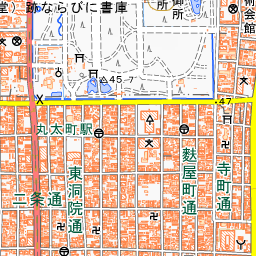


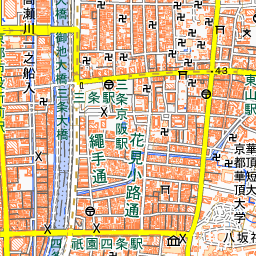


Spot location © OpenStreetMap contributors (ODbL)
Open in Google MapsGuides that include this spot (3)
Use asobot while you walk
- See where you are on the map and find spots nearby
- Listen to the guide's audio in course order, one after another (with subtitles)
- Walk to the next spot while following the map
Open on your phone
Scan to open this spot in asobot on your phone.