
Daruma-ji Temple
Japanese: 達磨寺
Oji Town, Nara
This information was written by AI and may contain mistakes. Please check official sources for opening hours, fees, and other details before you go.
Found a mistake? Let us know with “✏️ Something's wrong” on this spot's screen in asobot →
🎧 Audio guide(1:03)
In short
Daruma-ji Temple is a temple of the Nanzen-ji branch of the Rinzai sect, with the mountain name Kataokasan, located in Oji Town. Based on a story in the Nihon Shoki where Prince Shotoku helped a starving man and buried him with care, a legend arose that the man was an incarnation of Bodhidharma, and that the ancient burial mound (kofun) beneath the main hall is his grave. Within the temple grounds, there is also a statue of Yukimaru, said to have been the prince's pet dog.
- Principal Images: The seated wooden statue of Prince Shotoku and the seated wooden statue of Bodhidharma, which serve as the principal images, are Important Cultural Properties.
- Yukimaru Statue: A statue of a dog said to have understood human speech and chanted Buddhist sutras; Yukimaru, the mascot character of Oji Town, was created based on this statue.
- Roof of the Hojo (Abbot's Quarters): The hojo, built in 1667, features an unusual structure where one side of the roof is hip-and-gable (irimoya) and the other side is gabled (kirizuma).
History and Highlights
Daruma-ji Temple is a temple of the Nanzen-ji branch of the Rinzai sect with the mountain name Kataokasan, located in Honmachi, Oji Town. It is thought to have been founded during the Kamakura period.
The origin of the temple stems from a story in the 21st year of Empress Suiko's reign (613) recorded in the Nihon Shoki. Prince Shotoku gave food, drink, and clothing to a starving man lying by the roadside, but the man passed away. The prince grieved deeply and buried him with great care. It is said that when the grave was inspected several days later, the body had vanished, and the clothing was neatly folded and placed atop the coffin. This starving man later came to be regarded as an incarnation of Bodhidharma. It is handed down that Daruma-ji Tomb No. 3 beneath the main hall is Bodhidharma's grave.
The temple was restored repeatedly after falling into ruin due to oppression by older Buddhist factions and the fires of war caused by Matsunaga Hisahide. During the Muromachi period, Nanpo Sono carried out a large-scale restoration with support from the Ashikaga shogunate. In 2002, inside a small stone chamber in the podium of the main hall, a stone hokyointo pagoda was discovered containing a nested set: a covered container (gosu), a crystal five-ring pagoda (gorinto), and Buddhist relics. The present main hall was consecrated in 2004, and inside is an exhibition room displaying the temple's cultural properties. The seated wooden statue of Prince Shotoku and the seated wooden statue of Bodhidharma, the principal images, are Important Cultural Properties.
Highlights for Viewing and Experiencing
- Yukimaru Statue and Yukimaru's Grave: Yukimaru was Prince Shotoku's pet dog, said to have been capable of understanding human language and chanting sutras. The statue is enshrined to the southwest of the main hall. Daruma-ji Tomb No. 1, located to the northeast, is a round burial mound about 15 meters in diameter and is considered to be Yukimaru's grave. There is also a legend that the stone chamber of this burial mound was a secret underground passage used by the prince to travel from Horyu-ji Temple.
- Roof of the Hojo with Different Sides: The hojo is a building from 1667. It has a rare form where one side of the roof is hip-and-gable and the other is gabled, the reason for which remains unknown.
- Mondo-seki Stones and Chukoki Sekido (Stone Pillar): Near the southwest corner of the main hall are the Mondo-seki (Dialogue Stones), where Prince Shotoku and Bodhidharma are said to have met and exchanged poems. The one that appears to be lying flat is the Daruma Stone, and about 10 meters to the south is the Prince Stone. The octagonal stone pillar (sekido) about 180 cm tall on the north side of the main hall is an Important Cultural Property, carved with records of the temple's restoration.
Walking Tips
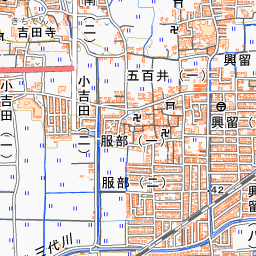
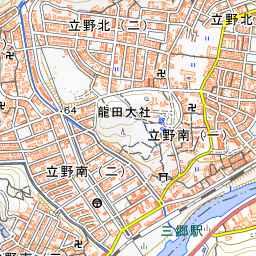
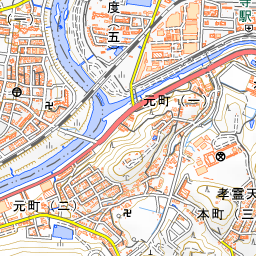
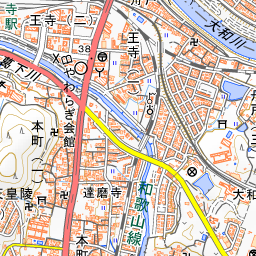
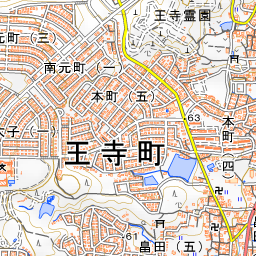
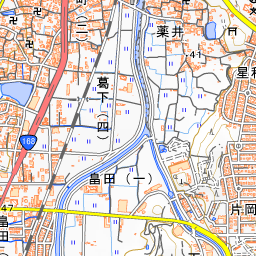
It is about a 15-minute walk from the South Exit of JR Oji Station along "Yukimaru Road," following Yukimaru's paw prints. The main gate (sanmon) faces the south side; if arriving by car, entering through the west gate right next to the parking lot is convenient. Look up at the roof of the sanmon gate to see the tomebutagawara, ornamental cap tiles set on top of the roof tiles. To the west of the main hall stands a stone pagoda said to be the grave of Matsunaga Hisahide, who committed suicide at Shigisan Castle in 1577. Every November, the "All-Japan Daruma-san ga Koronda Championship" is held within the temple grounds.

Use asobot while you walk
- See where you are on the map and find spots nearby
- Listen to the guide's audio in course order, one after another (with subtitles)
- Walk to the next spot while following the map
Open on your phone
Scan to open this spot in asobot on your phone.