 ✨ AI Generated
Goo-jinja Shrine
Japanese: 護王神社
Kamigyo Ward, Kyoto
This information was written by AI and may contain mistakes. Please check official sources for opening hours, fees, and other details before you go.
Found a mistake? Let us know with “✏️ Something's wrong” on this spot's screen in asobot →
🎧 Audio guide(0:57)
In short
Goo-jinja Shrine stands in front of the Hamaguri-gomon Gate of the Kyoto Imperial Palace and enshrines Wake no Kiyomaro no Mikoto and his elder sister, Wake no Hiromushi-hime no Mikoto. In 1886 (Meiji 19), by order of Emperor Meiji, shrine buildings were constructed at the current location, and the shrine was relocated from Jingo-ji Temple on Mount Takao. Revered as a deity protecting the legs and lower back, it is also affectionately known as the "Boar Shrine" (Inoshishi Jinja).
- Guardian Boars (Koma-inoshishi) and Water Purification Basin (Chozuya): There are statues of guardian boars erected in 1890 (Meiji 23), and a bronze boar statue whose snout is said to bring good fortune when rubbed
- Monument for Recovery from Leg Afflictions (Ashiwae Nangi Kaifuku no Hi): Visitors pray for recovery from illnesses and injuries of the legs and lower back by standing on the foot-shaped stones or rubbing the monument
- Bronze Statue of Wake no Kiyomaro and Sazare-ishi Stone: There is a bronze statue commemorating the 1,200th anniversary festival of Kiyomaro, and a sazare-ishi stone, sung of in the national anthem "Kimigayo," measuring 3 meters wide and 2 meters high
History and Highlights
Goo-jinja Shrine is a shrine situated directly in front of the Hamaguri-gomon Gate of the Kyoto Imperial Palace, enshrining Wake no Kiyomaro no Mikoto and his elder sister, Wake no Hiromushi-hime no Mikoto. It was originally established within the grounds of Jingo-ji Temple on Mount Takao in western Kyoto as a shrine dedicated to the spirit of Wake no Kiyomaro, where it was known since ancient times as "Goho Zenjin."
In 1851, toward the end of the Edo period, Emperor Komei praised Kiyomaro's achievements and bestowed upon him the divine title "Shoichii Goo Daimyojin." In 1874, it was renamed "Goo-jinja Shrine" and designated a special government shrine (Bekkaku Kanpeisha). In 1886, by order of Emperor Meiji, shrine buildings were constructed at the current location, and the shrine was relocated from Jingo-ji Temple. At this time, Hiromushi-hime was also enshrined alongside him, becoming a principal deity in 1915.
Kiyomaro had the tendons in his legs cut by Dokyo and was exiled to the remote mountains of Kyushu. According to legend, as many as 300 wild boars appeared from the mountains along the way to protect and guide him, and the paralysis in his legs that troubled him was miraculously cured, allowing him to stand and walk again. Because of this legend, the shrine is revered for protecting the legs and waist, and is affectionately known as the "Boar Shrine" (Inoshishi Jinja).
Sights and Activities
- Guardian Boars (Koma-inoshishi) and Water Purification Basin (Chozuya): Erected in 1890, statues of guardian boars stand on the shrine grounds. It is said that rubbing the snout of the bronze boar statue at the water purification basin brings good fortune.
- Monument for Recovery from Leg Afflictions (Ashiwae Nangi Kaifuku no Hi): This monument is located to the right of the main hall, near a sacred ogatamanoki tree (magnolia compressa). Visitors pray for recovery from illnesses and injuries of the legs and lower back by standing on the foot-shaped stones or rubbing the monument.
- Bronze Statue of Wake no Kiyomaro and Sazare-ishi Stone: On the north side of the grounds stands a bronze statue erected in 1998 to commemorate the 1,200th anniversary of Kiyomaro's passing. There is also a sazare-ishi (conglomerate rock), which is sung of in the Japanese national anthem "Kimigayo," forming a massive boulder measuring 3 meters wide and 2 meters high.
Walking Tips
It is about a 7-minute walk north from Marutamachi Station on the Karasuma Subway Line. Since the Hamaguri-gomon Gate of the Kyoto Gyoen National Garden is right in front, it is an easy place to stop by along with a stroll through the garden or a visit to the Kyoto Imperial Palace. Highlights of the garden are introduced under "Kyoto Gyoen National Garden," and the palace buildings are introduced under "Kyoto Imperial Palace."


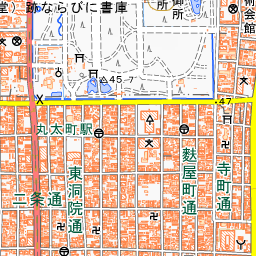


Spot location © OpenStreetMap contributors (ODbL)
Open in Google MapsUse asobot while you walk
- See where you are on the map and find spots nearby
- Listen to the guide's audio in course order, one after another (with subtitles)
- Walk to the next spot while following the map
Open on your phone
Scan to open this spot in asobot on your phone.