 ✨ AI Generated
Kitora Kofun Burial Mound
Japanese: キトラ古墳
Asuka Village, Nara
This information was written by AI and may contain mistakes. Please check official sources for opening hours, fees, and other details before you go.
Found a mistake? Let us know with “✏️ Something's wrong” on this spot's screen in asobot →
🎧 Audio guide(1:05)
In short
Kitora Kofun Burial Mound is a small circular mound about 14 meters in diameter, built between the late 7th and early 8th centuries in Abeyama, Asuka Village. The stone chamber murals are designated as a National Treasure, and the astronomical chart on the ceiling is regarded as the oldest surviving example in East Asia. It is one of the component assets of the World Heritage property "Ancient Capitals of Asuka and Fujiwara."
- Burial Mound Viewing Plaza: Offers an unbroken view of the two-tiered circular mound restored to its ancient dimensions following archaeological excavations.
- Shijin-no-Yakata: The basement exhibition room lets visitors learn about Kitora Kofun Burial Mound and ancient Asuka through high-definition video and a full-scale stone chamber model.
- Original Murals: The murals, removed from the stone chamber for conservation, are opened to the public on the first floor of Shijin-no-Yakata for limited periods.
History and Highlights
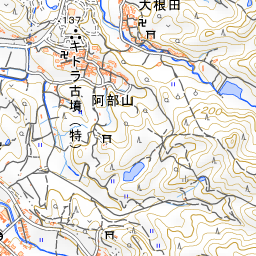
Kitora Kofun Burial Mound is a circular tumulus built between the late 7th and early 8th centuries, and is the second continental-style tomb with murals discovered in Japan, following Takamatsuzuka Kofun Burial Mound. It is situated halfway up the mountainside leading toward Abeyama past the settlement of Hinokuma. It has a two-tiered construction, with a diameter of 9.4 meters for the upper tier and 13.8 meters for the lower tier.
The clue leading to its discovery was a tip from a local resident right after the discovery of the Takamatsuzuka Kofun Burial Mound murals, reporting that there was a similar mound nearby. In 1983, a fiberscope exploration revealed a mural believed to depict Genbu (the Black Tortoise) on the back wall of the stone chamber. In 1998, Seiryu (the Azure Dragon), Byakko (the White Tiger), and an astronomical chart were confirmed, and in 2001, Suzaku (the Vermilion Bird) on the south wall and figures of the twelve Chinese zodiac signs were verified. It was designated as a national Historic Site in 2000, subsequently elevated to a Special Historic Site, and in 2019 its murals were designated as a National Treasure. It is also one of the component assets of the World Heritage property "Ancient Capitals of Asuka and Fujiwara."
The murals are painted on plaster applied to the stone chamber. Since they were found to be so fragile that they would eventually collapse if left in place, Japan's first full-scale detachment process began in August 2004. The burial mound was sealed with the same type of stone as the stone chamber, backfilled, and restored to its ancient dimensions in 2015.
Regarding the origin of its name, one theory says it was called "Kame-Tora Kofun" (Turtle-Tiger Mound) because looking inside revealed murals of a turtle and a tiger. Various candidates have been conjectured for the person interred here, such as Emperor Tenmu's son, Prince Takechi.
Highlights for Viewing and Experiencing
- Soaring Suzaku: While lost at Takamatsuzuka Kofun Burial Mound, Suzaku (the Vermilion Bird) remains here in good condition. It appears as though it is kicking off the ground and spreading its wings, ready to take flight at any moment.
- Ceiling Astronomical Chart: It depicts the celestial equator and the ecliptic (the sun's path), with Chinese-style constellations including the Big Dipper arranged on it. It is said to be the oldest extant astronomical chart in East Asia.
- Beast-Headed, Human-Bodied Zodiac Figures: These figures represent the twelve signs of the zodiac with animal heads and human bodies, arranged with three figures on each of the four walls beneath the Four Guardians. Currently, the presence of the Rat, Ox, Tiger, Horse, Dog, and Boar has been confirmed.
Tips for Exploring
Start by taking in the restored circular mound at the Burial Mound Viewing Plaza. The original murals are shown to the public at the first-floor conservation and management facility of Shijin-no-Yakata for limited periods and require advance application. Acquiring basic knowledge from the high-definition videos and full-scale stone chamber model in the basement exhibition room beforehand makes viewing the actual murals even more engaging.
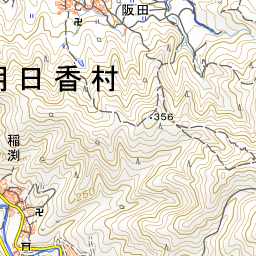
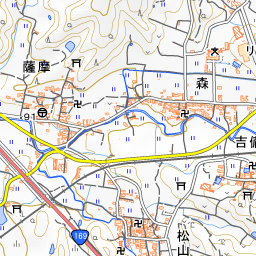
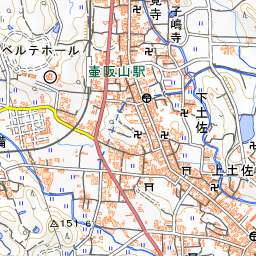
It is a 15-minute walk from Kintetsu Tsubosakayama Station and a 30-minute walk from Kintetsu Asuka Station. It is approximately 640 meters north-northwest to the Hinokuma-dera Temple Site, and about 1.2 kilometers north to Takamatsuzuka Kofun Burial Mound.
Spot location © OpenStreetMap contributors (ODbL)
Open in Google MapsGuides that include this spot (1)
Use asobot while you walk
- See where you are on the map and find spots nearby
- Listen to the guide's audio in course order, one after another (with subtitles)
- Walk to the next spot while following the map
Open on your phone
Scan to open this spot in asobot on your phone.