 ✨ AI Generated
Nara Palace Site Historical Park
Japanese: 平城宮跡歴史公園
Nara City, Nara
This information was written by AI and may contain mistakes. Please check official sources for opening hours, fees, and other details before you go.
Found a mistake? Let us know with “✏️ Something's wrong” on this spot's screen in asobot →
🎧 Audio guide(1:03)
In short
Nara Palace Site Historical Park is a national government park sprawling across the site of Heijo Palace, which was the center of Heijo-kyo, the capital during the Nara period. It is one of the component parts of the World Heritage site "Historic Monuments of Ancient Nara," featuring reconstructions such as Suzakumon Gate and the First Daigokuden.
- Suzakumon Gate: The main gate of Heijo Palace, featuring a two-tiered roof, a width of 25 meters, and a height of 22 meters. It was reconstructed in 1998. Foreign envoys were welcomed and seen off in the plaza in front of the gate.
- First Daigokuden: The largest building in Heijo Palace, with a width of 44 meters and a roof height of 27 meters. Its reconstruction was completed in 2010.
- Toin Teien Garden: A venue where banquets and ceremonies were held; this garden featuring a pond with intricate curves was reconstructed in 1998.
History and Highlights
Nara Palace Site Historical Park is a national government park planned on the Special Historic Site Heijo Palace Site, and is one of the component parts of the World Heritage site "Historic Monuments of Ancient Nara."
Heijo-kyo was established in 710 when Empress Gemmei moved the capital from Fujiwara-kyo. At its center, Heijo Palace brought together the Daigokuden (Audience Hall) and Chodoin where political affairs and ceremonies were held, the Dairi (imperial residence), administrative government offices, and gardens for banquets. Today, anyone can freely stroll through the spacious grounds measuring 1.3 kilometers east to west and 1 kilometer north to south.
After the capital was moved to Nagaoka-kyo, Heijo-kyo became agricultural fields. From the Meiji period through the Taisho period, local figures such as Tanada Kajuro and Mizobe Bunshiro formed a preservation society. Continuous excavation research by the Nara National Research Institute for Cultural Properties began in 1959 (Showa 34), and in 1961 (Showa 36), a plan to build a railcar inspection depot inside the palace site was cancelled due to public opinion nationwide.
Building reconstructions continue in the park. Suzakumon Gate and Toin Teien Garden were completed in 1998, the First Daigokuden in 2010, Daigokumon Gate in 2022, and the East Tower in March 2026.
Heijo Palace contains two Daigokuden sites. This is because after Emperor Shomu relocated the capital several times and returned to Heijo-kyo in 745, a new Daigokuden was built on the east side of the previous one.
Viewing and Experience Points
- Plaza in front of Suzakumon Gate: Suzakumon Gate is the main gate of Heijo Palace, featuring a two-tiered roof, a width of 25 meters, and a height of 22 meters. In the Nara period, the plaza in front of the gate was used to receive and see off foreign envoys, as well as for utagaki gatherings where large crowds congregated to sing and dance. At New Year, the Emperor would sometimes come to the gate to celebrate.
- First Daigokuden and Daigokumon Gate: The Daigokuden is the largest building in Heijo Palace, measuring 44 meters in width and 27 meters in roof height, and served as the venue for important ceremonies such as imperial enthronements. On the roof of Daigokumon Gate, which stands at its south front, sit shibi (ornamental ridge-end tiles) made of bronze covered in multiple layers of gold leaf, each about 1.5 meters tall.
- Excavation Site Exhibition Hall: A facility consisting of three buildings where excavated remains can be viewed in their original state. Visitors can see the post-hole traces of buildings that were rebuilt four times during the Nara period, as well as a large excavated well.
Tips for Walking
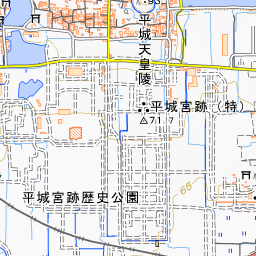
The park is easy to navigate by using Suzakumon Plaza in the south and the First Daigokuden compound in the north as your main axis. At Suzakumon Plaza, the Heijo Palace Izanai-kan is located on the east side across Suzaku-oji Avenue. In the eastern area, there is the foundation platform of the Second Daigokuden and the Toin Teien Garden with its intricately curved pond.
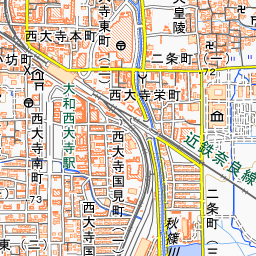
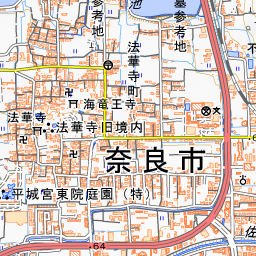
If coming on foot, it takes about 20 minutes from the south exit of Kintetsu Yamato-Saidaiji Station passing through Tamatemon Gate, or about 20 minutes from Kintetsu Shin-Omiya Station. By bus, use the "Suzakumon Hiroba-mae" stop. Hokke-ji Temple and Kairyuo-ji Temple lie to the east of the park, and Heijo-kyo Sakyo Sanjo Nibo Miyaato Garden lies to the southeast, making them easy to visit on the same trip.
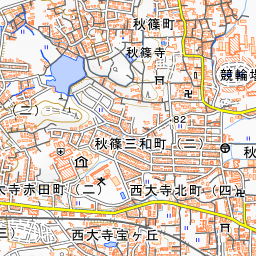
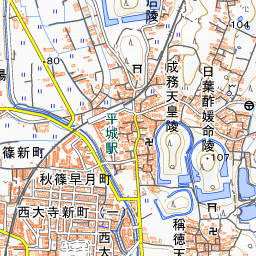

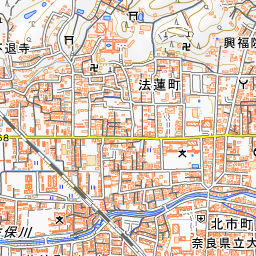
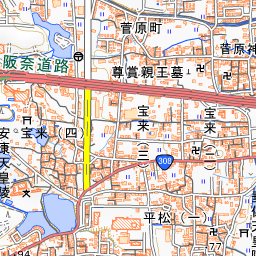
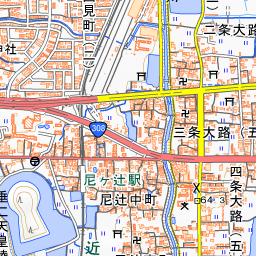
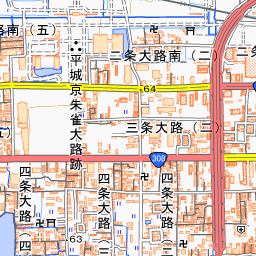
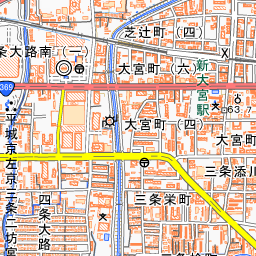

Spot location © OpenStreetMap contributors (ODbL)
Open in Google MapsGuides that include this spot (1)
Use asobot while you walk
- See where you are on the map and find spots nearby
- Listen to the guide's audio in course order, one after another (with subtitles)
- Walk to the next spot while following the map
Open on your phone
Scan to open this spot in asobot on your phone.