 ✨ AI Generated
Kyu-Furukawa Gardens
Japanese: 旧古河庭園
Kita City, Tokyo
This information was written by AI and may contain mistakes. Please check official sources for opening hours, fees, and other details before you go.
Found a mistake? Let us know with “✏️ Something's wrong” on this spot's screen in asobot →
🎧 Audio guide(1:01)
In short
Kyu-Furukawa Gardens is a garden that makes use of the slopes and lowlands of the Musashino Plateau, consisting of a Western-style residence, a Western-style garden, and a Japanese garden. The Western-style residence and garden were designed by Josiah Conder, while the Japanese garden was crafted by the Kyoto landscape gardener Ogawa Jihei VII. It is designated as a national Place of Scenic Beauty as a precious site retaining its original form from the early Taisho era.
- Western-style Residence: Completed in Taisho 6 (1917), this was one of Josiah Conder's final works. Its outer walls are built using Shin-Komatsu stone from Manazuru in the nozurazumi (uncut stone masonry) style.
- Roses of the Western-style Garden: Featuring about 200 rose bushes of approximately 100 varieties, a Rose Festival is held here in spring and autumn.
- Japanese Garden: A strolling pond garden centering on the Shinji-ike Pond, featuring dry waterfalls (karedaki), a large waterfall (otaki), and a central island (nakajima).
History and Highlights
Kyu-Furukawa Gardens is a garden located southeast of Asukayama. Making use of the slope and lowland terrain of the Musashino Plateau, a Western-style residence was built on the slightly elevated hill on the north side, a Western-style garden on the slope, and a Japanese garden in the lowland.
This site was originally the residence of Mutsu Munemitsu, a prominent statesman of the Meiji era. When Munemitsu's second son was adopted by Furukawa Ichibei, the property came into the possession of the Furukawa family.
The garden as it appears today was created by Furukawa Toranosuke, the third head of the Furukawa family. The Western-style residence and Western-style garden were completed in 1917 (Taisho 6). The Japanese garden was completed in 1919 (Taisho 8).
During the Great Kanto Earthquake of Taisho 12 (1923), the Western-style residence did not collapse and accommodated approximately 2,000 evacuees.
After World War II, ownership was transferred to the national government. The Tokyo Metropolitan Government leased the site from the government free of charge and opened it to the public. The Western-style residence was restored by the Otani Art Museum and opened to the public in 1989 (Heisei 1). As a precious site retaining its original form from the early Taisho era, it was designated as a national Place of Scenic Beauty on January 26, 2006 (Heisei 18).
Highlights for Viewing and Experiencing
- Western-style Residence: Designed in the final years of Josiah Conder, who is often called the "father of modern Japanese architecture." Its main structure is made of brick, and its exterior walls feature nozurazumi masonry of Shin-Komatsu stone from Manazuru. It has an unusual layout where the first floor for receiving guests consists of Western-style rooms, while the second floor where the family resided is made up almost entirely of Japanese-style rooms.
- Western-style Garden and Roses: A garden combining symmetrical geometric clipped hedges with stone balustrades, stone stairways, and water basins. Approximately 200 rose bushes of around 100 varieties bloom in spring and autumn, when a Rose Festival is held.
- Japanese Garden: Ogawa Jihei VII was a Kyoto landscape gardener who also worked on Murin-an and the Shin'en garden of Heian Jingu Shrine. Centered on the Shinji-ike Pond, it arranges dry waterfalls, a large waterfall, and a central island. The large waterfall cascades down from a height of over 10 meters. In winter, pine yukitsuri (rope supports) and komomaki (straw wraps), along with frost protection (shimoyoke) for cycads, become seasonal sights.
Tips for Visiting
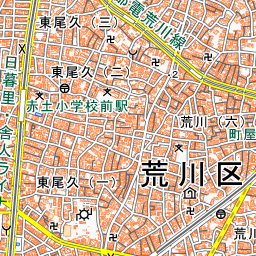
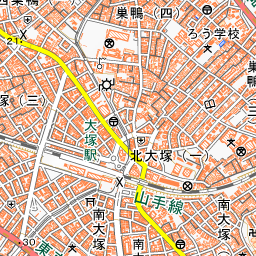
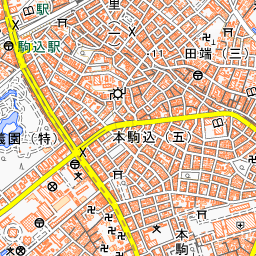
The nearest stations are Kami-Nakazato Station on the JR Keihin-Tohoku Line and Nishigahara Station on the Tokyo Metro Namboku Line, both a 7-minute walk away. It is a 12-minute walk from Komagome Station on the JR Yamanote Line.
Start by viewing the Western-style residence on the hill, then descend the slope through the Western-style garden to proceed to the Japanese garden in the lowland. Because the garden makes use of the undulating topography, there are many stairs and inclines throughout the grounds. If visiting in a wheelchair, please check the accessible route on the barrier-free map.
A separate admission fee is required for the Western-style residence, and its opening days and hours differ from those of the garden. Please check the information provided by the Otani Art Museum.
Asukayama Park is located about 1.1 km to the northwest, and Tabata Bunshimura Memorial Museum is about 1.3 km to the east-southeast.
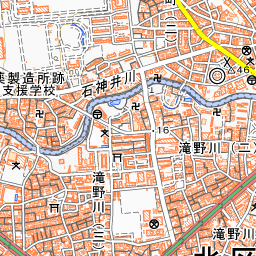
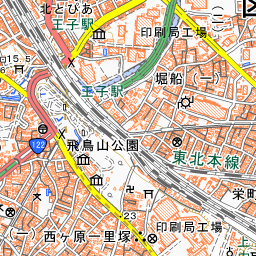

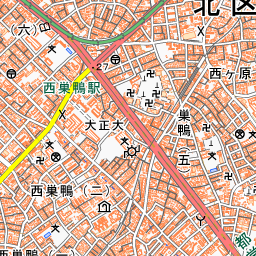
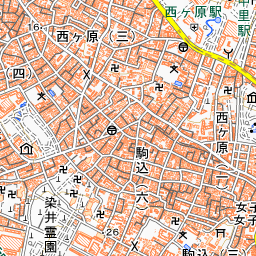
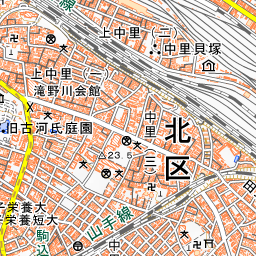
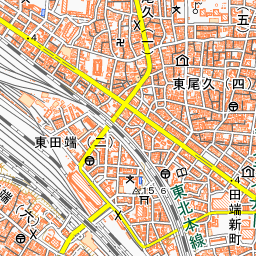



Spot location © OpenStreetMap contributors (ODbL)
Open in Google MapsGuides that include this spot (1)
Use asobot while you walk
- See where you are on the map and find spots nearby
- Listen to the guide's audio in course order, one after another (with subtitles)
- Walk to the next spot while following the map
Open on your phone
Scan to open this spot in asobot on your phone.