 ✨ AI Generated
Asukaniimasu-jinja Shrine
Japanese: 飛鳥坐神社
Asuka Village, Nara
This information was written by AI and may contain mistakes. Please check official sources for opening hours, fees, and other details before you go.
Found a mistake? Let us know with “✏️ Something's wrong” on this spot's screen in asobot →
🎧 Audio guide(1:10)
In short
Asukaniimasu-jinja Shrine is an ancient shrine located in Asuka, Asuka Village. Its exact founding is uncertain, but it is said to have been relocated to its current site on Mt. Torigata in 829, during the early Heian period. The Onda Festival, held every year on the first Sunday of February, is regarded as one of western Japan's three major eccentric festivals.
- Phallic Stones on the Grounds: Phallic stones stand throughout the approach. They are rooted in the belief of welcoming the mountain deity and praying for a warm spring.
- View from the Top of the Stone Steps: Passing through the torii gate and climbing the stone steps offers views of Mt. Nijo, Mt. Unebi, and Amakashi Hill.
- Onda Festival: The shrine's grand festival, featuring characters such as a tengu and otafuku acting out rice-planting rituals.
History and Highlights
The founding date of Asukaniimasu-jinja Shrine is uncertain. The primary enshrined deity is Yae-kotoshironushi-no-mikoto. An entry in the Nihon Shoki from the first year of the Shucho era (686) records that the imperial court presented offerings to the shrine to pray for Emperor Tenmu's recovery from illness.
The shrine was moved to its current location in 829, during the early Heian period. The Nihon Kiryaku records that it was relocated from Mt. Kannabi to Mt. Torigata following an oracle. Because Amaterasu Sume Okami was temporarily enshrined on Mt. Torigata before being enshrined in Ise, this location is referred to as "Motoise," and Amaterasu Sume Okami is enshrined in the sanctuary at the back of the grounds.
The Engishiki (927) lists the shrine as "Asukaniimasu-jinja Shiza" (four deities of Asukaniimasu-jinja Shrine). The Ainame-sai ritual, in which newly harvested rice was offered to major shrines specially revered by the court, applied to only 71 of the 3,132 deities (za) listed at Shikinaisha shrines nationwide. This shrine accounted for four of those.
The shrine has no local parishioners (ujiko); since its inception, generation after generation of the Asuka family has maintained and protected it. The scholar of Japanese literature Orikuchi Shinobu was also a descendant of this family, and a monument bearing his poem stands on the grounds.
The Onda Festival, held annually on the first Sunday of February, is the shrine's grand festival and is considered one of the three major eccentric festivals of western Japan. It is a rice-planting festival praying for the growth and abundance of rice crops as well as the prosperity of descendants. Before and after the ritual, figures such as a tengu, otafuku, an old man (okina), and an ox circulate striking visitors' buttocks with bamboo whisks (sasara) to ward off evil. The tengu and otafuku also act out the motions of rice planting. However, due to reconstruction work on the assembly hall (sanshuden), the festival has been canceled for 2025 and 2026 (Reiwa 7 and Reiwa 8).
Viewing and Experience Points
- Phallic Stones: Phallic stones can be seen throughout the grounds. This stems from a belief in welcoming the mountain deity using prominent phallic stones as sacred vessels (iwashiro) and praying for the arrival of a warm spring.
- Chikara-ishi and Asukai: It is said that good fortune will come if a man can lift the chikara-ishi (strength stone) with his left hand, or a woman with her right hand. The well named Asukai is sung about in the saibara (ancient folk songs) with the verse "One should surely lodge at Asukai."
- Poem Monuments: The grounds contain a Man'yo poem monument and a monument featuring a poem by Orikuchi Shinobu, who wrote under the pen name Shaku Chōkū. It is carved with the poem: "Hosusuki ni yugumo hikuki Asuka no ya / waga furusato wa hi o tomoshikeri" (Over the slender pampas grass where evening clouds hang low in Asuka / in my hometown, lights have been lit).
Walking Tips
After passing through the torii gate and climbing the stone steps, you can see Mt. Nijo, Mt. Unebi, and Amakashi Hill. By proceeding while viewing the phallic stones along the approach and following the official shrine guide map—Asukai well, main hall and worship hall, the rear shrine, and the poem monuments—you can explore the entire grounds.
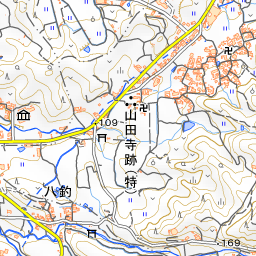
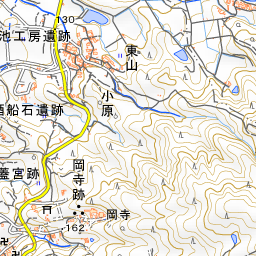
Asuka-dera Temple is about 260 meters to the southwest, the Nara Prefecture Complex of Man'yo Culture is about 270 meters to the south, and the Asuka Historical Museum is about 560 meters to the northeast.

Use asobot while you walk
- See where you are on the map and find spots nearby
- Listen to the guide's audio in course order, one after another (with subtitles)
- Walk to the next spot while following the map
Open on your phone
Scan to open this spot in asobot on your phone.