 ✨ AI Generated
Matsuchiyama Shoden Temple
Japanese: 待乳山聖天
Taito City, Tokyo
This information was written by AI and may contain mistakes. Please check official sources for opening hours, fees, and other details before you go.
Found a mistake? Let us know with “✏️ Something's wrong” on this spot's screen in asobot →
🎧 Audio guide(1:00)
In short
Matsuchiyama Shoden Temple stands on a hill about 10 meters above sea level to the northeast of Senso-ji Temple. Its official name is Honryuin. It is one of the branch temples of Senso-ji Temple and attracts deep devotion as a temple said to bring blessings of good health, marital harmony, and business prosperity. The temple is known for its Daikon Radish Festival, and symbols of daikon radishes and cloth purses (kinchaku) can be seen throughout the grounds.
- Daikon Radishes and Purses: Marks can be found throughout the grounds. The daikon radish is said to represent good health and marital harmony, while the purse represents financial fortune and blessings.
- Tsuijibei (Mud-Cored Wall): A tsuijibei wall depicted in Utagawa Hiroshige's artwork still remains on the temple grounds.
- Daikon Radish Festival: At this festival, held every year on January 7, simmered daikon radish (furofuki daikon) prepared from radishes offered during the New Year is distributed alongside sacred sake (omiki).
History and Highlights
Matsuchiyama Shoden Temple has its temple complex located on a hill about 10 meters above sea level, situated northeast of Senso-ji Temple on the west bank of the Sumida River. Its official name is Honryuin, and it is a branch temple of Senso-ji Temple.
According to temple legends, this mountain is a sacred hill that emerged overnight on September 20 in the third year of Empress Suiko's reign (595). At that time, a golden dragon is said to have descended, circled the mountain, and protected it. In the summer of the ninth year of Empress Suiko's reign (601), when people were suffering from a drought, Daisho Kangiten, an incarnation of the Eleven-Faced Kannon, appeared and saved them. It is said that the temple began when this deity was enshrined as Shoden-sama.
It attracts deep faith for its blessings in good health, marital harmony, and business prosperity. In the main hall, the yoku-yu kito (oil-bathing prayer ritual) is performed every morning to honor Shoden-sama. The main hall suffered damage from disasters, such as earthquakes, and was rebuilt in 1961 (Showa 36). It was built in the style of the former main hall.
Matsuchiyama is a low hill situated in the vast Edo plain, and since ancient times it was beloved by writers and artists as a scenic spot, serving as the subject of numerous paintings and poems. Utagawa Hiroshige also depicted it in works such as Night View of Matsuchiyama and Sanyabori from One Hundred Famous Views of Edo. At the time, it stood at the entrance to the Sanyabori canal, from where pleasure-seekers arriving by boat would proceed to Yoshiwara either on foot or by palanquin.
Highlights for Viewing and Experiencing
- Daikon Radishes and Purses: Symbols of daikon radishes and purses can be spotted in various places across the grounds, also depicted on monuments and paper lanterns. The daikon radish is said to represent good health and marital harmony, while the purse represents the blessings of wealth. Daikon radishes are essential offerings for the worship of Shoden-sama, and visitors can be seen offering them while praying.
- Tsuijibei: A tsuijibei wall depicted in Utagawa Hiroshige's art remains on the grounds. Built in the late Edo period, it extends for a length of 25 meters.
- Daikon Radish Festival: An annual event held on January 7 that has continued since 1974 (Showa 49). Following a Buddhist service, simmered daikon radish prepared from radishes offered during the New Year period is distributed alongside sacred sake.
Walking Tips
It is a 10-minute walk from Asakusa Station on the Tokyo Metro Ginza Line, Toei Asakusa Line, and Tobu Skytree Line. The grounds are located atop the hill. After visiting the main hall, in addition to the tsuijibei wall, be sure to see the hokyointo pagoda, erected in 1781 (Tenmei 1) and designated as a ward cultural property, as well as the Kangi Jizo-son, venerated as a guardian Jizo for child-rearing. It is also one of the stops on the Asakusa Meisho Seven Lucky Gods pilgrimage, with Bishamonten enshrined as an attendant deity to the principal image, Daisho Kangiten. You can combine your visit with Imado-jinja Shrine, about 220 meters to the north, and Sumida Park, about 210 meters to the south. You can also extend your walk from Senso-ji Temple, which is about 800 meters to the southwest.
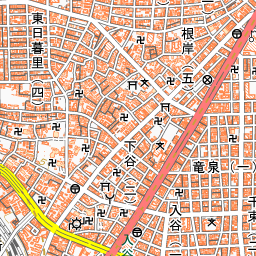
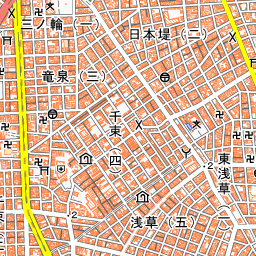
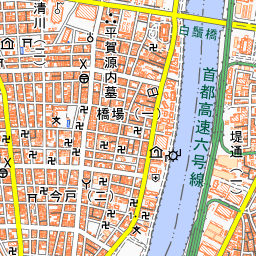


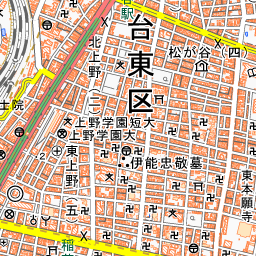

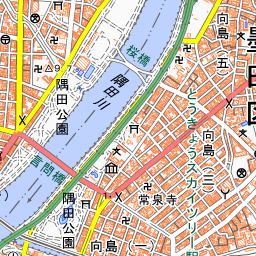
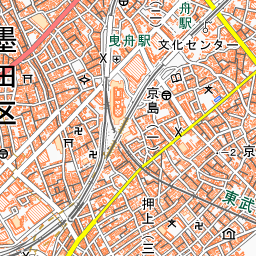
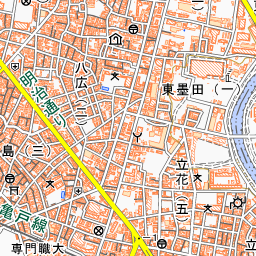

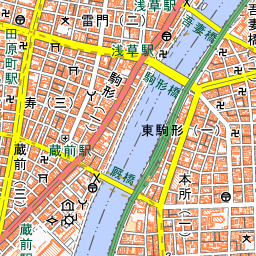
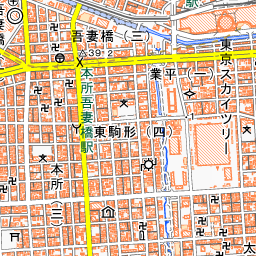
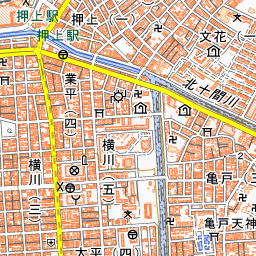

Spot location © OpenStreetMap contributors (ODbL)
Open in Google MapsUse asobot while you walk
- See where you are on the map and find spots nearby
- Listen to the guide's audio in course order, one after another (with subtitles)
- Walk to the next spot while following the map
Open on your phone
Scan to open this spot in asobot on your phone.