 ✨ AI Generated
Sakafune-ishi Ruins
Japanese: 酒船石遺跡
Asuka Village, Nara
This information was written by AI and may contain mistakes. Please check official sources for opening hours, fees, and other details before you go.
Found a mistake? Let us know with “✏️ Something's wrong” on this spot's screen in asobot →
🎧 Audio guide(1:03)
In short
The Sakafune-ishi Ruins are ritual ruins situated on a hill near the Asuka Palace Site. Known for the mysterious Sakafune-ishi Stone on top of the hill and the turtle-shaped stone structure at its foot, the site is believed to have been a facility associated with the rituals of the emperor. It is one of the components of the "Ancient Capitals of Asuka and Fujiwara," which was registered as a World Cultural Heritage site in 2026.
- Sakafune-ishi Stone: Depressions and grooves are carved into the flat surface of a granite rock measuring about 5.5 meters in length.
- Turtle-Shaped Stone Structure: A mechanism where spring water flows from an oval basin through the turtle's snout and collects inside its shell.
- Stone Walls Enclosing the Hill: Stone walls were built along the slopes of the hill, extending up to 700 meters in total length, and parts of them can still be seen today.
History & Highlights
The Sakafune-ishi Ruins are ritual ruins situated on a hill near the Asuka Palace Site. The main highlights are the Sakafune-ishi Stone atop the hill, the turtle-shaped and oval-shaped stone structures at the foot of the hill, and the stone walls surrounding the hill. Based on these structures, the site is believed to have been a facility related to imperial rituals. It is one of the components of the "Ancient Capitals of Asuka and Fujiwara," registered as a World Cultural Heritage site in 2026.
The Sakafune-ishi Stone atop the hill is a massive granite boulder. It measures about 5.5 meters in length, 2.3 meters in width, and 1 meter in thickness. On its flat upper surface are dish-like depressions connected by carved grooves. Its name comes from a legend claiming it was used for sake brewing. It has also been speculated to be a stone used for making medicine; furthermore, because clay pipes and stone flumes seemingly used to channel water were found on the higher ground to the east, it has also come to be thought of as a possible garden facility. Who built it and for what purpose remains a mystery today.
In 1992, stone walls were discovered on the northern slope of the hill. Subsequent surveys revealed that these stone walls surrounded the hill and extended up to 700 meters in total length. An entry from the 2nd year of Empress Saimei (656) in the Nihon Shoki states that stones were piled up on the mountain east of the palace to form a wall, and this was considered to correspond to that record. It has also been pointed out that the surrounding hills might be the remains of Empress Saimei's Futatsuki-no-miya Palace.
In 2000, water conveyance facilities, including the turtle-shaped stone structure, as well as stone paving, were discovered at the bottom of the valley at the northern foot of the hill. Although it is believed to have been an important site for rituals related to the emperor and the state, there is no corresponding description in historical records, leaving what took place there shrouded in mystery.
Highlights for Visitors
- The Turtle Mechanism: Spring water from underground first collects in an oval basin, and then passes through the turtle's snout to gather inside its shell. The turtle's face and limbs have a somewhat humorous appearance.
- Depressions and Grooves of Sakafune-ishi: The Sakafune-ishi Stone, which you reach by climbing the hill, also appears in works by Tezuka Osamu. Ponder what it might have been used for as you gaze at the depressions and grooves.
- The Hill's Stone Walls: In those days, the slopes of the hill were enclosed by stone walls, structured so as to isolate it from its surroundings. Today, you can still view parts of these stone walls.
Tips for Exploring
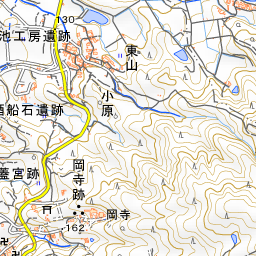
The site is right by the "Man'yo Bunkakan Nishi-guchi" stop on the Asuka Tour Bus. Climbing the hill to see the Sakafune-ishi Stone first and then proceeding down to the turtle-shaped stone structure at the foot follows the same order as the guide's route. Nearby, you will also find the Nara Prefecture Complex of Man'yo Culture about 210 meters to the north-northwest, the Asuka Palace Site about 340 meters to the southwest, and Oka-dera Temple about 630 meters to the southeast. In the garden of the Asuka Historical Museum, elaborate, life-sized replicas of both the turtle-shaped and oval-shaped stone structures are on display.
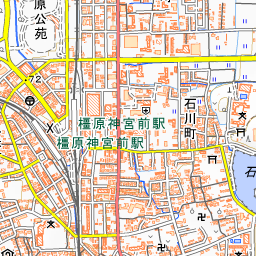
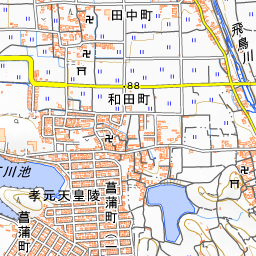
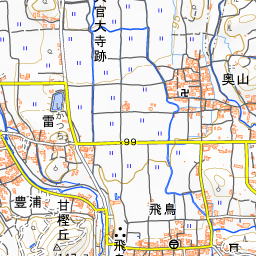
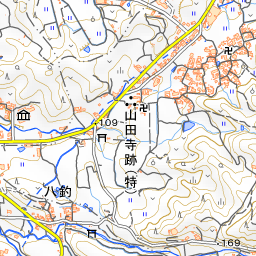

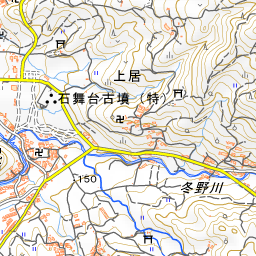
Spot location © OpenStreetMap contributors (ODbL)
Open in Google MapsGuides that include this spot (1)
Use asobot while you walk
- See where you are on the map and find spots nearby
- Listen to the guide's audio in course order, one after another (with subtitles)
- Walk to the next spot while following the map
Open on your phone
Scan to open this spot in asobot on your phone.