 ✨ AI Generated
Yoshimizu-jinja Shrine
Japanese: 吉水神社
Yoshino Town, Nara
This information was written by AI and may contain mistakes. Please check official sources for opening hours, fees, and other details before you go.
Found a mistake? Let us know with “✏️ Something's wrong” on this spot's screen in asobot →
🎧 Audio guide(1:12)
In short
Yoshimizu-jinja Shrine is located in the Naka-Senbon area of Mt. Yoshino and was originally a Shugendo temple lodging called Yoshimizuin. It served as the temporary imperial palace of the Southern Court for Emperor Go-Daigo, and the Senkyo-no-ma room, where Minamoto no Yoshitsune and Shizuka Gozen are said to have hidden, still remains. The shrine grounds offer an expansive view of the cherry blossoms known as "Hitome Senbon" (a thousand trees at a glance).
- A Shoin Said to Be the Oldest: The shoin (study/drawing room hall) is said to be the oldest in the history of Japanese residential architecture and is registered as a World Heritage site.
- Hitome Senbon: From next to the parking area on the grounds, you can take in a panoramic view of the mountain cherry blossoms of Naka-Senbon and Kami-Senbon.
- Hideyoshi's Hanami Headquarters: In 1594 (Bunroku 3), Toyotomi Hideyoshi made this the headquarters for his grand cherry blossom viewing (hanami) banquet. Artifacts and treasures from the eras of Yoshitsune, Emperor Go-Daigo, and Hideyoshi are on display in the shoin.
History and Highlights
Yoshimizu-jinja Shrine was originally a Shugendo temple lodging called Yoshimizuin. It is handed down that it was founded by En no Gyoja during the Hakuho period. Following the separation of Shinto and Buddhism during the Meiji period, it was renamed Yoshimizu-jinja Shrine in 1875 (Meiji 8) because it had been the imperial palace of the Southern Court. The character "Yoshi" (吉) in the shrine's name is written with "tsuchi" (土) above "kuchi" (口). The enshrined deities are Emperor Go-Daigo, Kusunoki Masashige, and Yoshimizu Soshin Hoin.
In 1185 (Bunji 1), Minamoto no Yoshitsune and Shizuka Gozen, fleeing from the pursuers sent by his elder brother Minamoto no Yoritomo, took refuge and lived secretly in Yoshimizuin together with Benkei and others. The shoin retains the "Senkyo-no-ma," said to be the room where the two spent their final time together. When Yoshitsune entered the mountains disguised as a yamabushi (mountain ascetic), he left behind the weapons and tools he carried at Yoshimizuin. The shrine continues to carefully preserve these relics today.
In 1336 (Engen 1), Emperor Go-Daigo moved from Kazan-in in Kyoto to Yoshino and, with the support of Yoshimizu Soshin Hoin, designated Yoshimizuin as the imperial palace of the Southern Court. According to the shrine, Yoshimizu-jinja Shrine is the only surviving temporary imperial palace of the Southern Court. The Throne Room (Gyokuza-no-ma) is a Momoyama-period shoin consisting of an upper 5-tatami-mat room and a lower 10-tatami-mat room, and the partition painting in front is the work of Kano Eitoku.
In 1594 (Bunroku 3), Toyotomi Hideyoshi set up his headquarters at Yoshimizuin and held a magnificent cherry blossom viewing banquet. He stayed for about five days, accompanied by a total of 5,000 people, including Tokugawa Ieyasu, Maeda Toshiie, and Date Masamune. Poetry gatherings, tea ceremonies, and Noh performances were held, and repairs were also made to the Throne Room.
Viewing and Experience Points
- The View of Hitome Senbon: From next to the parking area on the grounds, you can look out across the mountain cherry blossoms of Naka-Senbon and Kami-Senbon. It is also referred to as "Hitome Junen," and there is a legend that taking in this single glance will extend your life by ten years.
- The Shoin in the Early Shoin-zukuri Style: The shoin is said to be a masterpiece representative of the early shoin-zukuri style. The tokonoma (alcove) is built with a wide frontage and shallow depth, and is considered the origin of today's tokonoma. The nailhead covers (kugikakushi) are all made of wood.
- Hokketsumon Gate: A gate remaining in the back garden of the shoin, this is where mountain ascetics prayed for their safe journey before entering Mt. Omine. It is also said that Emperor Go-Daigo looked up at the sky in the direction of Kyoto here every morning and evening.
Walking Tips
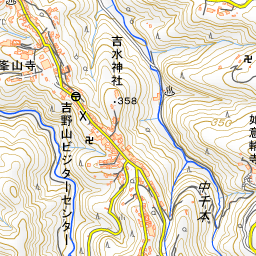
It is about 300 meters east from the Zaodo Hall of Kinpusen-ji Temple. Inside the shoin, relics and treasures from the eras of Yoshitsune, Emperor Go-Daigo, and Hideyoshi are on display. Kano Eitoku's gold-leaf folding screen "Cherry Blossoms," favored by Hideyoshi, can also be seen inside the shoin. Gaze upon the Throne Room while recalling the waka poem said to have been composed here by Emperor Go-Daigo: "Sleeping among the blossoms, how pleasant it is in Yoshino's Yoshimizu, as the sound of water rushing over stones echoes beside my pillow." Continuing about 600 meters southeast from here, you will find Nyoirin-ji Temple, which was a chokugan-ji (imperial prayer temple) of Emperor Go-Daigo.
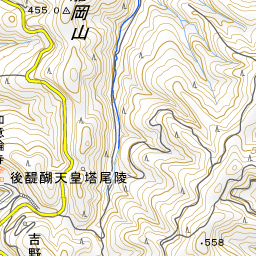
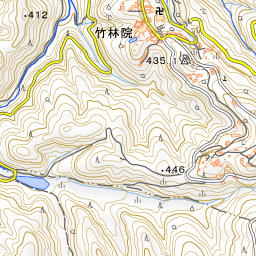
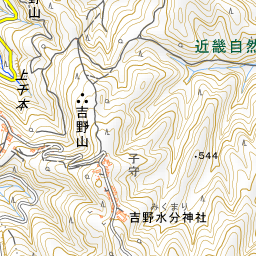
Spot location © OpenStreetMap contributors (ODbL)
Open in Google MapsGuides that include this spot (2)
Use asobot while you walk
- See where you are on the map and find spots nearby
- Listen to the guide's audio in course order, one after another (with subtitles)
- Walk to the next spot while following the map
Open on your phone
Scan to open this spot in asobot on your phone.