
Itabashi-shuku Honjin Site
Japanese: 板橋宿本陣跡
Itabashi City, Tokyo
This information was written by AI and may contain mistakes. Please check official sources for opening hours, fees, and other details before you go.
Found a mistake? Let us know with “✏️ Something's wrong” on this spot's screen in asobot →
🎧 Audio guide(1:11)
In short
This is the former site of the residence of the Iida family, who ran the honjin (official inn for high-ranking officials) at Itabashi-shuku, the first post town on the Nakasendo trail. Itabashi-shuku was one of the "Four Post Towns of Edo" and served as a gateway to Edo. Feudal lords (daimyo) on their sankin-kotai (alternate attendance) processions, as well as samurai on official business for the shogunate, rested at this honjin. Today, no buildings remain, and a stone monument marking the honjin site stands within the Nakajuku shopping street.
- Honjin Site Monument: A monument standing midway along the shopping street. It is not very prominent, so be careful not to miss it.
- Generations of Shinzaemon: The Iida family of the honjin passed down the name "Shinzaemon" from generation to generation.
- Touring Historic Sites of the Post Town: Nearby are Monju-in Temple, the family temple of the Iida family, and the Nakajuku Wakihonjin Site, where Princess Kazunomiya once stayed.
History and Highlights
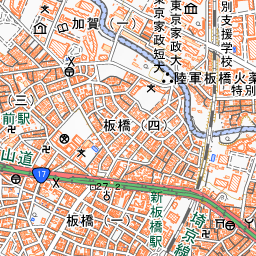
Itabashi-shuku was the first post station on the Nakasendo trail. Together with Shinagawa-shuku on the Tokaido, Senju-shuku on the Oshu Dochu, and Naito-Shinjuku on the Koshu Dochu, it was known as one of the "Four Post Towns of Edo" and served as an entrance to Edo. The post town stretched about 1,700 meters and was divided from north to south into Kamijuku, Nakajuku, and Hiraoshuku. The honjin and wakihonjin (secondary official inn) were located in Nakajuku.
Itabashi-shuku Honjin Site is the site of the residence of the Iida family, whose heads inherited the name "Shinzaemon" over successive generations. Feudal lords traveling for sankin-kotai, samurai on official shogunate business, monks, and court nobles took rests here.
The honjin and wakihonjin were abolished in 1870 (Meiji 3). Today, both the honjin and wakihonjin of Itabashi-shuku have vanished, and no buildings remain. Even so, historical materials passed down within the Iida family of the honjin have been designated as Cultural Properties of Itabashi Ward and are managed by the Itabashi City Local History Museum. Floor plans and old documents from when the honjin was newly built or renovated during the Edo period, as well as sekifuda (nameplates used when feudal lords stayed), still survive.
Viewing and Experiencing Points
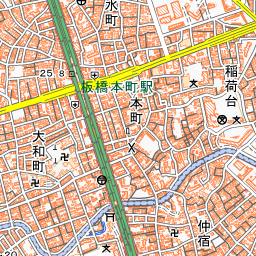
- Honjin Site Monument: Walking from the Nihonbashi side toward the middle of the Nakajuku shopping street, you will find the monument marking the honjin site on your right. It is not very prominent, so take care not to pass by it. Standing in front of the monument, try imagining that the residence where processions of feudal lords rested once stood along this very street.
- The Honjin's Daughter, Iida Shizu: Shizu was born in 1772 (An'ei 1) as the eldest daughter of Iida Shinzaemon, who served as the honjin keeper. Later, she served the seventh daughter of Maeda Yoshinori, the sixth lord of the Kaga Domain. She was fond of waka poetry and skilled in needlework. Grieving his elder sister's death, her younger brother carved her achievements onto a stone monument and erected it at the family temple, Monju-in Temple.
- A Shopping Street That Was the Heart of the Post Town: Nakajuku was the core of Itabashi-shuku, lined with shops since the Edo period. A merchant association was formed in 1949 (Showa 24), and in 1989 (Heisei 1), 88 new street lamps featuring a retro design reminiscent of Itabashi-shuku in days gone by were installed.
Walking Tips
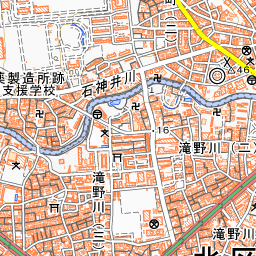
On the walking course in Itabashi Ward, from the honjin site, it is a 3-minute walk to Monju-in Temple, another 2 minutes to the Nakajuku Wakihonjin Site, 3 minutes to "Itabashi" spanning the Shakujii River, and an additional 3 minutes to the Enkiri Enoki Tree.
Monju-in Temple is the family temple of the Iida family, who served as the honjin keepers. The grave of Iida Shizu is located in the cemetery.
The Nakajuku Wakihonjin Site is the former location of the residence of another Iida family, who served as the nanushi (village headman) of Nakajuku. This Iida family inherited the name "Uhee" through generations. Around 5:00 p.m. on November 14, 1861 (Bunkyu 1), the procession of Princess Kazunomiya, traveling down the Nakasendo trail from Kyoto, arrived at Itabashi-shuku, and Princess Kazunomiya entered this wakihonjin.
The Enkiri Enoki Tree is approximately 510 meters north of the honjin site.

Use asobot while you walk
- See where you are on the map and find spots nearby
- Listen to the guide's audio in course order, one after another (with subtitles)
- Walk to the next spot while following the map
Open on your phone
Scan to open this spot in asobot on your phone.