 ✨ AI Generated
Konkai Komyo-ji Temple
Japanese: 金戒光明寺
Sakyo Ward, Kyoto
This information was written by AI and may contain mistakes. Please check official sources for opening hours, fees, and other details before you go.
Found a mistake? Let us know with “✏️ Something's wrong” on this spot's screen in asobot →
🎧 Audio guide(1:05)
In short
Konkai Komyo-ji Temple is a head temple of the Jodo sect, affectionately known to Kyoto locals as "Kurodani-san." It began in 1175, when the 43-year-old priest Honen came down from Kurodani on Mt. Hiei and built a thatched hut at this location, and it is considered the first temple of the Jodo sect. Near the end of the Edo period, Matsudaira Katamori, the lord of the Aizu Domain, established his headquarters here, and the temple is also known for its ties to the Shinsengumi.
- Sanmon Gate and Miei-do Hall: On the upper story of the Sanmon Gate, completed in 1860, hangs an imperial tablet inscribed with "Jodo Shinshu Saisho Mon," brushed by Emperor Gokomatsu. The Miei-do Hall enshrines a seated portrait statue of Honen at the age of 75
- Amida-do Hall and Monju Bosatsu: Amida-do Hall, reconstructed by Toyotomi Hideyori in 1605, is the oldest structure on the temple grounds. To the left of the Miei-do Hall, statues of Monju Bosatsu and his attendants, attributed to Unkei, are enshrined
- Aizu Domain Martyrs Cemetery and Goko Shiyui Amida Butsu: In the hilltop cemetery stands a memorial monument honoring the 237 people who died during the five years from Bunkyu 2 to Keio 3, and the 115 people killed in the Battle of Toba-Fushimi. The "Goko Shiyui Amida Butsu," whose hair, grown long through extended ascetic practice, is piled high in large coils, became a popular topic as the "Afro Buddha"
History and Highlights
Konkai Komyo-ji Temple is a head temple of the Jodo sect, affectionately known to Kyoto locals as "Kurodani-san." Its mountain honorific name is Shiunzan. It is considered the first temple of the Jodo sect, tracing its beginnings to 1175 (Joan 5) when the 43-year-old priest Honen came down from Kurodani on Mt. Hiei to spread the teachings of the Nembutsu and built a thatched hut at this location. Tradition holds that he built the hermitage here because when he recited the Nembutsu atop a stone on the mountain peak, purple clouds filled the entire mountain and light illuminated the surrounding area. Later, Unku, the eighth-generation head priest, served as the precept master to Emperor Gokogon and was bestowed the two characters "Konkai" (Golden Precepts), which is said to have led to the current temple name.
On December 24, 1862 (Bunkyu 2), near the end of the Edo period, Matsudaira Katamori, the lord of the Aizu Domain appointed as Kyoto Military Commissioner (Kyoto Shugoshoku), entered Kyoto leading one thousand vassals and established his headquarters here. The temple cites three reasons for this site being chosen: it sits on a small hill serving as a natural fortress, it is conveniently close to key points being about 2 kilometers from the Kyoto Imperial Palace, and it possesses spacious temple grounds capable of stationing an army of one thousand. The following year, figures such as Kondo Isami and Serizawa Kamo had an audience with Katamori here, and the temple is also known for its deep ties to the Shinsengumi.
Sights and Experiences
- Sanmon Gate and Miei-do Hall: The Sanmon Gate was completed in 1860 (Man'en 1), and hanging prominently on the upper story is an imperial tablet inscribed with "Jodo Shinshu Saisho Mon" brushed by Emperor Gokomatsu. The Miei-do Hall enshrines a seated portrait statue of Honen at the age of 75. The hall was destroyed by fire in 1934 and rebuilt in 1944 (Showa 19).
- Amida-do Hall and Monju Bosatsu: Amida-do Hall, reconstructed by Toyotomi Hideyori in 1605 (Keicho 10), is the oldest structure on the temple grounds and houses the principal image of Amida Nyorai, said to be the final work of Eshin Sozu. To the left of the Miei-do Hall, statues of Monju Bosatsu and his attendants, attributed to Unkei, are enshrined; the Yoshu Fushi, published in 1686 (Jokyo 3), records it as "one of the three great Monju of our land."
- Aizu Domain Martyrs Cemetery and Afro Buddha: To the northeast of the hilltop cemetery lies the Aizu Domain Martyrs Cemetery, featuring a memorial monument honoring the 237 people who died during the five-year period from Bunkyu 2 to Keio 3, as well as 115 soldiers killed in the Battle of Toba-Fushimi. In addition, the "Goko Shiyui Amida Butsu," whose hair is piled high in large coils as a result of long aeons of contemplation and ascetic practice, became a popular topic in the media as the "Afro Buddha."
Walking Tips
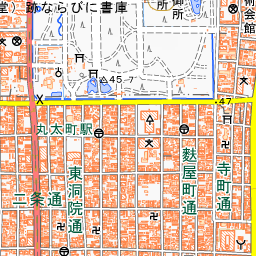
Located on high ground offering an expansive view of Kyoto, the temple is also renowned as a scenic spot for autumn sunsets. It is about a 10-minute walk from the "Okazakimichi" municipal bus stop. Shinsho Gokuraku-ji Temple is located about 210 meters to the north, and Heian-jingu Shrine is about 640 meters to the southwest, making it convenient to visit them together.






Spot location © OpenStreetMap contributors (ODbL)
Open in Google MapsGuides that include this spot (1)
Use asobot while you walk
- See where you are on the map and find spots nearby
- Listen to the guide's audio in course order, one after another (with subtitles)
- Walk to the next spot while following the map
Open on your phone
Scan to open this spot in asobot on your phone.