 ✨ AI Generated
To-ji Temple
Japanese: 東寺
Minami Ward, Kyoto
This information was written by AI and may contain mistakes. Please check official sources for opening hours, fees, and other details before you go.
Found a mistake? Let us know with “✏️ Something's wrong” on this spot's screen in asobot →
🎧 Audio guide(1:08)
In short
Also known as Kyoogokoku-ji Temple, it is the head temple of the Shingon sect. It was a state temple built together with Sai-ji Temple, flanking the Rajomon Gate of Heian-kyo, and in 823 (Konin 14), Emperor Saga entrusted it to Kobo Daishi Kukai, after which it became the fundamental training center for Shingon Esoteric Buddhism. It is the only surviving architectural remnant of Heian-kyo, and was registered as a World Heritage site in 1994 (Heisei 6).
- Five-Story Pagoda: About 55 meters tall, this National Treasure pagoda boasts the title of the tallest wooden structure in Japan. The present pagoda is the fifth generation, rebuilt in 1644 (Kan'ei 21) with the support of Tokugawa Iemitsu
- Three-Dimensional Mandala of the Lecture Hall: Twenty-one statues of Nyorai, Bodhisattvas, Myo'o, and Ten are arranged around Dainichi Nyorai, expressing the teachings of esoteric Buddhism in a visible form
- Kobo-ichi Market: The 21st of every month is the day the Mieku memorial service is held at the Mie-do Hall, and the grounds bustle with the "Kobo-ichi Market," featuring nearly 1,000 stalls
History and Highlights
To-ji Temple, also known as Kyoogokoku-ji Temple, is the head temple of the Shingon sect. Following the establishment of Heian-kyo in the 13th year of Enryaku (794), To-ji Temple and Sai-ji Temple were built flanking the Rajomon Gate, the capital's main entrance. Both were official temples, or state temples, and To-ji Temple is said to have been founded in the 15th year of Enryaku (796).
In the 14th year of Konin (823), twenty-nine years after the relocation of the capital to Heian-kyo, Emperor Saga entrusted To-ji Temple to Kobo Daishi Kukai, who had returned from Tang-dynasty China after studying esoteric Buddhism. At this point, To-ji Temple began its life as the fundamental training center for Shingon Esoteric Buddhism.
Over the course of time, both Sai-ji Temple and the Rajomon Gate were lost, leaving To-ji Temple as the only surviving architectural remnant of Heian-kyo. The Nandaimon (South Gate), Kondo (Main Hall), Kodo (Lecture Hall), and Jikido (Refectory) are aligned along a north-south axis, preserving the temple layout from the time of its founding. In the 6th year of Heisei (1994), it was registered as a World Heritage site.
Viewing and Experience Highlights
- Five-Story Pagoda: Designated as a National Treasure, this pagoda stands approximately 55 meters tall and boasts the title of the tallest wooden structure in Japan. Having burned down four times due to lightning and other causes, the current pagoda is the fifth generation, reconstructed in the 21st year of Kan'ei (1644) with the support of Tokugawa Iemitsu.
- Three-Dimensional Mandala of the Lecture Hall: Kukai designated the Kodo (Lecture Hall) as the central building of esoteric Buddhism. Inside the hall, twenty-one statues of Nyorai, Bodhisattvas, Myo'o, and Ten are arranged around Dainichi Nyorai, expressing the teachings of esoteric Buddhism in a visible form. The current Kodo was rebuilt as a top priority five years after burning down in the 18th year of Bunmei (1486).
- Kondo and Mie-do Hall: The main hall, the Kondo, is a representative building of the Momoyama period rebuilt in the 8th year of Keicho (1603) and is a National Treasure. Surrounding the pedestal of the principal image, Yakushi Nyorai, are the Twelve Heavenly Generals. The Mie-do Hall, built on the site where Kukai had his residence, is also a National Treasure, and meals and tea are still offered to Kobo Daishi there every day.
Walking Tips
It is about a 10-minute walk from Kintetsu To-ji Station, and about a 15-minute walk from the Hachijo Exit of JR Kyoto Station. On the 21st of every month, the Mieku memorial service is held at the Mie-do Hall, and the grounds bustle with the "Kobo-ichi Market," featuring nearly 1,000 stalls. Within the temple grounds, there are also Kanchi-in Temple, an academic academy of the Shingon sect, and the To-ji Temple Treasure House, which opens in spring and autumn; their respective highlights are introduced in their own sections.
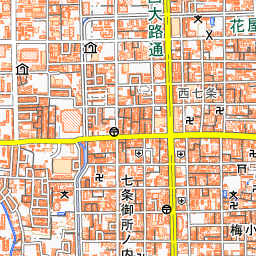
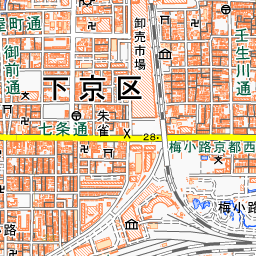
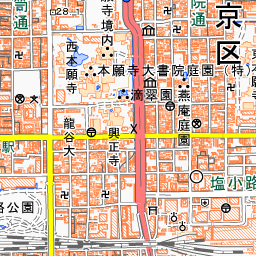
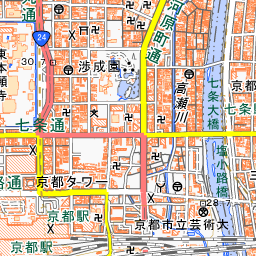
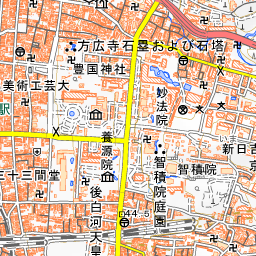
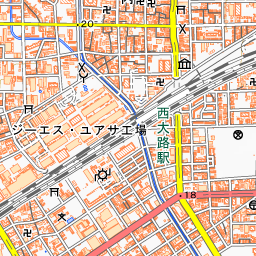
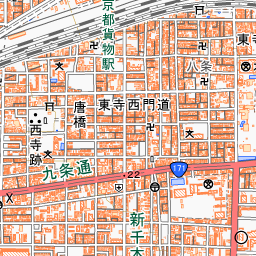
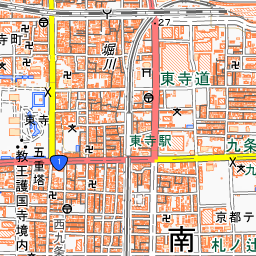
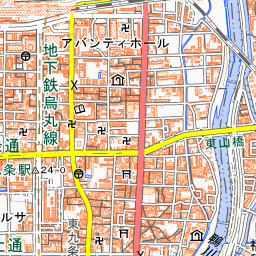
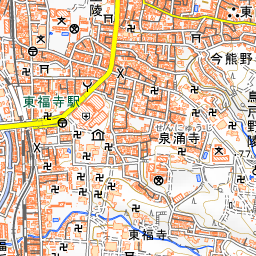
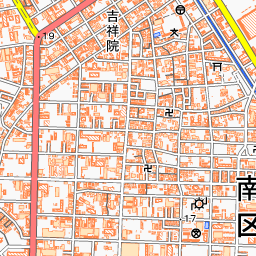
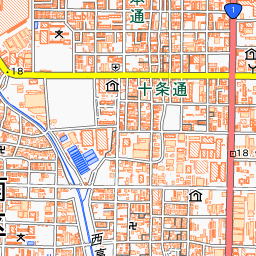
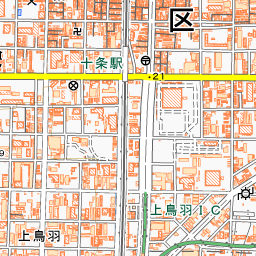
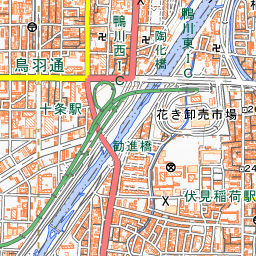
Spot location © OpenStreetMap contributors (ODbL)
Open in Google MapsGuides that include this spot (1)
Use asobot while you walk
- See where you are on the map and find spots nearby
- Listen to the guide's audio in course order, one after another (with subtitles)
- Walk to the next spot while following the map
Open on your phone
Scan to open this spot in asobot on your phone.