 ✨ AI Generated
Murin-an Garden
Japanese: 無鄰菴
Sakyo Ward, Kyoto
This information was written by AI and may contain mistakes. Please check official sources for opening hours, fees, and other details before you go.
Found a mistake? Let us know with “✏️ Something's wrong” on this spot's screen in asobot →
🎧 Audio guide(1:14)
In short
The villa of Yamagata Aritomo, a politician of the Meiji and Taisho periods who also served as Japan's third Prime Minister. Constructed between 1894 (Meiji 27) and 1896 (Meiji 29), it consists of a garden and three buildings: the main house, a Western-style building, and a tea house. Currently a garden owned by Kyoto City, it was designated as a national Place of Scenic Beauty in 1951 (Showa 26).
- The Stream of the Lake Biwa Canal and Higashiyama: Created under Yamagata's direction by Ogawa Jihei VII, known as "Ueji," the garden is said to be a pioneer of modern Japanese gardens in Kyoto. The murmuring water is drawn from the Lake Biwa Canal, and the entire garden is oriented around Higashiyama. More than 50 varieties of moss now spread across the garden
- The Main House and Tea House: The main house has a simple structure, reflecting Yamagata's philosophy of prioritizing the view of the garden from the tatami rooms. The main room of the tea house was modeled after En-nan of the Yabunouchi school, renowned as a tea house favored by Furuta Oribe
- The Western-Style Building of the Murin-an Conference: On April 21, 1903 (Meiji 36), before the outbreak of the Russo-Japanese War, four figures—Yamagata Aritomo, Ito Hirobumi, Katsura Taro, and Komura Jutaro—met on the second floor of the Western-style building to discuss diplomatic policy toward Russia. The Western-style room on the second floor has been preserved just as it was at that time
History and Highlights
Murin-an Garden is a villa built for Yamagata Aritomo, a politician of the Meiji and Taisho periods who also served as Japan's third Prime Minister. Constructed between 1894 and 1896, it consists of a garden and three buildings: the main house, a Western-style building, and a tea house. Currently owned by Kyoto City, it was designated as a national Place of Scenic Beauty in 1951.
The garden was created under Yamagata's direction by Ogawa Jihei VII, who was known by the trade name "Ueji." Moving away from the conventional symbolic style that represented the sea with ponds and islands with rocks, it was designed as a naturalistic garden featuring a lively stream reminiscent of a satoyama (woodland) landscape and a brook, and is said to be a pioneer of modern Japanese gardens in Kyoto. The entire garden is oriented around Higashiyama, which is regarded as the "main mountain" that goes beyond a mere borrowed landscape.
Viewing and Experience Highlights
- The Stream of the Lake Biwa Canal and Lawn: The murmuring water in the garden is drawn from Lake Biwa. Yamagata, who was involved in the Lake Biwa Canal project as a politician, was the first to build a villa in this area and drew water directly from the canal. Reflecting Yamagata's preference for lawn over moss, an open lawn area was created; however, over the years, moss has increased, and more than 50 varieties of moss now spread across the garden.
- The Main House and Tea House: The main house has a simple structure, reflecting Yamagata's philosophy of prioritizing the view of the garden from the tatami rooms. The tea house was relocated here around 1895, and its main room was modeled after En-nan of the Yabunouchi school, renowned as a tea house favored by Furuta Oribe.
- The Western-Style Building of the Murin-an Conference: On April 21, 1903, before the outbreak of the Russo-Japanese War, four figures—Yamagata Aritomo, Ito Hirobumi, Katsura Taro, and Komura Jutaro—met on the second floor of the Western-style building to discuss diplomatic policy toward Russia. This became known as the "Murin-an Conference," and the Western-style room on the second floor has been preserved just as it was at that time.
Walking Tips
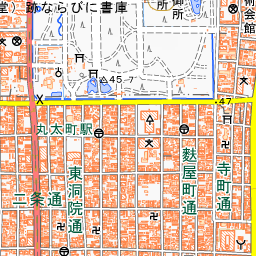
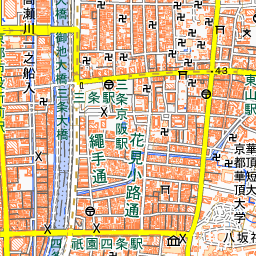
It is about a 7-minute walk from Keage Station on the Subway Tozai Line, and about a 10-minute walk from the city bus stops "Jingu-michi" or "Okazaki Koen / Bijutsukan / Heian Jingu-mae." Higashiyama can be viewed from the large hall of the main house. The Nanzen-ji Temple neighborhood, where Murin-an Garden is located, became an area lined with villas after the opening of the Lake Biwa Canal. Exploring it together with nearby Nanzen-ji Temple, Heian-jingu Shrine, and the Lake Biwa Canal offers a sense of the changes Kyoto underwent during the Meiji period.




Spot location © OpenStreetMap contributors (ODbL)
Open in Google MapsGuides that include this spot (1)
Use asobot while you walk
- See where you are on the map and find spots nearby
- Listen to the guide's audio in course order, one after another (with subtitles)
- Walk to the next spot while following the map
Open on your phone
Scan to open this spot in asobot on your phone.