 ✨ AI Generated
Seiryo-ji Temple
Japanese: 清凉寺
Ukyo Ward, Kyoto
This information was written by AI and may contain mistakes. Please check official sources for opening hours, fees, and other details before you go.
Found a mistake? Let us know with “✏️ Something's wrong” on this spot's screen in asobot →
🎧 Audio guide(1:11)
In short
An ancient temple of the Jodo sect known as "Saga Shaka-do Temple." After the death of Minamoto no Toru, considered the model for Hikaru Genji, his mountain villa was converted into a temple named Seika-ji. The temple began when Seisan, a disciple of Chonen, a monk from Todai-ji Temple, enshrined the statue of Shaka Nyorai that Chonen had brought back from Song-dynasty China in the Shaka-do hall of Seika-ji Temple.
- Standing Statue of Shaka Nyorai (Principal Image): A National Treasure reflecting ancient Indian style. Because silk internal organs (representing the five viscera and six bowels), written prayers, and sutra scrolls were enclosed inside the statue, it is called the "Living Shaka"
- Main Hall and Nio-mon Gate: The Main Hall, rebuilt during the Genroku era through the vows of Tokugawa Tsunayoshi and his birth mother Keishoin, is a designated Tangible Cultural Property of Kyoto Prefecture together with the Nio-mon Gate. From the covered corridor behind the main hall, the Bentendo hall facing the pond can be seen framed like a painting
- Amida Triad Statues in the Reihokan: The former principal images of Seika-ji Temple, designated as a National Treasure. The central seated statue of Amida Nyorai is also called the "Likeness of Hikaru Genji." The Reihokan is open to the public only during limited periods
History and Highlights
Seiryo-ji Temple, also known as "Saga Shaka-do Temple," is an ancient Buddhist temple of the Jodo sect whose mountain name (sango) is Godaisan. On this land, Minamoto no Toru, a prince of Emperor Saga and Minister of the Left, established a mountain villa called Seikakan. After Toru's death, it was converted into a temple and named Seika-ji. Minamoto no Toru is considered the model for Hikaru Genji in The Tale of Genji, and Seiryo-ji Temple is also said to correspond to the "Saga no Mido" temple built by Hikaru Genji.
Chonen, a monk from Todai-ji Temple, traveled to Song-dynasty China, had a replica statue of the Shaka Nyorai (Sakyamuni Buddha) carved, and brought it back to Japan. Chonen intended to establish a grand temple called Dai Seiryo-ji Temple by likening Mt. Atago to China's Mount Wutai, but he was unable to realize this plan. The origin of the temple began when his disciple Seisan enshrined this statue in the Shaka-do hall of Seika-ji Temple. It is also said that Honen, at the age of 24, secluded himself in this temple in search of Buddhist teachings.
Sights and Experiences
- Standing Statue of Shaka Nyorai (Principal Image): This National Treasure is worshipped as a statue that conveys the living appearance of Sakyamuni at age 37, featuring an exotic form reflecting ancient Indian style. Because silk internal organs (representing the five viscera and six bowels), written prayers, and sutra scrolls were found enclosed inside the statue, it is called the "Living Shaka," and more than 50 copies of this statue were made throughout Japan.
- Main Hall and Nio-mon Gate: The Main Hall (Shaka-do), which enshrines the principal image, was rebuilt during the Genroku era through the vows of Tokugawa Tsunayoshi and his birth mother Keishoin. Together with the Nio-mon Gate, it is a designated Tangible Cultural Property of Kyoto Prefecture. From the covered corridor behind the main hall, the Bentendo hall facing the pond can be seen framed like a painting.
- Amida Triad Statues in the Reihokan: The Reihokan (treasure gallery) houses the former principal images of Seika-ji Temple, the Amida Triad statues (National Treasure). The central seated statue of Amida Nyorai was commissioned by Minamoto no Toru during his lifetime and is also called the "Likeness of Hikaru Genji." The Reihokan is open to the public only during limited periods.
Tips for Exploring
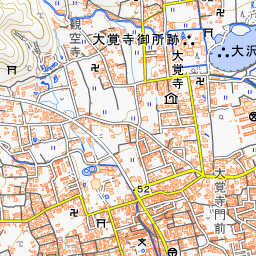
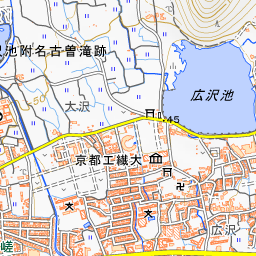
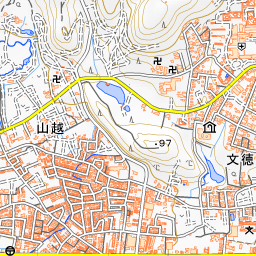
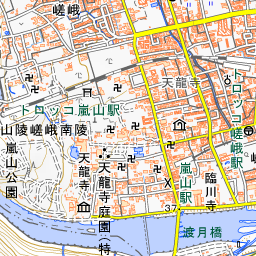
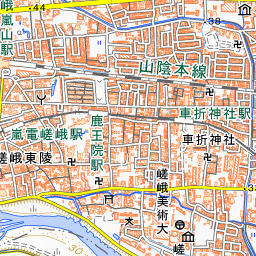
It is about 0.5 kilometers northwest of JR Saga-Arashiyama Station and just a short walk from the "Saga Shakadomae" bus stop. Heading north from Togetsukyo Bridge and passing Tenryu-ji Temple on your left leads to the Nio-mon Gate, which is often called the face of Sagano. Daikaku-ji Temple is located about 700 meters to the northeast, Rakushisha Hermitage about 500 meters to the southwest, and Nonomiya-jinja Shrine about 650 meters to the south. The Otaimatsu torch ritual of the Nehan-e (Nirvana ceremony) on March 15 and the Saga Dainenbutsu Kyogen performances held in the Kyogen-do hall within the precincts in spring and autumn are also well known.
Spot location © OpenStreetMap contributors (ODbL)
Open in Google MapsGuides that include this spot (1)
Use asobot while you walk
- See where you are on the map and find spots nearby
- Listen to the guide's audio in course order, one after another (with subtitles)
- Walk to the next spot while following the map
Open on your phone
Scan to open this spot in asobot on your phone.