 ✨ AI Generated
Konda Hachimangu Shrine
Japanese: 誉田八幡宮
Habikino, Osaka
This information was written by AI and may contain mistakes. Please check official sources for opening hours, fees, and other details before you go.
Found a mistake? Let us know with “✏️ Something's wrong” on this spot's screen in asobot →
🎧 Audio guide(1:07)
In short
A shrine situated to the south of the Kondagobyoyama Kofun Burial Mound, which is regarded as the mausoleum of Emperor Ojin, with Emperor Ojin as its main enshrined deity. Said to have been founded in the late 6th century by order of Emperor Kinmei, it is also said to be the oldest Hachimangu shrine in Japan. It was revered as the tutelary shrine of the Minamoto clan, and Minamoto no Yoritomo repaired the shrine buildings in 1196. Today, the shrine is held dear as a deity of safe childbirth and warding off evil.
- Haiden with visible timber framework: The haiden is an elongated wari-haiden (split worship hall) with an eleven-ken frontage. Because it lacks a ceiling, visitors can look up at the wooden joinery
- National Treasures and the Hojo-bashi Bridge: The treasure house holds two National Treasures: the Chiriji raden kondo-so shin-yo (a portable shrine adorned with gold-plated bronze and mother-of-pearl inlay on a gold-dust sprinkled lacquer ground), said to have been donated by Minamoto no Yoritomo, and the Kondo sukashibori kurakanagu (gilt-bronze openwork saddle fittings). The Hojo-bashi Bridge is the bridge that was crossed when proceeding toward the imperial mausoleum during the autumn procession ritual (togyo)
- The Nandaimon Gate, a remnant of the shrine-temple: The four-legged gate (shikyakumon) standing at the southern entrance is the gate of Naganosan Gokoku-ji Temple, the former jinguji (shrine-temple), and the triple-hollyhock crest (mitsuba-aoi) of the Tokugawa family can be seen on its gable
History and Highlights
Konda Hachimangu Shrine is situated to the south of the Kondagobyoyama Kofun Burial Mound, which is regarded as the mausoleum of Emperor Ojin, who serves as the shrine's main enshrined deity. Said to have been founded in the late 6th century by order of Emperor Kinmei, it is also said to be the oldest Hachimangu shrine in Japan. Located near the imperial mausoleum since ancient times, it has long been responsible for conducting rituals for the tomb.
Initially, the shrine buildings stood in front of the mausoleum. However, it is said that in 1051 during the mid-Heian period, Emperor Go-Reizei constructed the shrine pavilions at the current location and named it Konda Hachimangu Shrine. Later, it was revered as the tutelary shrine of the Minamoto clan, and Minamoto no Yoritomo repaired the shrine buildings in 1196. Ashikaga Yoshinori, the sixth shogun of the Muromachi shogunate, dedicated the "Konda Sobyo Engi," an illustrated handscroll depicting the shrine's origin. Until the Edo period, the shrine stood alongside its jinguji (shrine-temple), Naganosan Gokoku-ji Temple, where Shinto priests and Buddhist monks conducted rituals together. However, most of the temple was demolished during the separation of Shinto and Buddhism in the early Meiji period.
The treasure house preserves National Treasures. These include the Chiriji raden kondo-so shin-yo (a portable shrine adorned with gold-plated bronze and mother-of-pearl inlay on a gold-dust sprinkled lacquer ground), said to have been donated by Minamoto no Yoritomo, and the Kondo sukashibori kurakanagu (gilt-bronze openwork saddle fittings) excavated from the Konda Maruyama Kofun Burial Mound in 1848. The saddle fittings feature openwork dragon motifs in an arabesque style and are believed to have been brought from the Korean Peninsula. Today, the shrine is widely frequented as a guardian deity for safe childbirth and warding off evil.
Sights and Experiences
- Haiden with visible timber framework: The haiden (worship hall) is an elongated wari-haiden (split worship hall) with an eleven-ken frontage. It is believed that Toyotomi Hideyori began its reconstruction and Tokugawa Iemitsu continued and finished the work. Because it lacks a ceiling, visitors can look up to admire the wooden joinery.
- Hojo-bashi Bridge and the autumn procession: The Hojo-bashi Bridge is the bridge that was once crossed when proceeding toward the imperial mausoleum during the autumn festival procession (togyo) on September 15. Because the bridge has aged, the crossing is now made via an adjacent bridge. On the night of the autumn festival, the ritual procession of portable shrines heading toward the mausoleum is still conducted.
- The Nandaimon Gate, a remnant of the shrine-temple: The imposing four-legged gate (shikyakumon) standing at the southern entrance is not an original shrine gate, but the gate of Naganosan Gokoku-ji Temple, the former jinguji. The triple-hollyhock crest (mitsuba-aoi) of the Tokugawa family can be seen on its gable.
Walking Tips
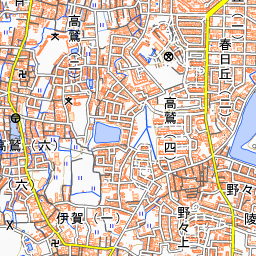
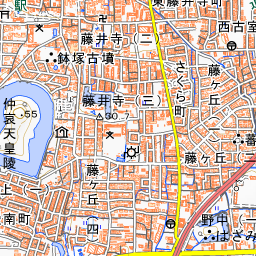
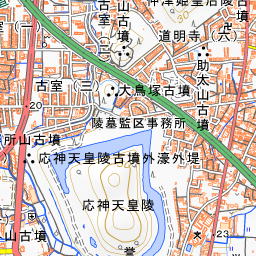
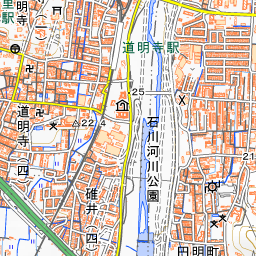
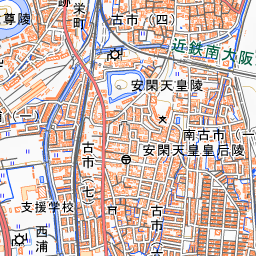
The shrine is approximately a 10-minute walk from Furuichi Station on the Kintetsu Minami-Osaka Line. The shrine grounds are adjacent to the circular rear portion of the imperial mausoleum, and reaching the northern worship point requires leaving the shrine and walking about 20 minutes one way. On the shrine grounds, there is also the Kizaseki stone, where Sugawara no Michizane is said to have visited and prayed during his stay at Domyo-ji Temple. About 1.2 kilometers to the northeast are Domyo-ji Temple and Domyoji Tenmangu Shrine, both of which are associated with Michizane.
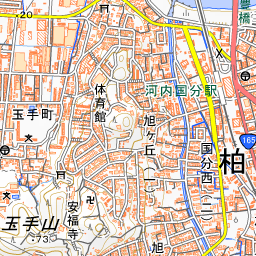
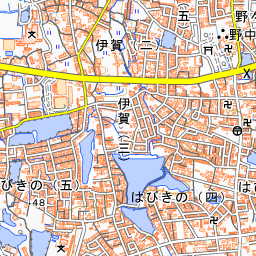
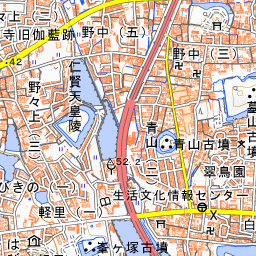

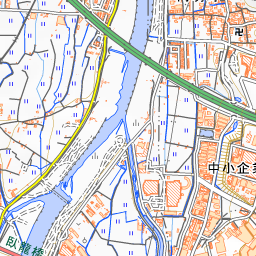
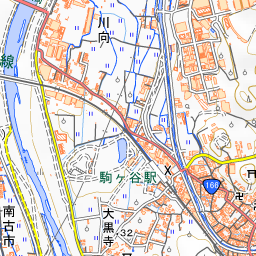
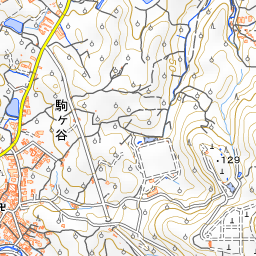
Spot location © OpenStreetMap contributors (ODbL)
Open in Google MapsGuides that include this spot (1)
Use asobot while you walk
- See where you are on the map and find spots nearby
- Listen to the guide's audio in course order, one after another (with subtitles)
- Walk to the next spot while following the map
Open on your phone
Scan to open this spot in asobot on your phone.