 ✨ AI Generated
Minamiza Theatre
Japanese: 南座
Higashiyama Ward, Kyoto
This information was written by AI and may contain mistakes. Please check official sources for opening hours, fees, and other details before you go.
Found a mistake? Let us know with “✏️ Something's wrong” on this spot's screen in asobot →
🎧 Audio guide(1:07)
In short
A theatre standing at the eastern end of Shijo-ohashi Bridge, still standing at the birthplace of kabuki, with the longest history of any theatre in Japan. The "kabuki odori" (kabuki dance) that Izumo no Okuni began on the Shijo riverbed in Kyoto in 1603 (Keicho 8) is said to be the origin of kabuki, and for over 400 years Minamiza Theatre has continued to be a center for various stage performances. The current theatre was constructed in 1929 (Showa 4) in the Momoyama style with hafu (gables), and it is a registered tangible cultural property of Japan.
- The Front Yagura: The section surrounded by a white curtain dyed with the company crest, and the symbol of Minamiza Theatre, said to have been permitted by Kyoto Shoshidai (deputy governor of Kyoto) Itakura Katsushige during the Genna era. Minamiza Theatre is the only theatre that carries on the tradition of the seven yagura permitted on the Shijo riverbed
- Kaomise and Maneki Signboards: The year-end Kichirei Kaomise Performance has continued without interruption, not even once, even during wartime. During the performance period, "maneki signboards" bearing the names of actors written in the Kanteiryu calligraphic style are displayed across the front of the theatre, serving as a seasonal winter tradition of Kyoto
- Monument to the Birthplace of Okuni Kabuki: On the west side of Minamiza Theatre stands a stone monument engraved with the words "Birthplace of Okuni Kabuki," erected by Shochiku in 1953 (Showa 28)
History and Highlights
Minamiza Theatre is a theatre standing at the eastern end of Shijo-ohashi Bridge. Still standing at the birthplace of kabuki, it has the longest history of any theatre in Japan. The "kabuki odori" (kabuki dance) that Izumo no Okuni began on the Shijo riverbed in Kyoto in 1603 (Keicho 8) is said to be the origin of kabuki. Amid the bustle of the Shijo riverbed, which flourished as a theatre district, Minamiza Theatre was born here and, for over 400 years, has continued to be a center for various stage performances, beginning with kabuki.
During the Genna era, seven yagura (turrets) were officially permitted on the Shijo riverbed. Of Kitaza and Minamiza, which remained until the end of the Edo period, Kitaza was demolished in 1893 (Meiji 26), and Minamiza is now the only theatre that carries on the tradition of the seven yagura to this day. Shochiku took over its management in 1906 (Meiji 39), and in 1929 (Showa 4), the current theatre was constructed in the Momoyama style with hafu (gables), equipped with the historic yagura. In 1996 (Heisei 8), it became a registered tangible cultural property of Japan, and was later also designated as a Historic Design Building of Kyoto City. Starting in 2016 (Heisei 28), it underwent a major seismic retrofitting renovation lasting over two years, and reopened with the kaomise (all-star performance) in November 2018 (Heisei 30).
Viewing and Experience Highlights
- The Front Yagura: The section at the front of the theatre surrounded by a white curtain dyed with the company crest is the yagura. It is the symbol of Minamiza Theatre, said to have been permitted by Kyoto Shoshidai (deputy governor of Kyoto) Itakura Katsushige during the Genna era.
- Kaomise and Maneki Signboards: The year-end Kichirei Kaomise Performance, which has become an annual event in Kyoto, has continued without interruption even during wartime. During the kaomise period, "maneki signboards" bearing the names of actors written in the Kanteiryu calligraphic style are displayed across the front of the theatre, serving as a seasonal winter tradition of Kyoto. The maneki signboard is one of the types of signs that decorated theatre facades with letters and pictures during the Edo period when advertising means were scarce; it is capped with a small roof shape (iorigata) and decorated with the actor's crest.
- Monument to the Birthplace of Okuni Kabuki: On the west side of Minamiza Theatre stands a stone monument engraved with the words "Birthplace of Okuni Kabuki." It was erected by Shochiku in 1953 (Showa 28). It is said that Okuni created Okuni kabuki by adding simple movements to the nembutsu odori (Buddhist chanting dance) and performed it in mushiro-bari (straw-mat enclosed) enclosures along places such as the Gojo riverbed.
Walking Tips
It is just outside Exit 6 of Gion-Shijo Station on the Keihan Railway, and about a 3-minute walk from Kyoto-Kawaramachi Station on the Hankyu Railway. It is about 300 meters northeast to Gion Shirakawa, about 540 meters east to Yasaka-jinja Shrine, and about 300 meters northwest to Pontocho-dori Street. Performance dates and times vary depending on the production.

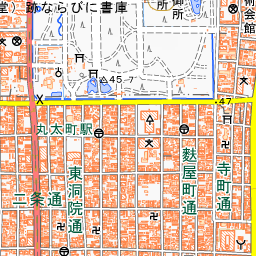


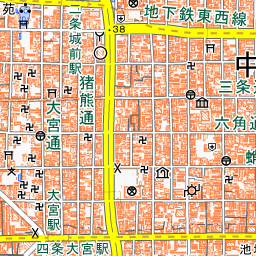

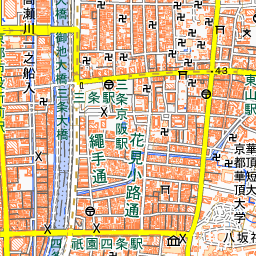


Spot location © OpenStreetMap contributors (ODbL)
Open in Google MapsGuides that include this spot (1)
Use asobot while you walk
- See where you are on the map and find spots nearby
- Listen to the guide's audio in course order, one after another (with subtitles)
- Walk to the next spot while following the map
Open on your phone
Scan to open this spot in asobot on your phone.