 ✨ AI Generated
Shosei-en Garden
Japanese: 渉成園
Shimogyo Ward, Kyoto
This information was written by AI and may contain mistakes. Please check official sources for opening hours, fees, and other details before you go.
Found a mistake? Let us know with “✏️ Something's wrong” on this spot's screen in asobot →
🎧 Audio guide(1:16)
In short
A garden on a detached precinct (villa) of Higashi Hongan-ji Temple, also affectionately known as "Kikoku-tei." Its origins date back to 1653 (Shoo 2), when Sennyo began developing it as a retirement residence. It is a pond-strolling garden said to have been designed by Ishikawa Jozan, and it is designated a national Place of Scenic Beauty.
- Ingetsuchi Pond and Shinsetsukyo Bridge: Ingetsuchi Pond, where the moon rising from Higashiyama is reflected on the water's surface, accounts for roughly one-sixth of the entire garden. Shinsetsukyo Bridge, a wooden arched bridge, spans to Kita-oshima Island
- Shukuentei and Kaitoro: There are Shukuentei, a teahouse on Kita-oshima Island, and Kaitoro, a wooden bridge with a shingle (kokera-buki) roof
- Bokakaku Pavilion and Seasonal Flowers: Rows of cherry trees spread beside Bokakaku Pavilion, built in the unusual two-story gate (romon) style, and in autumn, the autumn foliage of Tanpukei is magnificent
History and Highlights
Shosei-en Garden is a garden located on a detached precinct (villa) of Higashi Hongan-ji Temple. Its origins date back to 1653 (Shoo 2), when Sennyo, the 13th head priest of Higashi Hongan-ji Temple, retired and began developing it as a retirement residence on land donated by the third shogun, Tokugawa Iemitsu. Afterward, it served as a residence for successive retired head priests and as a place to welcome important guests. The garden was named by Sennyo after a phrase from "Guiqulai ci" (The Return) by the Chinese poet Tao Yuanming, and it is also affectionately known as "Kikoku-tei" because trifoliate orange (karatachi) was planted around it as a hedge.
The garden is a pond-strolling garden said to have been designed by Ishikawa Jozan, who established Shisendo Temple in Rakuhoku (northern Kyoto), and it was designated a national Place of Scenic Beauty in 1936. Its diverse scenic features are known as the "Thirteen Views." This site is traditionally said to be the ruins of the Rokujo Kawara-no-in residence built by Minamoto no Toru, the Minister of the Left during the Heian period, and features associated with this tradition, such as the "Tower linked to Minamoto no Toru" and the "Shiogama Water Basin," are placed within the grounds.
Highlights for Viewing and Experiencing
- Ingetsuchi Pond and Shinsetsukyo Bridge: Ingetsuchi Pond was named for the beauty of the moon rising from Higashiyama reflecting on the water's surface. Covering about 1,700 tsubo (approx. 5,600 square meters), it accounts for roughly one-sixth of the entire garden. The Minami-oshima Island floating in the pond is also called Garyudo; a small bell tower that once stood on the island was not rebuilt after burning down in the Great Ansei Fire, leaving only foundation stones. Shinsetsukyo Bridge, a wooden arched bridge, spans from the northwest shore to Kita-oshima Island.
- Shukuentei and Kaitoro: Shukuentei, located on Kita-oshima Island, is a teahouse from whose upper chamber a distant view of Amidagamine Peak was said to have looked like a miniature landscape in the past. Kaitoro, connecting Kita-oshima Island with the Tanpukei valley, is a wooden bridge with a shingle (kokera-buki) roof.
- Bokakaku Pavilion and Seasonal Flowers: Bokakaku Pavilion is a structure built in the two-story gate (romon) style, which is unusual for a garden, featuring a 4.5-tatami mat room on the upper floor accessed by staircases on the left and right. Rows of cherry trees spread alongside it, with nearly 50 cherry trees planted in the garden. In autumn, the foliage of the maples planted in Tanpukei is magnificent.
Walking Tips
It is about a 10-minute walk from JR Kyoto Station, and about 7 minutes from Gojo Subway Station. Regular admissions are for viewing the garden only, and entry into the buildings is not permitted. About 400 meters to the west is Higashi Hongan-ji Temple, of which Shosei-en Garden is a detached precinct, and about 350 meters to the northeast is Ichihime-jinja Shrine.
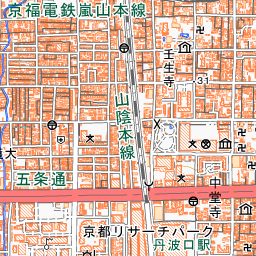
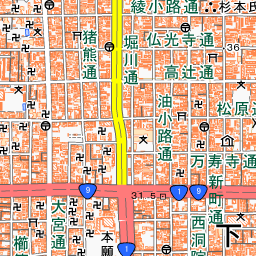


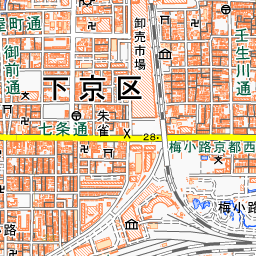
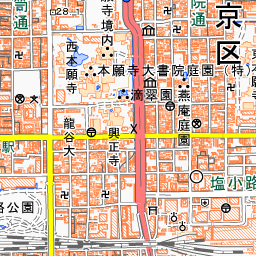
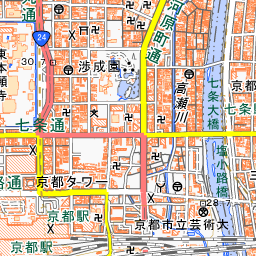
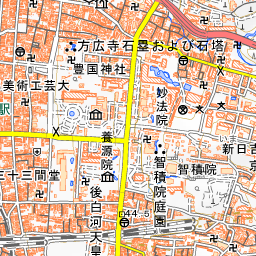
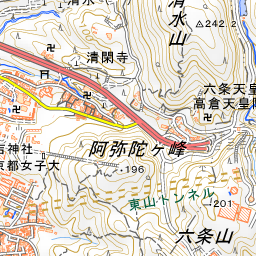
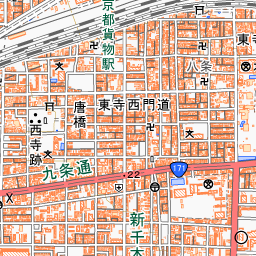
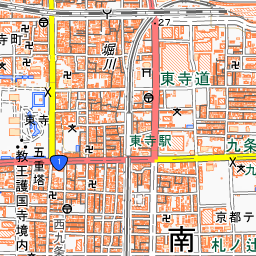
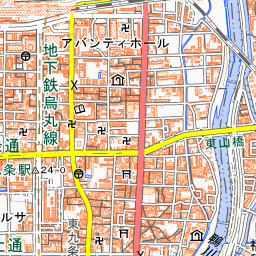
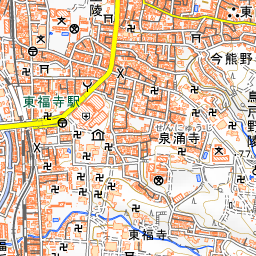
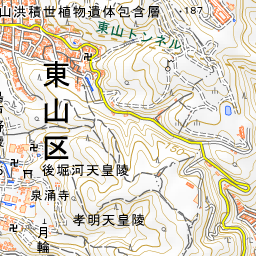
Spot location © OpenStreetMap contributors (ODbL)
Open in Google MapsGuides that include this spot (1)
Use asobot while you walk
- See where you are on the map and find spots nearby
- Listen to the guide's audio in course order, one after another (with subtitles)
- Walk to the next spot while following the map
Open on your phone
Scan to open this spot in asobot on your phone.