 ✨ AI Generated
Kitano Tenmangu Shrine
Japanese: 北野天満宮
Kamigyo Ward, Kyoto
This information was written by AI and may contain mistakes. Please check official sources for opening hours, fees, and other details before you go.
Found a mistake? Let us know with “✏️ Something's wrong” on this spot's screen in asobot →
🎧 Audio guide(1:08)
In short
The head shrine of approximately 12,000 Tenmangu and Tenjin shrines nationwide, enshrining Sugawara no Michizane. Its origins are said to date back to 947 (Tenryaku 1), when an oracle led to the enshrinement of Michizane in Kitano, and the current main hall, a National Treasure, was constructed in 1607 (Keicho 12) by Toyotomi Hideyori in accordance with the last wishes of Toyotomi Hideyoshi.
- The Star-less Sankomon Gate and the Rubbing Cows: The Sankomon Gate, the middle gate in front of the main hall, is an Important Cultural Property; it is also said that only its star carving cannot be seen, and it is counted among the shrine's "Seven Wonders." The statues of reclining cattle are known as nade-ushi (rubbing cows) and are cherished for the belief that rubbing them brings divine favors
- Tobiume and the Plum Garden: There are approximately 1,500 plum trees of 50 varieties associated with Michizane, and during the blossoming season, red and white blossoms bloom in competition. The "Tobiume" (flying plum) in front of the deity is a special plum tree said to have been passed down through grafting since the shrine's founding
- Maple Garden at the Historic Odoi Earthworks: On the west side of the shrine grounds, a portion of the Odoi Earthworks, built by Toyotomi Hideyoshi in 1591 (Tensho 19), remains and is designated as a National Historic Site. It has about 350 maple trees, offering magnificent views from places such as the vermilion-lacquered "Uguisu-bashi" bridge crossing the Kamiya River
History and Highlights
Kitano Tenmangu Shrine is the head shrine of approximately 12,000 Tenmangu and Tenjin shrines nationwide, enshrining Sugawara no Michizane. Its origins are said to date back to 947 (the first year of the Tenryaku era), when an oracle led to the enshrinement of Michizane in Kitano, located northwest of Heian-kyo. Long affectionately known as "Kitano no Tenjin-sama," it has been widely revered as a shrine where people pray for passing entrance exams, academic achievement, cultural and artistic success, and warding off misfortune.
The current main hall was constructed in 1607 (the 12th year of the Keicho era) by Toyotomi Hideyori in accordance with the last wishes of Toyotomi Hideyoshi. It connects the main hall enshrining Michizane with the worship hall via a stone-paved corridor called Ishi-no-ma, and features Gaku-no-ma (music rooms) on both sides of the worship hall. Built in a style known as both Yatsumune-zukuri and Gongen-zukuri, it is designated as a National Treasure. It is a representative architectural relic of the Momoyama period that also served as a prototype for Gongen-zukuri buildings in later eras.
Viewing and Experience Highlights
- The Star-less Sankomon Gate and the Rubbing Cows: The middle gate in front of the main hall is an Important Cultural Property called Sankomon Gate. Its name derives from carvings of the sun, moon, and stars; however, it is said that the star carving cannot be seen, counting it among the shrine's "Seven Wonders" as the "Star-less Sankomon." The statues of reclining cattle within the grounds are known as nade-ushi (rubbing cows) and are cherished for the belief that rubbing them brings divine favors.
- Tobiume and the Plum Garden: Within the grounds are approximately 1,500 plum trees of 50 varieties associated with Michizane, and during the blossoming season, red and white blossoms bloom in competition. The "Tobiume" (flying plum) planted in front of the deity is a special plum tree said to have been passed down through grafting since the shrine's founding.
- Maple Garden at the Historic Odoi Earthworks: On the west side of the shrine grounds, a portion of the Odoi Earthworks, built by Toyotomi Hideyoshi in 1591 (the 19th year of the Tensho era), remains and is designated as a National Historic Site. Today, it is a renowned spot with about 350 maple trees, offering magnificent views from places such as the vermilion-lacquered arched bridge "Uguisu-bashi" crossing the Kamiya River.
Walking Tips
On the 25th of every month, stalls line the approach for "Tenjin-san Day," a festival day associated with Michizane's birthday on June 25 and the day of his passing on February 25. After sunset, stone lanterns and hanging lanterns are lit, illuminating the National Treasure main hall. It is about a 5-minute walk from Kitano-Hakubaicho Station on the Keifuku Electric Railroad, or you can take the city bus and get off at "Kitano Tenmangu-mae."

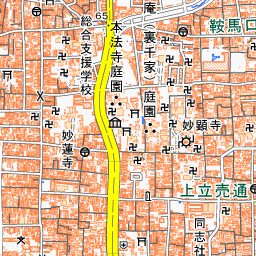
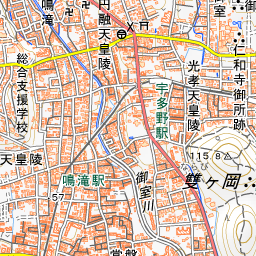


Spot location © OpenStreetMap contributors (ODbL)
Open in Google MapsGuides that include this spot (1)
Use asobot while you walk
- See where you are on the map and find spots nearby
- Listen to the guide's audio in course order, one after another (with subtitles)
- Walk to the next spot while following the map
Open on your phone
Scan to open this spot in asobot on your phone.