 ✨ AI Generated
Myoshin-ji Temple
Japanese: 妙心寺
Ukyo Ward, Kyoto
This information was written by AI and may contain mistakes. Please check official sources for opening hours, fees, and other details before you go.
Found a mistake? Let us know with “✏️ Something's wrong” on this spot's screen in asobot →
🎧 Audio guide(1:11)
In short
The head temple of the Myoshin-ji branch of Rinzai Zen Buddhism, bearing the mountain name Shobozan. It originated when Cloistered Emperor Hanazono, who devoted himself deeply to Zen, converted his detached palace in Hanazono into a Zen temple and welcomed Kanzan Egen as the founding abbot, and the temple regards 1337 (Kenmu 4) as its founding year. The temple complex, with the Sanmon gate, Buddha Hall (Butsuden), Dharma Hall (Hatto), Shindo, and Abbot's Quarters (Daihojo) arranged in a straight line from the Imperial Envoy Gate (Chokushimon), is said to represent the most complete form of an early modern Zen temple complex, and today it counts 46 sub-temples.
- The Dragon in the Clouds of the Dharma Hall and the National Treasure Temple Bell: On the flat board ceiling (kagami-tenjo) of the Dharma Hall, an Important Cultural Property built in 1657 (Meireki 3), is the Unryu-zu (Dragon in the Clouds), which took Kano Tan'yu eight years to paint. The Dharma Hall's Bell of the Oshikicho Tone is a National Treasure known as the bell bearing the oldest dated inscription in Japan
- Sanmon Gate and Buddha Hall: The Sanmon gate, built in 1599 (Keicho 4), is the only vermilion-lacquered building on the grounds. The Buddha Hall is the main hall, with its principal image being the historical Buddha Shakyamuni holding a lotus flower. Both are designated as national Important Cultural Properties
- The "Akechi Bathhouse": A bathhouse said to have been built by the monk Misshu of the Dairei-in sub-temple, who was an uncle of Akechi Mitsuhide, to pray for the repose of Mitsuhide's soul. The current structure dates to 1656 (Meireki 2) and is a national Important Cultural Property
History and Highlights
Myoshin-ji Temple, bearing the mountain name Shobozan, is the head temple of the Myoshin-ji branch of Rinzai Zen Buddhism. It originated when Cloistered Emperor Hanazono, who devoted himself deeply to Zen, converted his detached palace in Hanazono into a Zen temple and welcomed Kanzan Egen as the founding abbot. The temple regards 1337 (the fourth year of the Kenmu era) as its founding year. After being destroyed by fire during the Onin War, it was restored by Sekko Soshin; the grounds expanded, a seven-building temple complex (shichido garan) was constructed, and sub-temples were established one after another.
Heading north from the Imperial Envoy Gate (Chokushimon), the Sanmon gate, Buddha Hall (Butsuden), Dharma Hall (Hatto), Shindo, and Abbot's Quarters (Daihojo) are arranged in a straight line, while buildings such as the bathhouse and sutra repository (Kyozo) line the east side. This layout is said to represent the most complete form of an early modern Zen temple complex. Today, it counts 46 sub-temples, and the temple grounds are designated as a National Historic Site.
Sights and Experiences
- The Dragon in the Clouds of the Dharma Hall and the National Treasure Temple Bell: Built in 1657 (the third year of the Meireki era), the Dharma Hall (Hatto) is a national Important Cultural Property. On its flat board ceiling (kagami-tenjo) is the Unryu-zu (Dragon in the Clouds), which took Kano Tan'yu eight years to paint. The bell housed in the Dharma Hall is known as the Bell of the Oshikicho Tone and bears an inscription of the "Bojutsu year," which is believed to correspond to 698 (the second year of Emperor Monmu's reign). It is a National Treasure known as the bell bearing the oldest dated inscription in Japan.
- Sanmon Gate and Buddha Hall: The Sanmon gate, built in 1599 (the fourth year of the Keicho era), is the only vermilion-lacquered building on the grounds, and enshrines the Bodhisattva Avalokiteshvara (Kannon) and the Sixteen Arhats on its upper level. The Buddha Hall is the main hall of Myoshin-ji Temple, with its principal image being the historical Buddha Shakyamuni holding a lotus flower. Both are designated as national Important Cultural Properties.
- The "Akechi Bathhouse": A bathhouse said to have been built by the monk Misshu of the Dairei-in sub-temple, who was an uncle of Akechi Mitsuhide, to pray for the repose of Mitsuhide's soul, which has come to be called the "Akechi Bathhouse" (Akechi-buro). The current structure dates to 1656 (the second year of the Meireki era) and is a national Important Cultural Property.
Strolling Tips
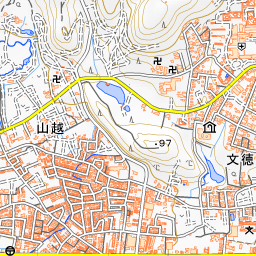
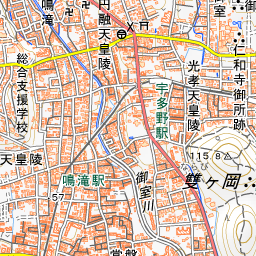
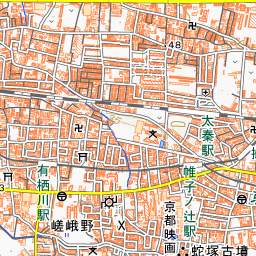
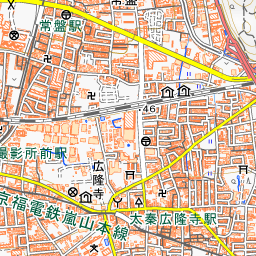
It is a 5-minute walk from Hanazono Station on the JR Sagano Line to the South Gate. Public residential paths run through the temple grounds, allowing visitors to walk through freely at any time. The reception desk for visiting the Dharma Hall is located at the entrance to the Abbot's Quarters (Daihojo), and there are also sub-temples that can be visited separately, such as Taizo-in, Daishin-in, and Keishun-in. Toji-in Temple is about 930 meters to the north, Ninna-ji Temple is about 900 meters to the northwest, and Ryoan-ji Temple is about 1.1 kilometers to the north.





Spot location © OpenStreetMap contributors (ODbL)
Open in Google MapsGuides that include this spot (1)
Use asobot while you walk
- See where you are on the map and find spots nearby
- Listen to the guide's audio in course order, one after another (with subtitles)
- Walk to the next spot while following the map
Open on your phone
Scan to open this spot in asobot on your phone.