 ✨ AI Generated
Fujiwara Palace Site
Japanese: 藤原宮跡
Kashihara, Nara
This information was written by AI and may contain mistakes. Please check official sources for opening hours, fees, and other details before you go.
Found a mistake? Let us know with “✏️ Something's wrong” on this spot's screen in asobot →
🎧 Audio guide(1:13)
In short
The Fujiwara Palace Site consists of the remains of the central complex of Fujiwara-kyo, which served as Japan's capital for 16 years from 694 to 710. Modeled on Chinese imperial capitals and adopting the jobosei grid layout, Fujiwara-kyo is considered Japan's first full-scale capital city. In July 2026, it was inscribed on the UNESCO World Heritage List as one of the component parts of the "Ancient Capitals of Asuka and Fujiwara."
- Site of the Daigokuden (Great Hall of State): An earthen mound known as Omiya Dodan remains at the site of the Daigokuden, the heart of the palace.
- Views of the Yamato Sanzan Mountains: The site is encircled by Mt. Unebi, Mt. Miminashi, and Mt. Amanokagu, and the view of the ridge lines of these three mountains from the palace site is designated an "Important Viewpoint Landscape."
- Seasonal Flowers: Canola flowers in spring, lotus in summer, and cosmos in autumn create vast, sweeping floral landscapes across the site.
History and Highlights
Fujiwara-kyo was established in 694 (the 8th year of the reign of Empress Jito), when Empress Jito relocated the capital from the Asuka Kiyomihara Palace. It endured for 16 years until 710 (Wado 3), when Empress Genmei moved the capital to Heijo-kyo. Following Chinese city-planning principles with a grid layout, it was Japan's first full-scale imperial capital. While various theories exist regarding its exact scale, a leading theory holds that it was a square measuring approximately 5.3 kilometers on each side.
The Fujiwara Palace was situated at the center of this capital. Enclosed within an area roughly one kilometer square were the Daigokuden and Chodoin—where state ceremonies and politics were conducted—along with the Dairi (the imperial residence) and other buildings. It combined the functions of what are today the Imperial Palace, the National Diet Building, and the Kasumigaseki government district. The architectural structure of Fujiwara Palace served as a model for subsequent capitals. It was also the very first palace in Japan to feature tiled roofs, and it is estimated that more than two million tiles were used in its construction.
The palace grounds were designated a Special Historic Site in 1952 (Showa 27). On July 26, 2026, the "Ancient Capitals of Asuka and Fujiwara" was officially inscribed on the World Heritage List, with the Fujiwara Palace Site being one of its 19 component parts.
Viewing and Experience Points
- Site of the Daigokuden: The Daigokuden faced south, fronted by 12 Chodo halls and 2 Choshuden assembly halls. While almost all of the structural foundations remain buried underground, an earthen mound known as Omiya Dodan marks the site of the Daigokuden.
- Views of the Yamato Sanzan Mountains: The palace site sits surrounded by the three peaks: Mt. Miminashi to the north, Mt. Amanokagu to the east, and Mt. Unebi in the distance to the southwest. In June 2011, the ridge line vistas of the Yamato Sanzan Mountains viewed from the palace grounds were designated an "Important Viewpoint Landscape." Looking toward Mt. Amanokagu, not a single concrete building intrudes upon the view.
- Seasonal Flowers: Flowers are planted across the palace grounds throughout the seasons. From canola blossoms in spring and lotus flowers in summer to cosmos in autumn, these panoramic carpets of flowers changing across the seasons are among the great attractions of the Fujiwara Palace Site.
Tips for Exploring
The site is about a 30-minute walk from Kintetsu Miminashi Station, JR Unebi Station, or Kintetsu Unebigoryomae Station. If taking the Kashihara City Community Bus, it is about a 4-minute walk from the "Kashihara-shi Fujiwarakyo Shiryoshitsu-mae" stop. On the east side of Daigo Pond within the site, backed by Mt. Amanokagu, stands a monument inscribed with Empress Jito's poem: "Haru sugite natsu kitarurashi" (Spring has passed, and summer seems to have arrived). At the nearby Kashihara City Fujiwara-kyo Exhibition Room, visitors can view a 1:1,000 scale model of Fujiwara-kyo, measuring approximately 7 meters wide and 6 meters deep. Extending south from the palace grounds, the remains of Suzaku-oji Avenue—the capital's central thoroughfare—have been reconstructed as far as Mt. Hidaka.
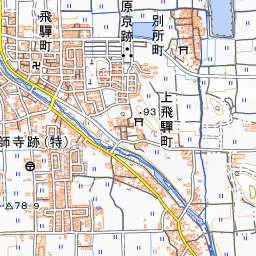
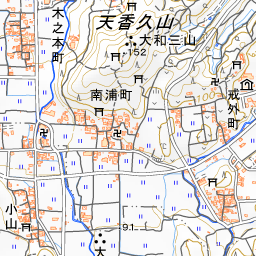
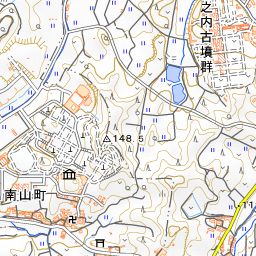
Spot location © OpenStreetMap contributors (ODbL)
Open in Google MapsGuides that include this spot (2)
Use asobot while you walk
- See where you are on the map and find spots nearby
- Listen to the guide's audio in course order, one after another (with subtitles)
- Walk to the next spot while following the map
Open on your phone
Scan to open this spot in asobot on your phone.