 ✨ AI Generated
Oshima Sakurakabu
Japanese: 大島のサクラ株
Oshima Town, Tokyo
This information was written by AI and may contain mistakes. Please check official sources for opening hours, fees, and other details before you go.
Found a mistake? Let us know with “✏️ Something's wrong” on this spot's screen in asobot →
🎧 Audio guide(0:57)
In short
Oshima Sakurakabu is an ancient Oshima cherry tree located in the Senzu district in the northeastern part of Izu Oshima. It is regarded as the oldest and largest Oshima cherry tree on the island, with an estimated age said to be over 800 years. It is the only plant in Tokyo designated as a Special Natural Monument of Japan.
- Remaining trunk base: The main trunk broke off, leaving only the base; the name "kabu" (stump) comes from this appearance.
- One tree formed by four stems: It consists of the original base and three cherry trees that grew upward around it.
- A spot spared by lava: Examination of the surrounding topography and geology revealed that it survived without being engulfed by lava flows.
History and Highlights
Oshima Sakurakabu is a giant Oshima cherry tree located along the hiking trail leading from Oshima Park toward Mt. Mihara. Regarded as the oldest and largest Oshima cherry tree on the island, its age is said to be over 800 years. Local residents have called it "Sakurakkabu" and carefully protected it. It was designated as a Natural Monument of Japan in 1935 and elevated to a Special Natural Monument in 1952. Among plants in Tokyo, it is the sole Special Natural Monument.
The name "kabu" originates from the fact that the main trunk broke off, leaving only its base. Today, it consists of the thickest original base and three separate trunks standing to the east, west, and north. These three are believed to have fallen in strong winds such as typhoons and subsequently grown upright from those spots. The original base has a height of 6.5 meters and a trunk circumference of 6.95 meters.
This site is situated in a lava field covered by a major eruption in 1552. Because of this, it was once thought to be a tree that grew after that time. However, examinations of the surrounding area revealed that this location is higher than its surroundings, and the lava branched off just before it, flowing through lower areas. An older forest that remains like an island surrounded by fresh lava flows is called a "kipuka" in the Hawaiian language.
In ancient times, it is said that boats coming from the direction of Boso used this tree as a landmark to reach Senzu Port. A shimenawa (sacred straw rope) was reportedly hung around the trunk, and gohei (ritual paper streamers) were also offered. People also used to say that if the flowers bloomed and fell quickly, rough seas would follow or it would be a year of poor harvest.
Viewing and Experience Points
- Thickness of the original base: First, look at the central base. The main trunk is withered above a height of about 2 meters. The immense thickness of the remaining base conveys the passage of many centuries.
- Branches touching the ground: Branches of various sizes extend in all directions from the base. Some branches hang down diagonally, touch the ground, take root, and grow upward again, creating an unusual tree form.
- White spring blossoms: Information indicates that Oshima Sakurakabu blooms with white flowers around the end of March each year. Because it is an old tree, it does not produce a profusion of blossoms, but the town describes the scene as possessing the aesthetic of wabi-sabi.
Walking Tips
From the mountain side of the cherry tree-lined path in Oshima Park, a 0.9-kilometer trail called the Izu Islands Botanical Garden continues, ending at Oshima Sakurakabu. Along the way, there is a forest of Sudajii chinquapin trees, a planted grove of Oshima azaleas, and an observation deck. It is a 20-minute walk from Tokyo Metropolitan Oshima Park.
The Oshima cherry is a wild cherry species semi-endemic to the Izu Islands. It unfolds its leaves almost simultaneously with blooming, with pure white petals standing out against the fresh green foliage. The Somei-yoshino cherry is a hybrid that originated with the Oshima cherry as the pollen parent (father) and the Edo higan cherry as the seed parent (mother).
Because Oshima Sakurakabu is aged and declining in vigor, it was propagated through tissue culture. Those saplings are planted inside Tokyo Metropolitan Oshima Park.



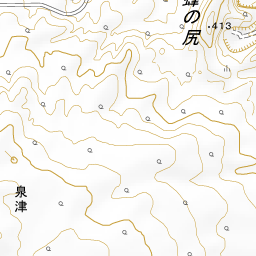
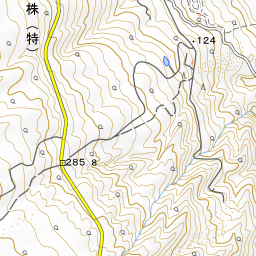

Spot location © OpenStreetMap contributors (ODbL)
Open in Google MapsUse asobot while you walk
- See where you are on the map and find spots nearby
- Listen to the guide's audio in course order, one after another (with subtitles)
- Walk to the next spot while following the map
Open on your phone
Scan to open this spot in asobot on your phone.