 ✨ AI Generated
Nishijin Textile Center
Japanese: 西陣織会館
Kamigyo Ward, Kyoto
This information was written by AI and may contain mistakes. Please check official sources for opening hours, fees, and other details before you go.
Found a mistake? Let us know with “✏️ Something's wrong” on this spot's screen in asobot →
🎧 Audio guide(1:05)
In short
A facility that showcases Nishijin-ori Brocade, a silk textile born in Kyoto's Nishijin district. Introductions to Nishijin-ori Brocade and historical materials are on continuous display, and visitors can also watch demonstrations of traditional techniques performed by artisans.
- Artisan Demonstrations: Skilled craftspeople demonstrate traditional techniques right before your eyes. You can also observe silkworm rearing and the process of thread-making known as zaguri (hand reeling)
- Yarn-Dyed Patterned Weaving: A patterned fabric that weaves colors and designs using pre-dyed threads. In 1976 (Showa 51), it was designated as a national traditional craft
- Origin of the Name "Nishijin": During the Onin War, Yamana Sozen, the general of the Western Army, established his camp in this area. After the war, artisans came back and resumed weaving, and so the area came to be called "Nishijin"
History and Highlights
Nishijin Textile Center is a facility that showcases Nishijin-ori Brocade, a traditional silk textile born in Kyoto's Nishijin district. Inside the center, introductions to Nishijin-ori Brocade and historical materials are on continuous display, and visitors can also watch demonstrations of traditional techniques performed by artisans.
The origins of Nishijin-ori Brocade are ancient, tracing back to around the 5th or 6th century when members of the Hata clan arrived from the continent, settled around present-day Uzumasa in Kyoto, and introduced sericulture and silk weaving techniques. During the Heian period, the imperial court organized silk weavers under an office called the Oribe-no-tsukasa, having them produce high-grade textiles such as aya (patterned twill) and nishiki (brocade). During the Onin War in the Muromachi period, Yamana Sozen, the general of the Western Army, established his camp in this area. After the war ended, artisans who had scattered to various regions returned and resumed weaving, which led to the entire area being called "Nishijin" (meaning "Western Camp").
Viewing and Experience Highlights
- Artisan Demonstrations: Skilled craftspeople demonstrate traditional techniques right before your eyes. You can also observe silkworm rearing and the process of thread-making known as zaguri (hand reeling).
- Yarn-Dyed Patterned Weaving: Nishijin-ori Brocade is a patterned fabric that weaves colors and designs using pre-dyed threads. It is characterized by producing small quantities of a wide variety of items, with 12 distinct types designated by the national government alone. In 1976 (Showa 51), it was officially designated as a national traditional craft.
- Historical and Archival Exhibits: Inside the center, you can view the history and archival documents related to Nishijin-ori Brocade. Through these materials, you can trace how Nishijin-ori Brocade, said to date back to the Kofun period, has been passed down through generations.
Tips for Exploring
The center is just a short walk from the "Horikawa Imadegawa" city bus stop, and about a 10-minute walk from Imadegawa Station on the Karasuma Subway Line. Walking slightly south along Horikawa-dori Street brings you to Seimei-jinja Shrine, which enshrines Abe no Seimei, making it easy to visit both in one trip. Because details such as operating periods and reservation requirements for hand-weaving experiences and events may change, it is recommended to check the center's official information before visiting.


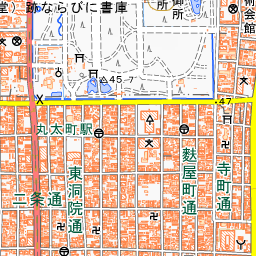

Spot location © OpenStreetMap contributors (ODbL)
Open in Google MapsGuides that include this spot (1)
Use asobot while you walk
- See where you are on the map and find spots nearby
- Listen to the guide's audio in course order, one after another (with subtitles)
- Walk to the next spot while following the map
Open on your phone
Scan to open this spot in asobot on your phone.