 ✨ AI Generated
Uda-Matsuyama Townscape
Japanese: 宇陀松山の町並み
Uda, Nara
This information was written by AI and may contain mistakes. Please check official sources for opening hours, fees, and other details before you go.
Found a mistake? Let us know with “✏️ Something's wrong” on this spot's screen in asobot →
🎧 Audio guide(1:12)
In short
The Uda-Matsuyama Townscape is a castle town surrounding Uda-Matsuyama Castle, located in Ouda, Uda City. It developed from a castle town into a merchant town and flourished to such an extent that it was called "Matsuyama Sengen" or "Uda Sengen" (meaning a bustling town of a thousand houses). Townhouses dating from the Edo period to the early Showa period still line the streets. In 2006, it was selected as a national Important Preservation District for Groups of Traditional Buildings.
- Townhouses with lattices and mushikomado: Stroll along while comparing the different lattice designs and the second-story mushikomado (insect-cage style latticed plaster windows) unique to each building.
- Waterways flowing along the street: Water drawn from the Uda River flows along both sides of the street in the center of town.
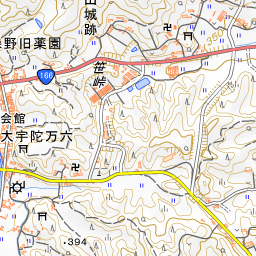
- Traces of a medicine town: The town has the "House of Medicine" (Kusuri no Yakata) and the Morino Old Medicinal Herb Garden, and historic signs for medicines can still be seen throughout the town.
History and Highlights
The Uda-Matsuyama Townscape is an area in Ouda, Uda City, that prospered as a castle town for Uda-Matsuyama Castle. Its history is said to have begun during the Sengoku (Warring States) period, when the Akiyama clan built a castle here and a castle town developed at its base. Subsequently, through governance by the retainers of Toyotomi Hidenaga, the domain rule of the Fukushima and Oda clans after the Battle of Sekigahara, and a period as direct territory under the shogunate (tenryo), the current townscape took shape.
The town developed from a castle town into a merchant town. It flourished as an economic center for the region by selling local specialties from surrounding areas, such as Udagami paper and Yoshino kuzu (arrowroot starch). It was bustling enough to be referred to as "Matsuyama Sengen" or "Uda Sengen."
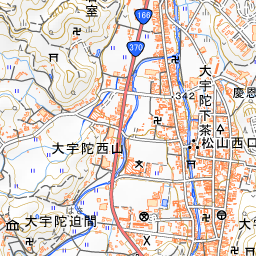
Along the roughly 600-meter street stretching between Shiroyama and the Uda River, townhouses from various eras—ranging from the Edo period to the early Showa period—remain. In 2006, approximately 17 hectares were selected as a national Important Preservation District for Groups of Traditional Buildings.
Unlike Kyoto's narrow "eel's bed" townhouses, the townhouses here are characterized by wide frontages and deep plots. This was because spacious work areas were necessary for processing arrowroot starch and medicinal herbs. Uda-Matsuyama has long been known as a town of medicine, and old signs for medicines can still be seen around town today.
Viewing and Experience Points
- Lattices and windows of the townhouses: The thickness, spacing, and assembly of the lattices vary from building to building, reflecting the occupations of the residents and the eras in which they lived. The second-story mushikomado tend to be larger in later eras, serving as a clue to estimating the age of the townhouses.
- Kuromon and Kusuri no Yakata: The Matsuyama West Entrance Gate (Matsuyama Nishiguchi Kanmon) at the entrance of the town is called "Kuromon" (Black Gate) because its pillars and beams are painted black; it is designated as a national Historic Site. At "Kusuri no Yakata" (the former Hosokawa family residence), the eye-catching signboard for "Tenjugan" medicine features a karahafu (curved gable).
- Streets of a castle town: Town planning designed for defense still remains today, including kaginote (crank-shaped roads that turn at right angles) and elevation changes separating samurai residential quarters from commoner areas.
Travel Tips
Take a bus bound for "Ouda" from Kintetsu Haibara Station, get off at the last stop, and walk for about 5 minutes. Water drawn from the Uda River at the southern end of the town flows along both sides of the street in the town center. Enjoy walking while listening to the murmur of this waterway, known as "Maekawa." In the middle of the townscape is a large three-way intersection called "Mizu no Wakare." Built in 1785, the Yamabe Family Residence is the oldest townhouse in the district, and its grand estate layout can be viewed from the street. The interior is not open to the public. Morino Old Medicinal Herb Garden, said to be the oldest extant private medicinal herb garden in Japan, is located about 240 meters south of here.

Guides that include this spot (1)
Use asobot while you walk
- See where you are on the map and find spots nearby
- Listen to the guide's audio in course order, one after another (with subtitles)
- Walk to the next spot while following the map
Open on your phone
Scan to open this spot in asobot on your phone.