 ✨ AI Generated
Rozan-ji Temple
Japanese: 廬山寺
Kamigyo Ward, Kyoto
This information was written by AI and may contain mistakes. Please check official sources for opening hours, fees, and other details before you go.
Found a mistake? Let us know with “✏️ Something's wrong” on this spot's screen in asobot →
🎧 Audio guide(1:08)
In short
A Buddhist temple belonging to the Tendai Enjo Sect. It is said to have been founded south of Mt. Funaoka during the Tenkei era (938–947) by Ganzan Daishi Ryogen, the 18th head abbot of Mt. Hiei, and it was moved to its current location during the Tensho era. The grounds are said to be the former site of the mansion built by Fujiwara no Kanesuke, the great-grandfather of Murasaki Shikibu, and it is said that Murasaki Shikibu grew up in this mansion and wrote most of The Tale of Genji and other works at this location.
- Genji Garden and Bellflowers: A garden of white sand and moss laid out in 1965 (Showa 40). Purple bellflowers associated with Murasaki Shikibu bloom from late June to around early September
- Demon Dance of the Setsubun Service: The Tsuina-shiki Onihoraku ritual of the Setsubun service on February 3 is also called the "Demon Dance." Red, blue, and black demons dance in the Daishido hall, before being driven out through the gate by the esoteric rites of the goma fire ritual, sacred bows, and the scattering of beans
- National Treasure and Important Cultural Properties: The temple treasure Jie Daishi Goyuigo (Testament of Jie Daishi) is a National Treasure and is currently on deposit at the Tokyo National Museum. The main hall enshrines seated statues of Amida Nyorai and its two attendant bodhisattvas, which are Important Cultural Properties
History and Highlights
Rozan-ji Temple is a Buddhist temple belonging to the Tendai Enjo Sect. It is said to have been founded south of Mt. Funaoka during the Tenkei era (938–947) by Ganzan Daishi Ryogen, the 18th head abbot of Mt. Hiei. In 1245, Kakuyu restored the temple and named it Rozan Tendai Koji. After burning down during the Onin War, it was moved to its current location during the Tensho era. The current main hall was constructed in 1794 when Emperor Kokaku relocated a portion of the Sento Imperial Palace here.
The grounds are said to be the former site of the mansion built by Fujiwara no Kanesuke, the great-grandfather of Murasaki Shikibu. It is said that Murasaki Shikibu grew up, lived her married life, and wrote most of The Tale of Genji and other works at this location. In November 1965, a monument commemorating the site of Murasaki Shikibu's residence was erected on the temple grounds.
Points for Viewing and Experiencing
- Genji Garden and Bellflowers: A garden of white sand and moss laid out in 1965, the same year as the memorial monument. Evoking the atmosphere of a Heian-period garden, purple bellflowers associated with Murasaki Shikibu bloom from late June to around early September. It is said that the residence of Hanachirusato from The Tale of Genji was located around this area.
- Demon Dance of the Setsubun Service: The Tsuina-shiki Onihoraku ritual held during the Setsubun festival on February 3 is also called the "Demon Dance." A red demon with a torch and sacred sword, a blue demon with a large axe, and a black demon with a large mallet dance in the Daishido hall, before being driven out through the gate by the esoteric rites of the goma fire ritual, sacred bows, and the scattering of beans. The three demons represent the three worldly passions that undermine human virtue.
- National Treasures and Important Cultural Properties: The temple treasure Jie Daishi Goyuigo (Testament of Jie Daishi) is designated as a National Treasure and is currently on deposit at the Tokyo National Museum. The main hall enshrines seated statues of Amida Nyorai and its two attendant bodhisattvas, which are designated as Important Cultural Properties.
Walking Tips
At Rozan-ji Temple, remains of the Odoi Earthworks, built by Toyotomi Hideyoshi in 1591, still survive and are designated as a National Historic Site. Just to the west is Nashinoki-jinja Shrine, renowned for its Japanese bush clover. It is about a 5-minute walk from the "Furitsu Idai Byoin-mae" city bus stop. Because there is no entrance from Kawaramachi-dori street, enter from Teramachi-dori street.


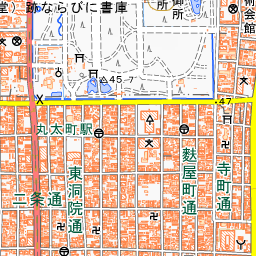


Spot location © OpenStreetMap contributors (ODbL)
Open in Google MapsUse asobot while you walk
- See where you are on the map and find spots nearby
- Listen to the guide's audio in course order, one after another (with subtitles)
- Walk to the next spot while following the map
Open on your phone
Scan to open this spot in asobot on your phone.