
Hirakata-shuku Kagiya Museum
Japanese: 市立枚方宿鍵屋資料館
Hirakata, Osaka
This information was written by AI and may contain mistakes. Please check official sources for opening hours, fees, and other details before you go.
Found a mistake? Let us know with “✏️ Something's wrong” on this spot's screen in asobot →
🎧 Audio guide(1:14)
In short
A museum that conveys the history of Hirakata-shuku, an Edo-period post town. Hirakata-shuku was a post town along the Kyo-kaido Road connecting Kyoto and Osaka, and it also served as a transit hub for river transport on the Yodo River, where Sanjikkokubune Boat vessels and other craft traveled. Kagiya flourished around the end of the Edo period as a "boat-waiting inn" for Yodo River Sanjikkokubune Boat passengers, and from the modern era onward, it operated as a traditional restaurant and ryokan inn until 1997 (Heisei 9). It opened as a museum in July 2001 (Heisei 13).
- Early 19th-Century Machiya Main Building: A kitchen area with a kamado (stove) facing the main street and a long, narrow wooden veranda where passengers waiting for boats rested still remain, and the earthen floor hallway running from the front entrance to the back exit once led to the Yodo River boat landing
- Model of a Kurawankabune Boat: There is a restored model of a small boat commonly known as a "Kurawankabune Boat," which would row up to Sanjikkokubune Boat vessels to sell mochi (rice cakes), gonbo-jiru (burdock root soup), and other foods
- Grand Hall on the Second Floor of the Annex: A 63-tatami-mat grand hall created during renovations in 1928 (Showa 3), featuring grand construction such as an oriage-go-tenjo (coved coffered ceiling) and an alcove post made of Kitayama cedar. It offers a panoramic view of the Yodo River
History and Highlights
Hirakata-shuku Kagiya Museum is a museum that conveys the history of Hirakata-shuku, an Edo-period post town. Hirakata-shuku was a post town along the Kyo-kaido Road connecting Kyoto and Osaka, and it also served as a transit hub for river transport on the Yodo River, where Sanjikkokubune Boat vessels and other craft traveled. Four post towns—Moriguchi, Hirakata, Yodo, and Fushimi—were established along the Kyo-kaido Road as an extension of the Tokaido Road, and Hirakata-shuku bustled as one of them.
Kagiya, which faced the Kyo-kaido Road, operated as an inn during the Edo period and flourished around the end of the Edo period as a "boat-waiting inn" for Yodo River Sanjikkokubune Boat passengers. It is even sung in the boat song "Yodogawa Sanjikkokubune Uta": "Here is Hirakata Kagiya-ura. In Kagiya-ura, no anchor is needed; shamisen and drums stop the boats." While Kagiya handed down that it was founded during the Tensho era (1573–1592), the earliest historical document confirming its name dates to 1773 (Anei 2), at which time it was a mochi shop. From the modern era onward, it operated as a traditional restaurant and ryokan inn until 1997 (Heisei 9).
The main building (omoya) is designated as a Tangible Cultural Property of the city, and the Kagiya grounds are designated as a City Historic Site. The city received the building as a donation, dismantled and restored it, and opened it as a museum in July 2001 (Heisei 13). The annex, a modern Japanese-style structure built in the early Showa period, became a national Registered Tangible Cultural Property in 2023 (Reiwa 5).
Highlights of the Visit
- Early 19th-Century Machiya Main Building: Ink inscriptions dating to 1811 (Bunka 8) found during dismantling and restoration confirmed that it was a machiya (townhouse) from the early 19th century. A kitchen area with a kamado (stove) facing the main street and a long, narrow wooden veranda where passengers waiting for boats rested still remain, and the earthen floor hallway running from the front entrance to the back exit once led to the Yodo River boat landing.
- Model of a Kurawankabune Boat: There is a restored model of a small boat commonly known as a "Kurawankabune Boat," which would row up to Sanjikkokubune Boat vessels to sell mochi (rice cakes), gonbo-jiru (burdock root soup), and other foods. The "kurawanka" in the phrase "Won't you eat mochi? Won't you drink sake?" (Mochi kurawanka, sake kurawanka) is a dialect expression meaning "Won't you eat?"
- Grand Hall on the Second Floor of the Annex: A 63-tatami-mat grand hall created during renovations in 1928 (Showa 3), featuring grand construction such as an oriage-go-tenjo (coved coffered ceiling) and an alcove post made of Kitayama cedar. It offers a panoramic view of the Yodo River, as well as views of Takatsuki City on the opposite shore.
Tips for Walking Around
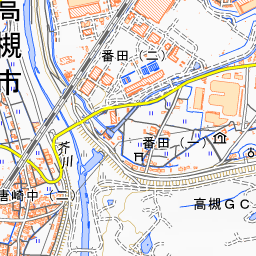
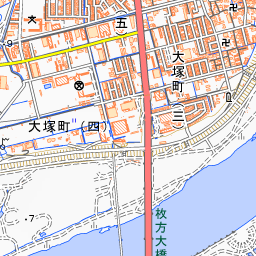
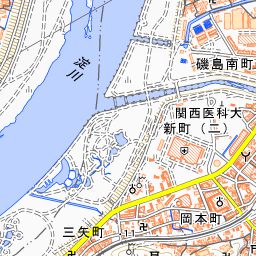
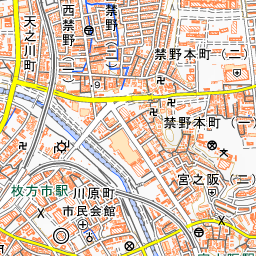
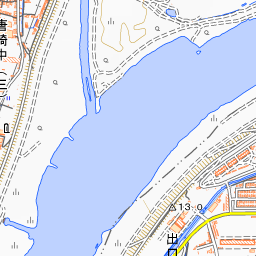
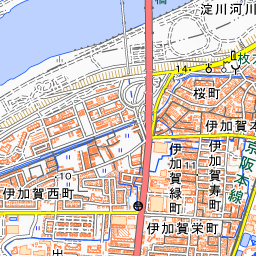
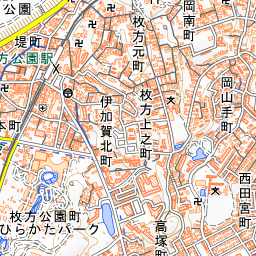
It is about a 5-minute walk west from Hirakata-koen Station on the Keihan Main Line. The area along the old highway stretching approximately 1.5 kilometers from the museum toward Hirakata-shi Station was the former post town, where historic temples, shrines, and traditional townhouses still remain today. Today's Yodo River follows a river channel reshaped in and after the Meiji period, which differs greatly from its Edo-period course, leaving the river at some distance from the museum. Hirakata Park is located approximately 650 meters south of the museum.




Spot location © OpenStreetMap contributors (ODbL)
Open in Google MapsGuides that include this spot (1)
Use asobot while you walk
- See where you are on the map and find spots nearby
- Listen to the guide's audio in course order, one after another (with subtitles)
- Walk to the next spot while following the map
Open on your phone
Scan to open this spot in asobot on your phone.