 ✨ AI Generated
Koami-jinja Shrine
Japanese: 小網神社
Chuo City, Tokyo
This information was written by AI and may contain mistakes. Please check official sources for opening hours, fees, and other details before you go.
Found a mistake? Let us know with “✏️ Something's wrong” on this spot's screen in asobot →
🎧 Audio guide(1:04)
In short
Koami-jinja Shrine is a shrine located in Nihonbashi Koamicho and is revered as a deity of strong fortune and protection against bad luck. It is said to have been founded in the first year of the Bunsho era (1466), and its current main hall was constructed in the fourth year of the Showa era (1929). Having escaped wartime destruction, it is the only remaining prewar wooden shrine architecture in the Nihonbashi district.
- Ascending and Descending Dragons: Paired carvings of a dragon ascending to heaven and a dragon descending from heaven adorn the left and right sides of the main hall's kohai (porch roof).
- Zeniarai no I: It is believed that purifying money in the "Zeniarai no I" (coin-washing well) located on the left side of the main hall and keeping it in one's wallet will bring financial fortune. The shrine is also known as "Tokyo Zeniarai Benten."
- Pentagonal Kagura-den: The kagura-den (sacred dance hall), built to match the shape of the shrine grounds, has an unusual pentagonal structure.
History and Highlights
Koami-jinja Shrine is located in Nihonbashi Koamicho. It enshrines Ukanomitama-no-kami, an Inari deity, as well as Ichikishimahime-no-kami, who is Benzaiten, and Fukurokuju, among others.
According to the shrine's history, a severe epidemic spread in this area in 1466 (the first year of the Bunsho era). It is said that when a shrine was founded honoring an elderly fisherman as an Inari deity, the disease soon subsided. The feudal lord Ota Dokan is also said to have visited this shrine on various occasions and donated land.
The current main hall and kagura-den were built in 1929 (Showa 4) after the Great Kanto Earthquake. They were the work of a school of shrine carpenters led by master craftsman Naito Komasaburo, who constructed Meiji-jingu Shrine during the Taisho era. Having escaped subsequent wartime destruction, it became the only surviving prewar wooden shrine structure in the Nihonbashi district. The main hall and kagura-den are registered as cultural properties of Chuo Ward.
There is a historical reason why it is called the deity of strong fortune and protection against bad luck. During World War II, all soldiers who carried amulets from this shrine are said to have returned alive. Even during the Great Tokyo Air Raid on March 10, 1945 (Showa 20), the buildings on the precinct, including the main hall, miraculously escaped war damage.
Viewing and Experiencing Highlights
- Ascending and Descending Dragons of the Kohai: On the left and right sides of the main hall's kohai (porch roof), there are paired carvings of a dragon ascending to heaven and a dragon descending from heaven. It is said that the "ascending dragon" conveys worshippers' wishes to the deity, and the "descending dragon" bestows the deity's virtue upon the worshippers.
- Zeniarai no I and Mampuku Funanori Benzaiten: To the left facing the main hall stands a statue of Benzaiten and the "Zeniarai no I" (coin-washing well). Because the statue rests on a boat, it is called Mampuku Funanori Benzaiten. Cleansing money in this well and keeping it in a wallet or similar pouch is believed to bring financial luck. Koami-jinja Shrine is also known as "Tokyo Zeniarai Benten."
- Pentagonal Kagura-den: Located on the east side of the shrine grounds, the kagura-den was built according to the shape of the precinct and features an unusual pentagonal design. Its roof also slopes in five directions rather than the usual four.
Walking Tips
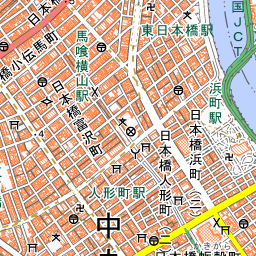
It is a 5-minute walk from Exit A2 of Ningyocho Station on the Hibiya Line. To the left after passing through the torii gate is a statue of Fukurokuju, one of the Nihonbashi Seven Lucky Gods. The Niinamesai held every year on November 28 is also called the "Doburoku Festival," during which unrefined sake (doburoku) offered before the deity is served to worshippers.
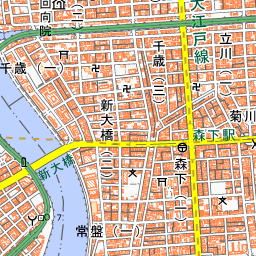
When the former main hall collapsed during the Great Kanto Earthquake, the chief priest evacuated to the nearby Shin-Ohashi Bridge while holding the sacred object. This is also recorded on the evacuation monument located at the foot of Shin-Ohashi Bridge. Ningyocho is about 320 meters to the east, Suitengu Shrine is about 430 meters to the east, and Nihonbashi is about 570 meters to the west.
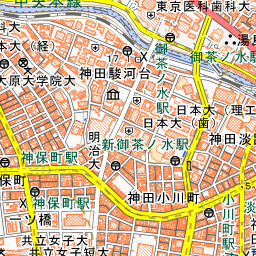
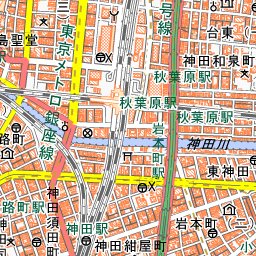


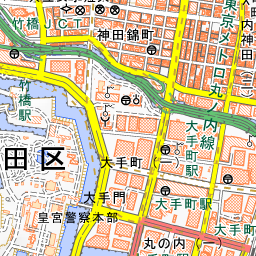
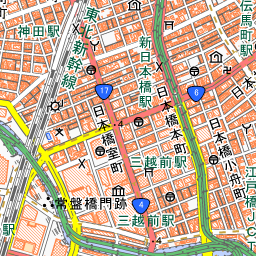
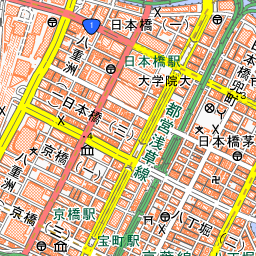
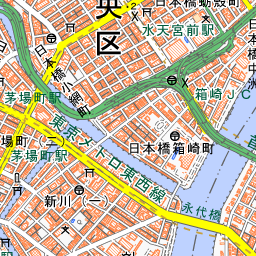
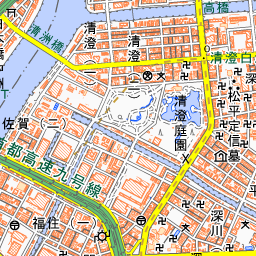
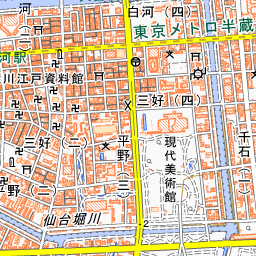
Spot location © OpenStreetMap contributors (ODbL)
Open in Google MapsUse asobot while you walk
- See where you are on the map and find spots nearby
- Listen to the guide's audio in course order, one after another (with subtitles)
- Walk to the next spot while following the map
Open on your phone
Scan to open this spot in asobot on your phone.