 ✨ AI Generated
Shishizaki Inari-jinja Shrine
Japanese: 獅子崎稲荷神社
Miyazu, Kyoto
This information was written by AI and may contain mistakes. Please check official sources for opening hours, fees, and other details before you go.
Found a mistake? Let us know with “✏️ Something's wrong” on this spot's screen in asobot →
🎧 Audio guide(0:55)
In short
Shishizaki Inari-jinja Shrine is a shrine located on the Kunda Peninsula, on the eastern side of Miyazu Bay. The view from the observation rest area, reached by climbing stairs lined with vermilion torii gates, closely resembles the composition of Sesshu's National Treasure "View of Amanohashidate," and it is known as "Sesshukan," one of the "Five Great Views" of Amanohashidate.
- Torii Gates and Mitsuba Tsutsuji Azaleas: From mid to late April, the mountainside around the vermilion torii gates is dyed deep pink with about 1,000 mitsuba tsutsuji azaleas
- Amanohashidate in a Straight Horizontal Line: Positioned to look at Amanohashidate from the east, it offers a panoramic view of Miyazu Bay along with Amanohashidate stretching out in a straight horizontal line
- Comparing with Sesshu's Painting: One way to enjoy this spot is to compare the view while visualizing the composition of "View of Amanohashidate," in the collection of the Kyoto National Museum
History and Highlights
Shishizaki Inari-jinja Shrine is a shrine located on the Kunda Peninsula, on the eastern side of Miyazu Bay. At the top of the mountain, reached by climbing a flight of stairs lined with vermilion torii gates, is the "Amanohashidate Sesshukan Observation Rest Area." The view from here is known as "Sesshukan," one of the "Five Great Views" of Amanohashidate.
The name Sesshukan was given because the view from the observation deck closely resembles the composition of "View of Amanohashidate," a National Treasure painted by the Muromachi period ink painter Sesshu. It is estimated that Sesshu painted this work around 1501 to 1506, and he is believed to have been over 80 years old at that time. The observation rest area is positioned to look at Amanohashidate from the east, offering a panoramic view of Miyazu Bay along with Amanohashidate stretching out in a straight horizontal line.
Viewing and Experience Highlights
- Torii Gates and Mitsuba Tsutsuji Azaleas: From mid to late April, the mountainside is dyed deep pink with mitsuba tsutsuji azaleas surrounding the vermilion torii gates. About 1,000 bushes grow wild in the surrounding area, and the scenery woven together by the torii gates and the clusters of azaleas makes it a popular photography spot.
- The Flower of Miyazu City: Mitsuba tsutsuji was designated as the official flower of Miyazu City in 1984 (Showa 59). As its name suggests, it is characterized by producing three leaves, and because the leaves emerge after the flowers bloom, the mountain is covered entirely in pink flowers at peak bloom.
- Comparing with Sesshu's Painting: Sesshu's "View of Amanohashidate" is in the collection of the Kyoto National Museum. One way to enjoy this spot is to compare the view from the observation rest area while visualizing the composition of the painting.
Walking Tips
Visiting the shrine is free. By car, it is about 10 minutes from the Miyazu-Amanohashidate Interchange; look for the information sign for the observation rest area along Kyoto Prefectural Road Kunda Peninsula Line (Prefectural Road 605). Please note that parking spaces are limited. The best viewing time for the mitsuba tsutsuji varies from year to year, and in years when they began blooming early, they were almost entirely scattered by late April. Other views of Amanohashidate can be enjoyed from Kasamatsu Park and Amanohashidate View Land.


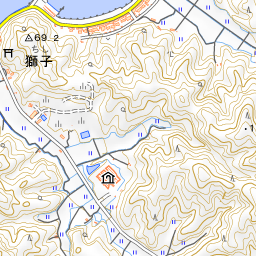


Spot location © OpenStreetMap contributors (ODbL)
Open in Google MapsUse asobot while you walk
- See where you are on the map and find spots nearby
- Listen to the guide's audio in course order, one after another (with subtitles)
- Walk to the next spot while following the map
Open on your phone
Scan to open this spot in asobot on your phone.