 ✨ AI Generated
Senso-ji Temple
Japanese: 浅草寺
Taito City, Tokyo
This information was written by AI and may contain mistakes. Please check official sources for opening hours, fees, and other details before you go.
Found a mistake? Let us know with “✏️ Something's wrong” on this spot's screen in asobot →
🎧 Audio guide(1:10)
In short
Senso-ji Temple is the head temple of the Shokannon sect, enshrining Sho Kanzeon Bosatsu as its principal image, and is the oldest Buddhist temple in Tokyo. According to temple tradition, its origins date back to 628, when a statue was caught in the net of two brothers fishing in the Sumida River. Within the precinct leading from Kaminarimon Gate with its large red lantern to the Main Hall, gates and halls rebuilt in the Showa period stand side by side.
- Kaminarimon Gate: The symbol of Asakusa, officially named "Furaijinmon." The large red lantern inscribed with "Kaminarimon" weighs about 700 kg.
- The Owaraji (Giant Straw Sandal) of Hozomon Gate: A vermilion-lacquered two-story gate featuring a giant straw sandal measuring 4.5 m in height and weighing 500 kg. It is said that evil spirits, startled by it, will leave.
- Ceiling Paintings of the Main Hall: On the ceiling of the outer hall, "Ryuno-zu" (Dragon) by Kawabata Ryushi and "Tennin-no-zu" (Celestial Beings) and "Sange-no-zu" (Scattering Flowers) by Domoto Insho are depicted.
History and Highlights
Senso-ji Temple is Tokyo's oldest Buddhist temple, enshrining Sho Kanzeon Bosatsu as its principal image. According to temple tradition, early in the morning on March 18 in the 36th year of Empress Suiko's reign (628), two brothers, Hinokuma no Hamanari and Takenari, who were fishing in the Miyato River (now the Sumida River), found a statue in their cast net. When Haji no Matsuchi, the local headman, inspected it, he recognized it as a statue of Sho Kanzeon Bosatsu. There are several theories regarding his name. Haji no Matsuchi later converted his private residence into a temple and dedicated his life to worshipping the Kannon.
The principal image remains a hidden Buddha (hibutsu) today, and it cannot be viewed during worship. This stems from an event in the first year of Taika (645), when the Kannon appeared in a dream to the monk Shokai and instructed, "Do not worship me thoughtlessly."
When Tokugawa Ieyasu entered Edo in the 18th year of Tensho (1590), Senso-ji Temple was designated as a prayer temple. During the Edo period, Asakusa became one of Edo's leading bustling areas, crowded with pilgrims and sightseers.
The Main Hall was destroyed by fire during the Great Tokyo Air Raid in Showa 20 (1945). The principal image had been placed beforehand in a bronze bowl buried about 3 m underground directly beneath the Main Hall, and was safe. Subsequently, the Main Hall was rebuilt in 1958 (Showa 33), Kaminarimon Gate in 1960 (Showa 35), Hozomon Gate in 1964 (Showa 39), and the Five-Story Pagoda in 1973 (Showa 48). In Showa 25 (1950), the sect changed from Tendai to the Shokannon sect, and Senso-ji serves as its head temple.
Appreciation and Experience Highlights
- Kaminarimon Gate and the Large Lantern: The symbol of Asakusa, whose official name "Furaijinmon" derives from enshrining Fujin (the Wind God) and Raijin (the Thunder God) on the left and right sides of the gate. The large red lantern inscribed with "Kaminarimon" is 3.9 m tall, 3.3 m wide, weighs about 700 kg, and has a dragon carving on its bottom.
- Hozomon Gate and the Owaraji: Walking past Kaminarimon Gate, a vermilion-lacquered two-story gate greets you. Nio statues stand on both sides of the gate. The giant straw sandal, measuring 4.5 m high and weighing 500 kg, represents the power of the Nio guardians, and it is said that evil spirits will flee in surprise.
- Ceiling Paintings of the Main Hall: The outer hall is a vast space with a ceiling about 10 m high. Looking up, you can see "Ryuno-zu" by Kawabata Ryushi in the center, and Domoto Insho's "Tennin-no-zu" and "Sange-no-zu" to the left and right.
Walking Tips
Pass through Kaminarimon Gate and walk down the roughly 250-meter-long Nakamise Shopping Street toward Hozomon Gate. In front of the Main Hall stands the Jokoro (large incense burner), where people continuously bathe in the rising smoke to pray for sound health. The vermilion Five-Story Pagoda stands 53 m above the ground, and its top layer enshrines sacred relics of the Buddha received from a temple in Sri Lanka. Nitenmon Gate stands to the east of the Main Hall, and Asakusa-jinja Shrine is also located on the east side of the Main Hall. If you have time to venture further, Matsuchiyama Shoden Temple, located about 800 m to the northeast, is one of Senso-ji Temple's branch temples.
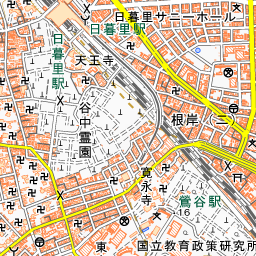
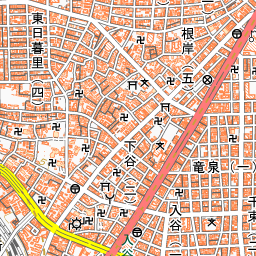
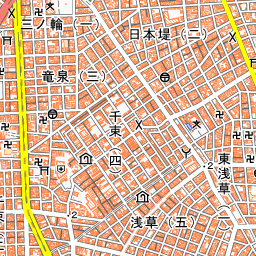
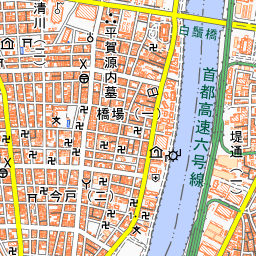


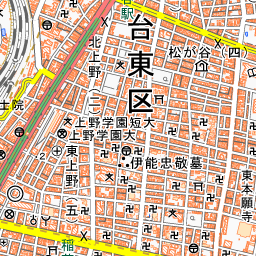

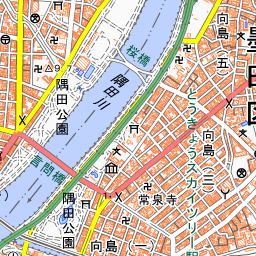


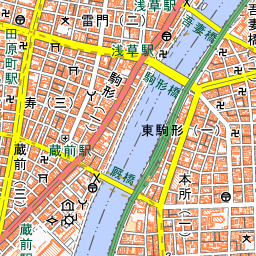
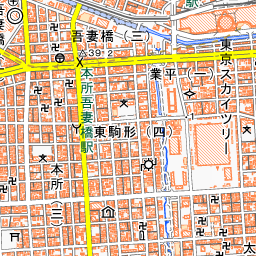
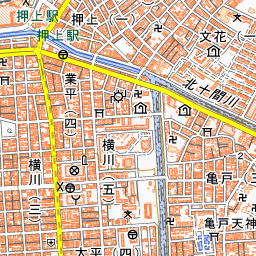
Spot location © OpenStreetMap contributors (ODbL)
Open in Google MapsGuides that include this spot (2)
Use asobot while you walk
- See where you are on the map and find spots nearby
- Listen to the guide's audio in course order, one after another (with subtitles)
- Walk to the next spot while following the map
Open on your phone
Scan to open this spot in asobot on your phone.