 ✨ AI Generated
Toji-in Temple
Japanese: 等持院
Kita Ward, Kyoto
This information was written by AI and may contain mistakes. Please check official sources for opening hours, fees, and other details before you go.
Found a mistake? Let us know with “✏️ Something's wrong” on this spot's screen in asobot →
🎧 Audio guide(1:11)
In short
A temple of the Rinzai sect's Tenryu-ji Temple branch with the mountain name Mannenzan, and the family temple (bodaiji) of the Ashikaga shogun clan. In 1341 (Ryakuo 4), Ashikaga Takauji founded it, welcoming Muso Kokushi as its founding priest; when Takauji died, he was buried at this temple, and it was named Toji-in after his posthumous Buddhist name.
- Statues of the Successive Shoguns in the Reiko-den: Its principal image is the Riun Jizo Bosatsu, Takauji's personal Buddha, and it houses statues of the successive Ashikaga shoguns, excluding the 5th shogun Yoshikazu and the 14th shogun Yoshihide, along with a statue of Tokugawa Ieyasu
- Gardens with Two Ponds: There are the garden of Fuyo-chi Pond, also said to be the work of Muso Kokushi, and the garden of Shinji-ike Pond, shaped like the cursive character for "heart" (shin). In the center to the north of the hojo stands Takauji's grave, a hokyointo pagoda
- Uguisubari Veranda and Seiren-tei Teahouse: Walking quietly along the wide veranda facing the south garden of the hojo produces the chirping sound of "uguisubari" (nightingale floors). From the Seiren-tei Teahouse, you can look down on Fuyo-chi Pond below
History and Highlights
Toji-in Temple, carrying the mountain name Mannenzan, is a temple of the Rinzai sect's Tenryu-ji Temple branch and serves as the family temple (bodaiji) of the Ashikaga shogun clan. In 1341 (Ryakuo 4), Ashikaga Takauji founded it at the southern foot of Mt. Kinugasa, welcoming Muso Kokushi as its founding priest. When Takauji died in 1358 (Enbun 3), he was buried at this temple, and it was named Toji-in after his posthumous Buddhist name. Later, Toji-ji Temple was also relocated here, making it the memorial temple for successive generations of the Ashikaga shogun family. Although it suffered from fires and warfare such as the Onin War, it was held in such high regard that Toyotomi Hideyoshi had his son Hideyori rebuild it, and cultural properties that tell the history of over 230 years spanning 15 generations of Ashikaga shoguns are still preserved today. The present hojo (main hall) was originally built in 1616 (Genna 2) by Fukushima Masanori at Kaifuku-in, a sub-temple of Myoshin-ji Temple, and was relocated here in 1812 (Bunka 9). Walking quietly along the wide veranda facing the south garden produces the chirping sound of "uguisubari" (nightingale floors).
Viewing and Experience Points
- Statues of the Successive Shoguns in the Reiko-den: The Reiko-den enshrines the Riun Jizo Bosatsu, which Takauji revered as his guardian Buddha, as its principal image. Flanked by Bodhidharma and Muso Kokushi on the left and right, it houses statues of the successive Ashikaga shoguns—excluding the 5th shogun Yoshikazu and the 14th shogun Yoshihide—along with a statue of Tokugawa Ieyasu. The statue of Ieyasu was made in gratitude for divine protection warding off bad luck at the age of 42; it was originally located at the Hozobo of Iwashimizu Hachimangu Shrine and was moved here after the anti-Buddhist movement (haibutsu kishaku).
- Gardens with Two Ponds: The garden is divided into east and west, featuring a stroll garden style centered on Fuyo-chi Pond to the west and Shinji-ike Pond to the east. The garden around Fuyo-chi is said to have been designed by Muso Kokushi, adorned with uraku camellias from winter to early spring, satsuki azaleas in early summer, and cotton roses (fuyo) in early autumn. On the central island of Shinji-ike Pond, which is shaped like the cursive character for "heart" (shin), the Myoon-kaku pavilion once stood, and its foundation stones still remain today. In the center to the north of the hojo stands Takauji's grave, a hokyointo pagoda, where the characters for April of Enbun 3 (1358) can be seen on its pedestal.
- Seiren-tei Teahouse: Built on a small artificial hill north of the hojo, the Seiren-tei Teahouse has an unclear date of establishment, but it is recorded in the Miyako Rinsen Meisho Zue published in 1799 (Kansei 11). It is a teahouse of two mats and a daime (three-quarter mat), featuring an elevated one-mat area as a seat for nobility (kijindoko), and offers an overlooking view of Fuyo-chi Pond below.
Walking Tips
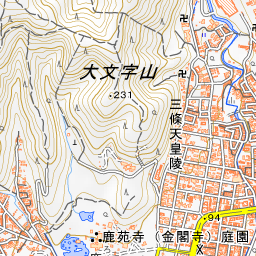
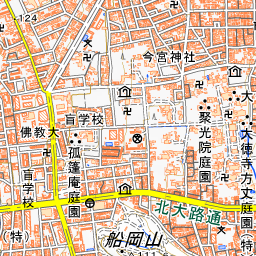
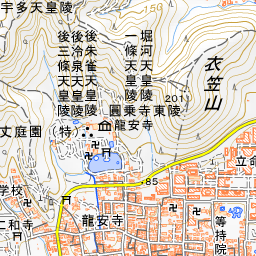
The nearest station is "Toji-in / Ritsumeikan University Kinugasa Campus-mae" on the Keifuku Electric Railroad Kitano Line, and it is about an 8-minute walk from the Kyoto City Bus stop "Tojiin Minamicho". The garden around Shinji-ike Pond changes its appearance through the seasons, with cherry blossoms in spring, lizard's tail around the summer solstice, autumn foliage, and sasanqua camellias in winter. Kinkaku-ji Temple, located in the same Kita Ward, is also introduced as a separate destination.

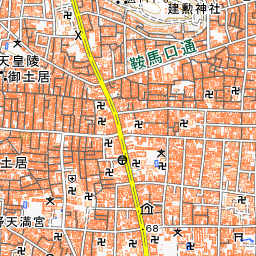
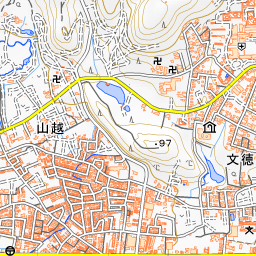
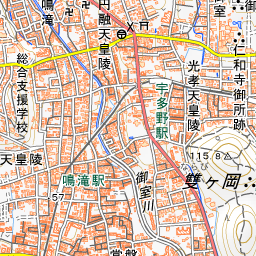


Spot location © OpenStreetMap contributors (ODbL)
Open in Google MapsUse asobot while you walk
- See where you are on the map and find spots nearby
- Listen to the guide's audio in course order, one after another (with subtitles)
- Walk to the next spot while following the map
Open on your phone
Scan to open this spot in asobot on your phone.