 ✨ AI Generated
Choho-ji Temple
Japanese: 頂法寺
Nakagyo Ward, Kyoto
This information was written by AI and may contain mistakes. Please check official sources for opening hours, fees, and other details before you go.
Found a mistake? Let us know with “✏️ Something's wrong” on this spot's screen in asobot →
🎧 Audio guide(1:09)
In short
A temple with the mountain name (sango) Shiunzan, affectionately known as "Rokkaku-do Hall" or "Rokkaku-san" because its main hall is hexagonal. According to temple tradition, Prince Shotoku, who visited this land in 587, the 2nd year of Emperor Yomei's reign, is said to have built a hexagonal hall to enshrine his guardian deity (nenjibutsu), an image of Nyoirin Kannon. It is the 18th temple of the Saigoku Kannon Pilgrimage.
- Birthplace of Ikebana: As the successive head priests of Ikenobo continued to refine their methods while offering flowers before the Buddha, ikebana (flower arrangement) was established in the Muromachi period
- Heso-ishi (Navel Stone): A hexagonal stone named after the navel, the center of the body, because Rokkaku-do Hall was considered the center of Kyoto
- A Temple Associated with Shinran: In 1201, the first year of the Kennin era, Shinran made a vow to seclude himself in Rokkaku-do Hall for 100 days, and on the dawn of the 95th day, he received a divine revelation that led him to establish the Jodo Shinshu sect
History and Highlights
Choho-ji Temple is a temple with the mountain name (sangō) Shiunzan. It is affectionately known as "Rokkaku-do Hall" or "Rokkaku-san" because its main hall is hexagonal. In the guides for the Saigoku Kannon Pilgrimage, its sect is described as an independent temple of the Tendai lineage. According to temple tradition, Prince Shotoku, who carried an image of Nyoirin Kannon that had drifted ashore on Awaji Island as his personal guardian deity (nenjibutsu), visited this land in the 2nd year of Emperor Yomei's reign (587) in search of timber to build Shitenno-ji Temple. When he hung his guardian deity on a tree to purify himself in a pond, it would not move, and it conveyed its wish to remain in this place to save the people; thus, he is said to have built a hexagonal hall to enshrine it.
In the first year of the Kennin era (1201), Shinran made a vow to seclude himself in Rokkaku-do Hall for 100 days, and on the dawn of the 95th day, he received a divine revelation that led him to establish the Jodo Shinshu sect. It is the 18th temple of the Saigoku Kannon Pilgrimage and the 1st temple of the Rakuyo 33 Kannon Pilgrimage. The residence of the monks by the pond, whose founder is said to be Ono no Imoko, was called "Ikenobo." As the successive head priests of Ikenobo continued to refine their methods while offering flowers before the Buddha, ikebana (flower arrangement) was established in the Muromachi period. This is why Rokkaku-do Hall is said to be the birthplace of ikebana. The current main hall was rebuilt in the 10th year of the Meiji era (1877).
Points for Appreciation and Experience
- Hexagonal Main Hall and Heso-ishi (Navel Stone): The hexagonal shape is said to carry a prayer wishing to discard the six worldly desires, eliminate corners, and achieve harmony and peace. Passing through the Sanmon gate, in the center of the paving stones to the front right, lies the hexagonal "Heso-ishi" with a round hole in it. Because Rokkaku-do Hall was considered the center of Kyoto, it was named after the navel (heso), the center of the body. There is also a legend that when Heian-kyo was built, the hall moved about 5 jo (approx. 15 meters) to the north, leaving one foundation stone behind.
- Taishi-do Hall and the Historic Site of Ablution: In the northeast of the temple grounds, floating on the edge of the pond, is the Taishi-do Hall, where Prince Shotoku is enshrined. The stone well curb in the pond to its west is said to be the site where the Prince purified himself, and swans and carp swim in the revived pond.
- Rokkaku Willow and the Sixteen Arhats: Originating from the story that Emperor Saga took a woman standing under a willow tree as his consort following a divine message in a dream, the Rokkaku Willow is called the "Matchmaking Willow." There are also the Sixteen Arhats with their ever-smiling faces, and the "Hitokoto Negai Jizo," which is said to grant a single wish.
Walking Tips
It is about a 3-minute walk from Karasuma Oike Subway Station and about a 5-minute walk from Karasuma Station on the Hankyu Line. From the observation elevator of "WEST18," a building just south of the Ikenobo Headquarters, you can look down at the distinctive roof of Rokkaku-do Hall from above. The Museum of Kyoto is about 300 meters to the northeast, and the Kyoto International Manga Museum is about 500 meters to the north.


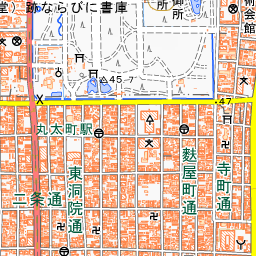


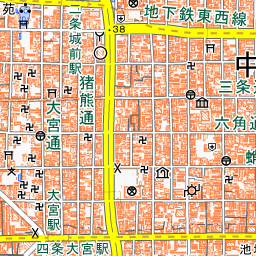

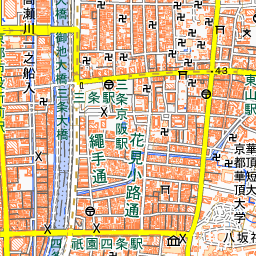


Spot location © OpenStreetMap contributors (ODbL)
Open in Google MapsUse asobot while you walk
- See where you are on the map and find spots nearby
- Listen to the guide's audio in course order, one after another (with subtitles)
- Walk to the next spot while following the map
Open on your phone
Scan to open this spot in asobot on your phone.