 ✨ AI Generated
Akasaka Hikawa-jinja Shrine
Japanese: 赤坂氷川神社
Minato City, Tokyo
This information was written by AI and may contain mistakes. Please check official sources for opening hours, fees, and other details before you go.
Found a mistake? Let us know with “✏️ Something's wrong” on this spot's screen in asobot →
🎧 Audio guide(1:12)
In short
Akasaka Hikawa-jinja Shrine is a shrine dedicated to Susanoo-no-Mikoto, Kushinadahime-no-Mikoto, and Onamuchi-no-Mikoto. The shrine is said to have been founded over a thousand years ago, and its current pavilions were built by order of Tokugawa Yoshimune, the eighth shogun. Having escaped numerous disasters, it preserves its original appearance from the time of its construction to this day.
- Shrine pavilions built by Yoshimune: Constructed in 1729 (Kyoho 14), they are designated as a Tangible Cultural Property of Tokyo.
- The Great Ginkgo: Estimated to be 400 years old, it is the symbol of the shrine. Despite having most of its trunk burned in air raids, it turns a vibrant yellow every year.
- Seven pairs of komainu: The guardian dogs on both sides of the Chumon gate are considered to be the oldest stone komainu remaining in shrines within Tokyo.
History and Highlights
The beginnings of Akasaka Hikawa-jinja Shrine are said to date back to 951 (Tenryaku 5). When the high priest Renrin, who was traveling through eastern Japan, spent a night in Hitotsugi Village—around present-day Akasaka 4-chome—he received an oracle from the deity in a dream. Following this, he is said to have built the shrine pavilion of Hikawa Myojin on this land to enshrine the deity.
In 1716 (Kyoho 1), when Yoshimune of the Kishu Tokugawa clan became the eighth shogun, the shogunate's reverence grew because the Kishu Domain's secondary residence (nakayashiki) was located in Akasaka. In 1729 (Kyoho 14), Yoshimune appointed Senior Councilor (Roju) Mizuno Tadayuki as the overall supervisor to build the shrine pavilions at the current location. In April of the following year, the shrine was relocated from Hitotsugi Village, and Yoshimune visited to worship in person.
The shrine pavilions survived the Great Ansei Earthquake, the Great Kanto Earthquake, and the 1945 Tokyo air raids, and were designated as a Tangible Cultural Property of Tokyo in 1976. Reflecting an era of promoted frugality, the architecture is simple and unadorned, but heavy, solemn designs such as large cloud-shaped bracket complexes (kumogata kumimono) can also be seen. In the first year of the Meiji period (1868), it was designated as a junchokusai-sha (associate imperial shrine), and today it is counted as one of the Tokyo Jissha (Ten Shrines of Tokyo). Because it enshrines Susanoo-no-Mikoto, who defeated Yamata no Orochi, it is believed to bring blessings for warding off evil; and because it enshrines the married couple Susanoo-no-Mikoto and Kushinadahime-no-Mikoto alongside Onamuchi-no-Mikoto, it is also said to offer blessings for matchmaking.
Highlights & Things to Experience
- The Great Ginkgo: With an estimated age of 400 years, its trunk circumference is approximately 7.5 meters. Believed to have been growing here before the shrine pavilions were moved, this tree is designated as a Natural Monument of Minato Ward and can be considered the symbol of the shrine. Although most of its trunk was burned in the 1945 air raids, its leaves turn a vibrant yellow every year in late November.
- Komainu and Stone Lanterns: There are as many as seven pairs of komainu on the grounds. The pair on both sides of the Chumon gate bears an inscription from 1675 (Empo 3) and is regarded as the oldest stone komainu surviving at shrines in Tokyo. The stone lantern in front of the Chumon gate was dedicated by Mizuno Tadayuki to commemorate the completion of the shrine pavilions.
- Shiawase Inari: When four shrines were merged in 1898 (Meiji 31), Katsu Kaishu named it Shiawase Inari, playing on "enshrining four shrines together" (shisha wo goshi), the word for happiness (shiawase), and "aligning one's aspirations" (kokorozashi wo awaseru). Katsu Kaishu maintained a residence in present-day Akasaka 6-chome from 1872 (Meiji 5) until his later years.
Tips for Exploring
The recommended nearest exits are Exit 5 of Akasaka Station on the Chiyoda Line, Exit 7 of Roppongi Station on the Hibiya and Oedo Lines, and Exit 1 of Roppongi-itchome Station on the Namboku Line. The shrine grounds have approach paths on the south and east sides. After walking through the lush green grove and arriving in front of the Chumon gate, take a look not only at the komainu and stone lanterns on either side, but also at the tensuioke (rainwater cistern) cast by the Edo-period metal caster Ota Rokuemon. Tokyo Midtown is located about 500 meters west-southwest, and Nogi-jinja Shrine is about 700 meters to the west.
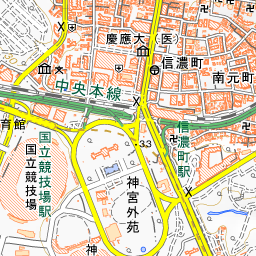
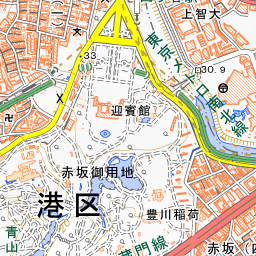
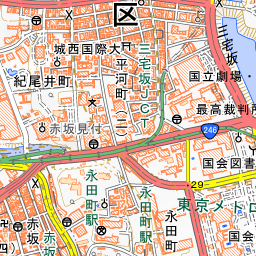
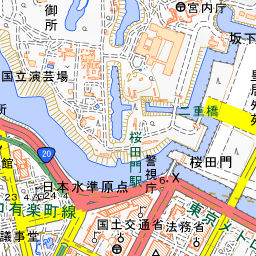
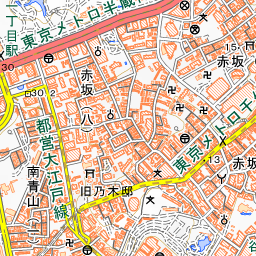


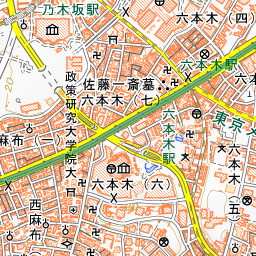
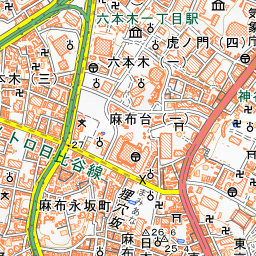
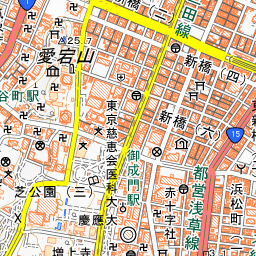

Spot location © OpenStreetMap contributors (ODbL)
Open in Google MapsUse asobot while you walk
- See where you are on the map and find spots nearby
- Listen to the guide's audio in course order, one after another (with subtitles)
- Walk to the next spot while following the map
Open on your phone
Scan to open this spot in asobot on your phone.