 ✨ AI Generated
Eikando Zenrin-ji Temple
Japanese: 永観堂 禅林寺
Sakyo Ward, Kyoto
This information was written by AI and may contain mistakes. Please check official sources for opening hours, fees, and other details before you go.
Found a mistake? Let us know with “✏️ Something's wrong” on this spot's screen in asobot →
🎧 Audio guide(1:10)
In short
The head temple of the Seizan Zenrin-ji School of Jodo Buddhism, whose formal name is Zenrin-ji. It is called "Eikando" after its seventh head priest, Yokan Risshi, and is known as "Eikando of the Maples," with about 3,000 maple trees said to grow within and around the temple grounds.
- Mikaeri Amida (Looking-back Amida): The principal image, a wooden standing statue of Amida Nyorai, is a national Important Cultural Property. Legend has it that in 1082 (Eiho 2), as Yokan was chanting the Nembutsu, the Amida statue stepped down from its pedestal, looked back over its left shoulder at him, and called out, "Yokan, you are slow"
- Garyoro and Iwagaki Momiji: The covered corridor ascending to the Kaisan-do (Founder's Hall) is called Garyoro because it resembles a dragon lying across the rocks. The maple extending diagonally from the slope just below it is known as the "Iwagaki Momiji," and Fujiwara no Sekio, who had a mountain villa on this land, wrote of it in the Kokin Wakashu
- View from the Tahoto Pagoda: Built in 1928, the Tahoto Pagoda stands at the highest point on the temple grounds, at the top of 140 steps. From under its eaves, a view of northern Kyoto opens up, including Heian-jingu Shrine and the mountain where the Daimonji bonfire is lit
History and Highlights
Eikando Zenrin-ji Temple is the head temple of the Seizan Zenrin-ji School of Jodo Buddhism. Its formal name is Zenrin-ji, but it is commonly called "Eikando Temple" after its seventh head priest, Yokan Risshi.
This land was originally the mountain villa of Fujiwara no Sekio, a poet and man of letters. In 853 (Ninju 3), Shinjo Sozu, a disciple of Kobo Daishi Kukai, purchased the former residence of Sekio to make it temple grounds, and in 863 (Jogan 5), Emperor Seiwa bestowed the imperial plaque bearing the name "Zenrin-ji." It was initially a temple of Shingon Esoteric Buddhism.
Yokan Risshi, who became head priest in the late Heian period, spread the Nembutsu (recitation of Amitabha's name) at Zenrin-ji and is said to have chanted the Nembutsu 60,000 times every day himself. He also built a medical dispensary called Yakuo-in on the temple grounds and worked to help the poor. At the beginning of the Kamakura period, Johen Sozu appointed Honen as the 11th head priest, took the position as the 12th himself, and later passed it to Honen's senior disciple, Shoku Shonin. After that, Eikando Temple became a temple of the Seizan branch of the Jodo sect.
Highlights for Viewing and Experiencing
- Mikaeri Amida (Looking-back Amida): The principal image, a wooden standing statue of Amida Nyorai, is a national Important Cultural Property and is known as the "Mikaeri Amida" (Looking-back Amida). Legend has it that before dawn on February 15, 1082 (Eiho 2), as Yokan was chanting the Nembutsu and circling around the Amida statue in the Amida-do Hall, the statue stepped down from its pedestal and began walking ahead of him. When Yokan stood frozen in astonishment, the statue looked back over its left shoulder and called out, "Yokan, you are slow."
- Garyoro and Iwagaki Momiji: The covered corridor ascending to the Kaisan-do (Founder's Hall) gently curves up the steep mountain slope. Because its appearance resembles a dragon lying across the rocks, it is called Garyoro (reclining dragon corridor). Just below it, a maple tree extending diagonally from the mountain slope is known as the "Iwagaki Momiji" (rock-fence maple), and Sekio wrote of it in the Kokin Wakashu: "Deep in the mountains, the rock-fence maple leaves must be scattering, without ever seeing the light of the shining sun."
- View from the Tahoto Pagoda: Built in 1928, the Tahoto Pagoda sits halfway up Mount Nyakuoji after climbing 140 steps, marking the highest point on the temple grounds. From under its eaves, a panoramic view of northern Kyoto opens up, including Heian-jingu Shrine and the mountain where the Daimonji bonfire is lit.
Tips for Exploring
To reach Eikando Temple, it is about a 3-minute walk from the "Nanzenji Eikando-michi" city bus stop, and about a 15-minute walk from Keage Station on the subway Tozai Line. There are said to be around 3,000 maple trees within and around the temple grounds, earning it the reputation as "Eikando of the Maples." In autumn, a special exhibition of temple treasures and evening illumination are held, drawing very large crowds, especially in late November. You can enjoy walking around it together with the nearby Nanzen-ji Temple and the Philosopher's Path.


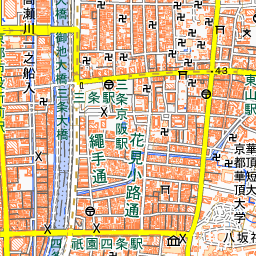


Spot location © OpenStreetMap contributors (ODbL)
Open in Google MapsGuides that include this spot (1)
Use asobot while you walk
- See where you are on the map and find spots nearby
- Listen to the guide's audio in course order, one after another (with subtitles)
- Walk to the next spot while following the map
Open on your phone
Scan to open this spot in asobot on your phone.