 ✨ AI Generated
Kofuku-ji Temple
Japanese: 興福寺
Nara City, Nara
This information was written by AI and may contain mistakes. Please check official sources for opening hours, fees, and other details before you go.
Found a mistake? Let us know with “✏️ Something's wrong” on this spot's screen in asobot →
🎧 Audio guide(1:10)
In short
Located about a 5-minute walk from Kintetsu-Nara Station, Kofuku-ji Temple is the head temple of the Hosso Sect and one of the Historic Monuments of Ancient Nara UNESCO World Heritage sites. It was relocated to this site during the capital transfer in 710 and flourished as the family temple of the Fujiwara clan. The Five-Story Pagoda is currently undergoing preservation and repair work and is covered by a protective structure, so its exterior cannot be viewed.
- Chukon-do Hall: The central and most important building in the temple complex, reconstructed in 2018 in its original form.
- National Treasure Museum (Kokuhokan): Houses Buddhist statues from the Nara period, including the statue of Ashura, known as a masterpiece of Tenpyo sculpture.
- Tokon-do Hall and Nan'en-do Hall: Tokon-do Hall is a hall whose principal image is Yakushi Nyorai, while Nan'en-do Hall is an octagonal hall serving as the ninth temple on the Saigoku Kannon Pilgrimage.
History and Highlights
Kofuku-ji Temple is said to trace its origins to Yamashina-dera Temple, built by Kagami no Okimi, the wife of Fujiwara no Kamatari, to pray for her husband's recovery from illness. In 710, upon the capital's transfer, it was moved to its current location through the planning of Fujiwara no Fuhito and named "Kofuku-ji." As the family temple of the Fujiwara clan, its influence expanded alongside the prosperity of the clan. Neither the Kamakura shogunate nor the Muromachi shogunate appointed a military governor (shugo) in Yamato Province, leaving Kofuku-ji Temple to fulfill that role. Kofuku-ji Temple is one of the components of the World Heritage site "Historic Monuments of Ancient Nara."
In 1180, most of the halls were destroyed by fire during the Siege of Nara by the Taira clan. Nevertheless, they were rebuilt shortly thereafter. Although the temple endured difficult times during the anti-Buddhist movement (haibutsu kishaku) of the Meiji period, its restoration progressed through the dedication of its monks and associated patrons.
At the center of the complex stands the Chukon-do Hall. It burned down and was rebuilt six times following its founding; after burning in 1717, rebuilding was not carried out for a long period. Reconstructed in 2018, it was revived in its original founding form.
The Five-Story Pagoda was erected in 730 upon the wish of Empress Komyo. The current pagoda is a reconstruction dating to around 1426. Standing 50.1 meters tall, it is the second-tallest surviving wooden pagoda in Japan after the five-story pagoda at To-ji Temple in Kyoto. Large-scale preservation and repair work, the first in about 120 years since the Meiji period, is underway. It is currently covered by a protective construction shed, meaning its exterior cannot be seen.
Points for Appreciation and Experiences
- Tokon-do Hall: A west-facing hall located to the east of Chukon-do Hall. It was built in 726 by Emperor Shomu to pray for the complete recovery from illness of his aunt, Retired Empress Gensho. The current structure is a reconstruction dating to 1415. Buddhist statues are arranged inside, centered around the seated statue of the principal image, Yakushi Nyorai, created during the Muromachi period.
- National Treasure Museum (Kokuhokan): A storage and exhibition facility built in 1959 on the site of the former refectory (jiki-do), where monks once gathered to eat. It houses the Hachibushu statues (Eight Legions)—including the Nara-period Ashura statue—and a 7th-century Buddha head brought from Yamada-dera Temple in Asuka. The Ashura statue is renowned as a masterpiece of Tenpyo sculpture.
- Nan'en-do and Hokuen-do Halls: Nan'en-do Hall is an octagonal hall erected in 813 by Fujiwara no Fuyutsugu in memorial service for his father, and is the ninth pilgrimage stop of the Saigoku Kannon Pilgrimage. The deer skin draped over the principal image, Fukukenjaku Kannon, was linked with the worship of the deer serving the deities of Kasuga-sha Shrine, garnering deep devotion from the Fujiwara clan. Hokuen-do Hall, reconstructed around 1210, is celebrated as the most beautiful of the surviving octagonal halls in Japan.
Walking Tips
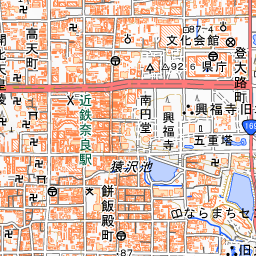
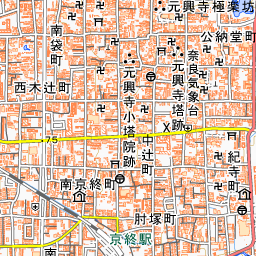
It is about a 5-minute walk from Exit 2 of the East Ticket Gate at Kintetsu-Nara Station. Sarusawa Pond is located south of the temple grounds, and to the north of the pond are the stone steps known as Gojunidan Steps. The doors of Nan'en-do Hall are opened each year on October 17, while Hokuen-do Hall is open during special viewings in spring and autumn. Nara National Museum is about 640 meters to the east, and Todai-ji Temple is about 950 meters to the northeast.

Guides that include this spot (2)
Use asobot while you walk
- See where you are on the map and find spots nearby
- Listen to the guide's audio in course order, one after another (with subtitles)
- Walk to the next spot while following the map
Open on your phone
Scan to open this spot in asobot on your phone.