 ✨ AI Generated
Oni-no-Setchin
Japanese: 鬼の雪隠
Asuka Village, Nara
This information was written by AI and may contain mistakes. Please check official sources for opening hours, fees, and other details before you go.
Found a mistake? Let us know with “✏️ Something's wrong” on this spot's screen in asobot →
🎧 Audio guide(1:06)
In short
Oni-no-Setchin is one of the mystery stones scattered across Asuka Village. It is a megalith paired with Oni-no-Manaita across the road, and it is said to have originally been part of an ancient burial mound (kofun). It is known for the legend that an ogre (oni) cooked travelers and relieved himself here.
- Legend of the Ogre: A legend remains that an ogre prepared travelers on a chopping board (manaita) and relieved himself at the privy (setchin).
- Originally the Stone Burial Chamber of a Tomb: It is thought that the stone burial chamber (sekkaku) that held the coffin became separated into two pieces.
- Two Stones Across the Road: Oni-no-Manaita sits at the top of the slope and Oni-no-Setchin at the bottom, allowing visitors to compare the two.
History and Highlights
"Setchin" refers to a toilet. Legend has it that long ago, an ogre captured travelers, prepared them on a large stone chopping board, and used this privy to relieve himself. This stone forms a pair with Oni-no-Manaita located across the road.
However, it is said to have originally been part of a burial mound. It is believed that the stone burial chamber (sekkaku), which housed the coffin, was split into two parts. Said to be the stone chamber of a burial mound built in the mid-7th century, its upper section reportedly detached from the base stone. Like Ishibutai Kofun Burial Mound, its earthen mound is said to have disappeared.
Oni-no-Setchin is the burial chamber portion, measuring 1.5 meters in inner diameter and 1.3 meters in height. The base stone corresponds to Oni-no-Manaita, which measures 4.5 meters in length, approximately 2.7 meters in width, and 1 meter in thickness. Both are made of granite.
The two stones are separated by several dozen meters. As Oni-no-Manaita is located up the slope and Oni-no-Setchin is below, one explanation is that it slid down due to an earthquake or other event. On the other hand, there are also theories that it was abandoned in an unfinished state, or that it was a joint burial tomb possessing two stone chambers in a single earthen mound, so the truth is not certain.
Today, it is managed by the Imperial Household Agency as a satellite tomb (baizuka) of the Mausoleum of Emperor Kinmei.
Tips for Viewing and Experiencing
- Internal Space of Oni-no-Setchin: Inside the stone, there is a space with an inner diameter of 1.5 meters and a height of 1.3 meters. Picture how it looked when it once housed a coffin.
- Oni-no-Manaita Across the Way: Across the walking path lies Oni-no-Manaita. Compare the scale of this 4.5-meter-long base stone with Oni-no-Setchin.
- Upper and Lower Positions: Oni-no-Manaita is located up the slope, and Oni-no-Setchin is below. Seeing the positions of the two makes it easier to imagine the explanation that it slid down.
Walking Tips
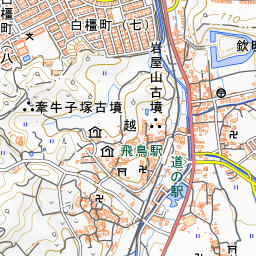
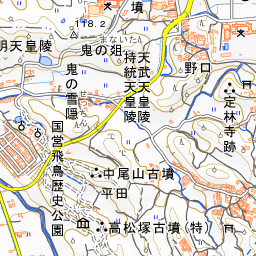
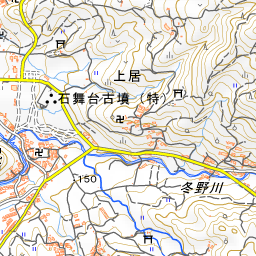
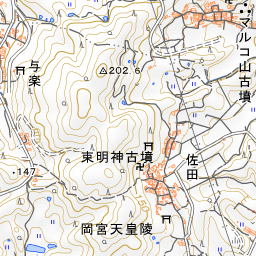
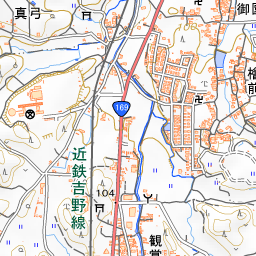
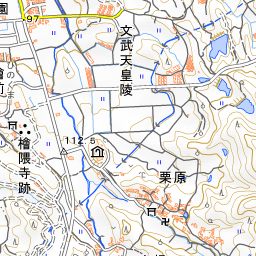
It is a 15-minute walk from Asuka Station on the Kintetsu Yoshino Line. Because it is managed by the Imperial Household Agency, you cannot enter the grounds or touch the stone. Nearby, you will find the Mausoleum of Emperor Tenmu and Empress Jito approximately 260 meters to the east, Nakaoyama Kofun Burial Mound approximately 480 meters to the south, Saru-ishi Stone approximately 510 meters to the west, and Kame-ishi Stone approximately 660 meters to the east-northeast. For a walking route visiting stone structures, one option is to travel from Asuka Station past Saru-ishi Stone to here, and then continue on to Kame-ishi Stone, Tachibana-dera Temple, and Ishibutai Kofun Burial Mound.

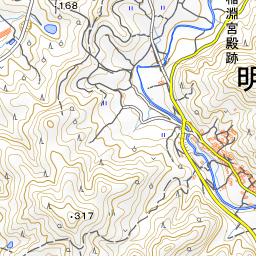
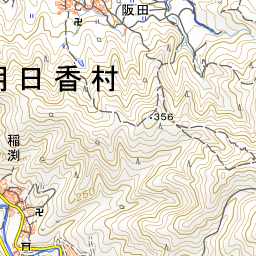
Spot location © OpenStreetMap contributors (ODbL)
Open in Google MapsUse asobot while you walk
- See where you are on the map and find spots nearby
- Listen to the guide's audio in course order, one after another (with subtitles)
- Walk to the next spot while following the map
Open on your phone
Scan to open this spot in asobot on your phone.