 ✨ AI Generated
Kishiwada Castle
Japanese: 岸和田城
Kishiwada, Osaka
This information was written by AI and may contain mistakes. Please check official sources for opening hours, fees, and other details before you go.
Found a mistake? Let us know with “✏️ Something's wrong” on this spot's screen in asobot →
🎧 Audio guide(1:04)
In short
A castle selected as one of the Continued Top 100 Japanese Castles, with the alternate name "Chikiri Castle." According to tradition, it is said to have been built during the Kenmu Restoration period by Wada Takaie, a member of Kusunoki Masashige's clan. Koide Hidemasa, who became lord of the castle in 1585 (Tensho 13), developed the castle grounds, and the castle keep was also erected at this time. The original five-tiered keep was destroyed by a lightning fire in 1827 (Bunsei 10); the current keep is a three-tiered, three-story structure built in 1954 (Showa 29) and serves as an exhibition room for historical materials and an observation deck.
- National Place of Scenic Beauty "Hachijin Garden": The Kishiwada Castle Garden, which spreads out in front of the castle keep, is a karesansui (dry landscape) garden designed and built in 1953 (Showa 28) by landscape architect Shigemori Mirei, themed around Zhuge Liang's "Eight Formations (Hachijinho)." It was designated as a National Place of Scenic Beauty in 2014 (Heisei 26)
- The Garden Overlooked from the Keep: From the top floor of the keep, visitors can look down upon the entirety of the garden and also take in a panoramic view of Kishiwada City. From the ground, the garden is designed so that the stone arrangements can be appreciated from any angle, 360 degrees around
- Wishes for Peace: Shigemori himself recorded that he infused his wishes for peace into this garden, noting that the Eight Formations were not originally battle arrays for attacking enemies, but rather defensive formations to protect against outside enemies
History and Highlights
Kishiwada Castle has been selected as one of the Continued Top 100 Japanese Castles. According to tradition, it is said to have been built during the Kenmu Restoration period by Wada Takaie, a member of Kusunoki Masashige's clan. Because the Wada clan made this area, which was called "Kishi" at the time, their stronghold, they were called the "Wada clan of Kishi," which is said to be the origin of the place name "Kishiwada."
In 1585, Hashiba Hideyoshi appointed his uncle Koide Hidemasa as lord of the castle. Hidemasa developed the castle grounds, and the castle keep (tenshukaku) was also erected at this time. In 1640, Okabe Nobukatsu entered the castle, and thereafter, 13 generations of the Okabe clan ruled the Kishiwada Domain until the Meiji Restoration. The original keep had five tiers, but it was destroyed by a lightning fire in 1827; the moats and stone walls are all that remain today of the pre-modern structures.
Its alternate name is "Chikiri Castle." The word chikiri refers to a device used to wind the warp threads on a loom, and it is said to derive from the fact that the overlapping shape of the honmaru (main bailey) and ninomaru (second bailey) resembles this tool. The current keep is a three-tiered, three-story structure built in 1954 with the purpose of using the interior as a library, and it now serves as an exhibition room for historical materials and an observation deck.
Points for Viewing and Experiencing
- National Place of Scenic Beauty "Hachijin Garden": The Kishiwada Castle Garden (Hachijin Garden), which spreads out in front of the castle keep, is a karesansui (dry landscape) garden designed and built in 1953 by landscape architect Shigemori Mirei. Themed around Zhuge Liang's "Eight Formations (Hachijinho)," it features a stone arrangement representing the "commander-in-chief" at the center of the upper tier of a three-tiered platform (upper, middle, lower), with eight groups of stones arranged as if guarding the commander. In 2014, it was designated as a National Place of Scenic Beauty.
- The Garden Overlooked from the Keep: This garden was designed with the intention of being viewed from above as well as from the castle keep, which was scheduled to be built the following year. From the top floor of the keep, visitors can look down upon the entirety of the garden and also take in a panoramic view of Kishiwada City. From the ground, it is designed so that the stone arrangements can be appreciated from any angle, 360 degrees around.
- Stone Formations by Tactical Array: The "Tiger" and "Wind" arrays are placed on the middle tier, while the "Heaven," "Earth," "Cloud," "Dragon," "Bird," and "Snake" arrays are set on the lower tier. The stones used are mainly green crystalline schist from Okinoshima in Wakayama Prefecture. Shigemori himself recorded that he infused his wishes for peace into this garden, noting that the Eight Formations were not originally battle arrays for attacking enemies, but rather defensive formations to protect against outside enemies.
Walking Tips
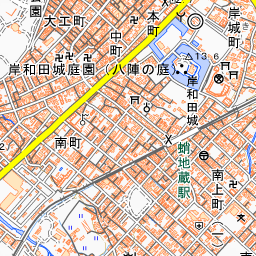
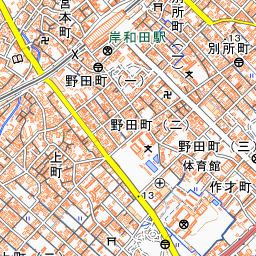
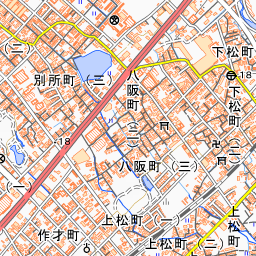
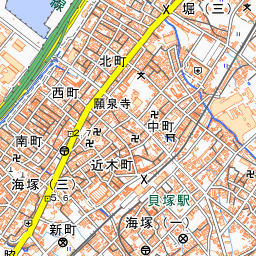
Just south of the castle is the Gofuso garden, to the east is Kishiki-jinja Shrine (the castle's guardian shrine), to the north is Jisen Kaikan, and to the west is the Kishiwada Danjiri Museum, all of which can be explored on foot. In Honmachi, located along the old road (kaido) running just west of the castle, visitors can see the traditional townscape of merchant houses that supported the castle town era. It takes about 7 minutes on foot from Takojizo Station on the Nankai Main Line and about 15 minutes from Kishiwada Station.
Guides that include this spot (1)
Use asobot while you walk
- See where you are on the map and find spots nearby
- Listen to the guide's audio in course order, one after another (with subtitles)
- Walk to the next spot while following the map
Open on your phone
Scan to open this spot in asobot on your phone.