 ✨ AI Generated
Oe-jinja Shrine
Japanese: 大江神社
Tennoji Ward, Osaka
This information was written by AI and may contain mistakes. Please check official sources for opening hours, fees, and other details before you go.
Found a mistake? Let us know with “✏️ Something's wrong” on this spot's screen in asobot →
🎧 Audio guide(1:10)
In short
A shrine said to have been enshrined by Prince Shotoku as a guardian shrine for Shitenno-ji Temple, and known alongside six other shrines as the "Tennoji Shichimiya." It enshrines Toyouke no Okami, the ancestral deity of bountiful harvests. It was called "Inui no Yashiro" during the Edo period, and its name was changed to the present one in 1867 (Keio 3). During the last war, everything except the ema-do (votive tablet hall) and the shinkiko (sacred storehouse) was burned down, but the main hall (honden) and worship hall (haiden) were restored in 1963 (Showa 38).
- Komatora: At the back of the shrine grounds, instead of komainu, sit "komatora" (guardian tigers), the protectors of Bishamonten, who was enshrined here during the Edo period. In 2003 (Heisei 15), local volunteers created an Ungyo tiger statue, and that same year, the Hanshin Tigers won the championship for the first time in 18 years. Today, many fans visit to worship the tigers as guardians of the team
- Yuhigaoka Monument and Basho Haiku Monument: As it was a famous spot for sunsets, a monument bearing the inscription "Yuhigaoka" stands within the grounds. There is also a haiku monument inscribed with Basho's verse "Akaaka to / hi wa tsurenaku mo / aki no kaze"
- Momotose no Kaidan: The somewhat steep stone steps along the terrace cliff heading toward the shrine are called "Momotose no Kaidan" (Hundred-Year Stairs)
History and Highlights
Oe-jinja Shrine is one of the shrines known alongside six others as the "Tennoji Shichimiya" (Seven Shrines of Tennoji), and is said to have been enshrined by Prince Shotoku as a guardian shrine for Shitenno-ji Temple. It serves as the ubusunagami (local guardian deity) of Tennoji Kitamura, enshrining Toyouke no Okami, the ancestral deity of bountiful harvests.
At some point, Shinto and Buddhist practices merged here to enshrine Bishamonten. Because it is located in the northwest (known as "inui") of Shitenno-ji Temple, it was called "Inui no Yashiro" during the Edo period, and monks from Shitenno-ji Temple performed its religious rituals. In 1867, because the shrine grounds were continuous with the shore of Oe, the name was changed to the present Oe-jinja Shrine, and after the Meiji Restoration, Shinto and Buddhism were separated.
During the last war, everything except the ema-do (votive tablet hall) and the shinkiko (sacred storehouse) was burned down, but the main hall (honden) and worship hall (haiden) were restored in 1963 by shrine parishioners and devotees. Around 130 trees, such as enoki (Japanese hackberry) and camphor trees, grow within the spacious grounds of approximately 1,800 tsubo (approx. 5,950 m²), and the area is designated as a preserved forest by Osaka City.
Sights and Experiences
- Komatora: Instead of the usual komainu (guardian lion-dogs), "komatora" (guardian tigers) sit at the back of the shrine grounds. They originally served as protectors of Bishamonten, who was enshrined here during the Edo period. During the separation of Shinto and Buddhism in the Meiji period, the closed-mouthed Ungyo statue was moved to Shiga, and the remaining open-mouthed Agyo statue was hit by an incendiary bomb during the Great Osaka Air Raid. In August 2003, local volunteers created a new Ungyo tiger statue. That same year, the Hanshin Tigers baseball team won their championship for the first time in 18 years, and today, many fans visit to worship the tigers as guardians of the team. A new Agyo statue was also dedicated in 2011.
- Yuhigaoka Monument and Basho Haiku Monument: It is said that the area along the western edge of the Uemachi Plateau was named "Yuhigaoka" (Sunset Hill) because the sea used to extend close to the plateau in ancient times, with the sun setting into the western sea. As it was a famous spot for sunsets, a monument bearing the inscription "Yuhigaoka" stands within the grounds. There is also a haiku monument inscribed with a verse by Matsuo Basho: "Akaaka to / hi wa tsurenaku mo / aki no kaze" (Bright and relentless though the sun may be, the autumn wind blows).
- Momotose no Kaidan: The flight of steps along the terrace cliff heading toward the shrine is called "Momotose no Kaidan" (Hundred-Year Stairs). Climbing the somewhat steep stone stairs next to Aizenzaka Slope leads up to the sprawling shrine grounds.
Tips for Exploring
The shrine is about a 3-minute walk from Shitennoji-mae Yuhigaoka Station on the Osaka Metro Tanimachi Line. It is said that Sekiyoan, where the waka poet Fujiwara no Ietaka spent his later years, was also located around this area. Yuhigaoka-cho has a site believed to be Fujiwara no Ietaka's grave, and the place name Yuhigaoka is said to originate from the "nami no irihi" (sun setting into the waves) depicted in Ietaka's poem. Consider exploring this site together with Shoman-in Temple / Aizen-do Hall about 50 meters to the east, Kuchinawazaka Slope about 220 meters to the northwest, Kiyomizu-dera Temple about 210 meters to the south, and Shitenno-ji Temple about 520 meters to the southeast.


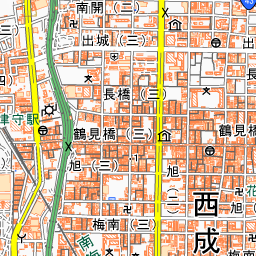

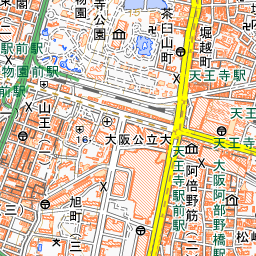

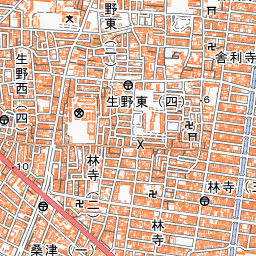
Spot location © OpenStreetMap contributors (ODbL)
Open in Google MapsUse asobot while you walk
- See where you are on the map and find spots nearby
- Listen to the guide's audio in course order, one after another (with subtitles)
- Walk to the next spot while following the map
Open on your phone
Scan to open this spot in asobot on your phone.