 ✨ AI Generated
Kotai-jinja Shrine
Japanese: 皇大神社
Fukuchiyama, Kyoto
This information was written by AI and may contain mistakes. Please check official sources for opening hours, fees, and other details before you go.
Found a mistake? Let us know with “✏️ Something's wrong” on this spot's screen in asobot →
🎧 Audio guide(0:58)
In short
Kotai-jinja Shrine, enshrined in Naiku, Oe-cho, Fukuchiyama City, is referred to as "Motoise Naiku" as the original shrine of the Naiku (Inner Shrine) of Ise Jingu Shrine. According to tradition, after Amaterasu Sume Omikami was worshipped here for 4 years, the deity traveled through various other regions and is said to have settled at the present Ise Jingu Shrine. The main hall is built in the thatched shinmei-zukuri style and is a provisionally registered cultural property of Kyoto Prefecture.
- Kuroki no Torii (Unbarked Wooden Torii Gate): Constructed from raw logs with the bark left intact, it is the most rustic and primitive form of torii gate, which is rare nationwide. Kotai-jinja Shrine uses cedar
- Ryuto Cedar and Maroko Cedar: There is the Ryuto Cedar, a sacred tree towering beside the main hall that is said to be 2,000 years old, and the Maroko Cedar along the approach, an ancient tree over 1,000 years old said to have been planted by Prince Maroko
- Himurogatake Remote Worship Site: A remote worship site to revere Himurogatake, a sacred mountain resembling a pyramid. It is called "Ichigan-san," and it is said that if you make just one wish, it will be granted
History and Highlights
Kotai-jinja Shrine, enshrined in Naiku, Oe-cho, Fukuchiyama City, is a shrine referred to as "Motoise Naiku" as the original shrine of the Naiku (Inner Shrine) of Ise Jingu Shrine. The enshrined deity is Amaterasu Sume Omikami.
According to tradition, in the 39th year of the reign of Emperor Sujin, the 10th emperor, Amaterasu Sume Omikami departed from Kasanui Village in Yamato, where the deity had previously been enshrined, and set out on a journey seeking a sacred site for eternal veneration. It is said that the deity first moved to Tamba, and this shrine was founded based on that historical origin. After being worshipped here for 4 years, the deity traveled through various other regions and is said to have settled at the present Ise Jingu Shrine in the 26th year of the reign of Emperor Suinin. It is said to be the place where the sacred object of Amaterasu Omikami was relocated and enshrined for 4 years, 54 years before Ise Jingu Shrine.
The main hall is built in the thatched shinmei-zukuri style, and except for the use of pedestal stones for the foundation, it shares the same ancient form as Ise Jingu Shrine. There is also a door on the back of the main hall, and as one of the larger shinmei-zukuri buildings in the prefecture, it is designated as a provisionally registered cultural property of Kyoto Prefecture. In 2010 (Heisei 22), the Great Heisei Renovation was carried out. Centering on the main hall, flanking sub-shrines and more than 80 smaller auxiliary shrines surround it, giving rise to the faith of "Happo-mairi," in which worshippers visit each small shrine one by one to ward off misfortune from all directions.
Points for Viewing and Experiencing
- Kuroki no Torii (Unbarked Wooden Torii Gate): The torii gate at the front is constructed from raw logs with the bark left intact, making it the most rustic and primitive form of torii gate, which is rare nationwide. Kotai-jinja Shrine uses cedar.
- Ryuto Cedar and Maroko Cedar: The Ryuto Cedar towering beside the main hall is a sacred tree said to be 2,000 years old, with a legend that on the night of Setsubun, the Dragon King offers a sacred lantern to Amaterasu Sume Omikami. The Maroko Cedar standing along the approach is an ancient tree over 1,000 years old said to have been planted by Prince Maroko, and it has been selected among the top 10 "Heavenly Trees" of Kyoto Prefecture.
- Himurogatake Remote Worship Site: About 200 meters from Kotai-jinja Shrine toward Ama-no-Iwato-jinja Shrine, there is a remote worship site to revere Himurogatake, a sacred mountain resembling a pyramid. It is called "Ichigan-san," and it is believed that if you make just one wish, it will be granted. On the day of the summer solstice, when looking from the worship site, the sun sets directly atop the mountain summit.
Tips for Strolling
The front approach extends for about 300 meters, continuing with a stone stairway of 220 natural stone steps. It is a 15-minute walk from Oeyamaguchi-Naiku Station on the Kyoto Tango Railway. Ama-no-Iwato-jinja Shrine, located in the gorge of the Miya River, is about 400 meters west-northwest from here, and Toyouke Daijinja Shrine, known as Motoise Geku, is about 3 km to the south. These three shrines are called the "Three Motoise Shrines," and following the custom of Ise Jingu Shrine, it is considered customary to visit them in the order of Toyouke Daijinja Shrine, Kotai-jinja Shrine, and Ama-no-Iwato-jinja Shrine.


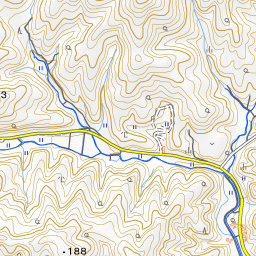
Spot location © OpenStreetMap contributors (ODbL)
Open in Google MapsGuides that include this spot (1)
Use asobot while you walk
- See where you are on the map and find spots nearby
- Listen to the guide's audio in course order, one after another (with subtitles)
- Walk to the next spot while following the map
Open on your phone
Scan to open this spot in asobot on your phone.